Warning: Cannot declare class Normalizer, because the name is already in use in /home/nginx/domains/profit.pakistantoday.com.pk/public/wp-content/plugins/cloudflare/vendor/symfony/polyfill-intl-normalizer/Resources/stubs/Normalizer.php on line 20
Trade – Page 22 – Profit by Pakistan Today

Category: Trade

  • Govt allows import of wheat, sugar, fertiliser at Gwadar Port

    Govt allows import of wheat, sugar, fertiliser at Gwadar Port

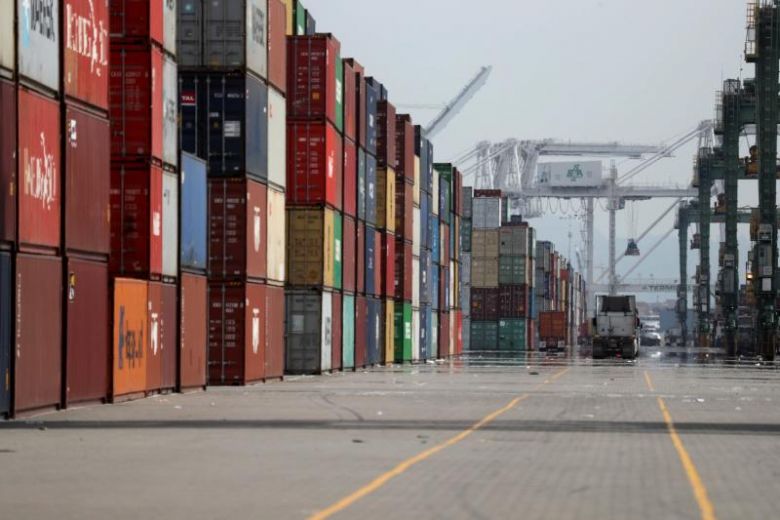
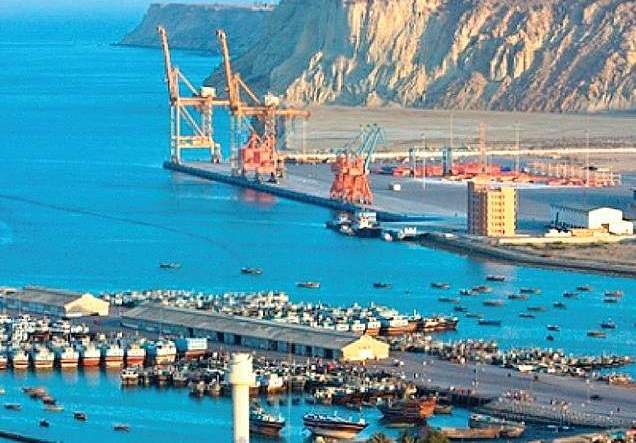
    ISLAMABAD: The federal government has allowed the import of wheat, sugar and fertilisers at the Gwadar Port and onward transit to Afghanistan through bonded carriers- insured and sealable trucks having a tracking device.

    The Ministry of Commerce (MoC), on the request of the Federation of Pakistan Chambers of Commerce and Industry (FPCCI), the Pakistan-Afghanistan Joint Chamber of Commerce and Industry (PAJCCI), the Gwadar International Terminals Limited and other stakeholders, has issued an Office Memorandum (MO) titled ‘Implementation of the import and export policy orders through shipping procedure and instructions for operationalisation of the Gwadar Port’.

    The ministry has been approached with the request to allow import of Afghan bulk cargo at the Gwadar Port and onward transit to Afghanistan through sealable trucks.

    The petitions of all stakeholders have been examined in the light of the Afghanistan-Pakistan Transit Trade Agreement (APTTA), 2010 Article 21(1)(c) of the APTTA, 2010 that allows transit of “bulk cargo (not imported in containers — like ship load) in open trucks or other transport units”, notification stated.

    “In view of the above mentioned provisions of the APTTA, the petitions of stakeholders, and for the sake of efficient and cost-effective operationalisation of the Gwadar Port and the Western-Corridor of the CPEC, the import of Afghan bulk-cargo of wheat, sugar and fertilisers at the Gwadar Port and onward transit to Afghanistan shall be permitted in bonded carrier, insured and sealable trucks having a tracking device installed on them.”

    Customs authorities will take necessary and cost efficient measures to ensure the en route security of the cargo, notification adds.
  • Pak-US trade surplus falls 1.9pc in eight months: SBP

    Pak-US trade surplus falls 1.9pc in eight months: SBP

    ISLAMABAD: The country’s goods and trade services with the United States (US) have witnessed a decrease of 1.9 per cent in surplus during the first eight months of the current financial year (2019-20) as compared to the corresponding period of last year.

    Overall exports to the US were recorded at $2,755.213 million during July-February (FY20) against the export of $2,687.053 million during July-February (FY19), showing a growth of 2.53pc, according to the State Bank of Pakistan (SBP).

    Pakistan’s overall exports to other countries witnessed an increase of 2.64pc in 8MFY20, from $16.009 billion to $16.433 billion.

    On the other hand, imports from the US into the country during the period under review were recorded at $1,469.674 million against $1376.547 million last year, showing an increase of 16.76pc in the first eight months of this year.

    Overall imports into the country decreased by 17.51pc from $35.945 billion to $29.651 billion, the data further revealed.

    The trade surplus during the period under review was recorded at $1,285.539 million against $1,310.506 million in the same period of last year, showing a decline of 1.9pc.

  • 3QFY20: Textile exports increase 4.24pc to $10.4bn

    3QFY20: Textile exports increase 4.24pc to $10.4bn

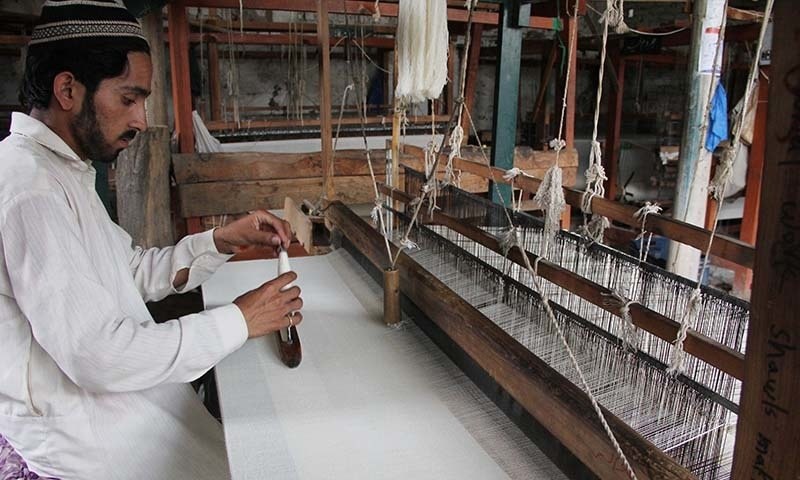
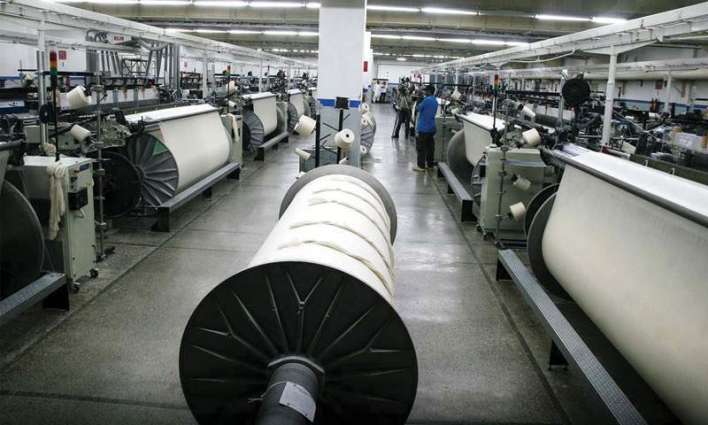
    ISLAMABAD: Textile exports from the country increased by 4.24 per cent during the first three quarters of the current fiscal year as against the corresponding period of last year, the Pakistan Bureau of Statistics (PBS) reported on Friday.

    Textile exports from the country during July-March FY20 were recorded at $10,412.939 million, as against the exports of $9,989.457 million in July-March FY19.

    Textile commodities that contributed towards growth included knitwear whose exports jumped from $2,154.562 million last year to $2,229.869 million during the current fiscal year, showing a growth of 6.74pc.

    During the period under review, the export of readymade garments increased by 11pc, from $1,955.778 million to $2,170.517 million, while the export of bedwear increased by 2.45pc, from $1,719.376 million to $1,761.552 million.

    The export of raw cotton increased by 8.19pc, from $15.719 million to $17.007 million; towels by 0.58pc, from $588.1 million to $591.527 million; while the export of tents, canvas and tarpaulin surged by 5.77pc, from $68.277 million to $72.216 million.

    The export of art, silk and synthetic textile increased by 18.47pc by growing from $220.459 million last year to $261.172 million in current fiscal year.

    Among textile goods that witnessed a negative growth in trade is cotton yarn, the export of which declined by 1.9pc by dropping from $835.719 million last year to $819.808 million during the current year.

    The export of cotton cloth also decreased from $1595.882 million to $1,548.176 million, a decline of 2.99pc, whereas the export of cotton carded or combed plunged from $0.161 million to $0.062 million, showing a fall of 61.49pc. Likewise, the export of yarn (other than cotton yarn) decreased by 7.11pc, by falling from $22.559 million to $20.956 million

    On a year-on-year basis, textile exports during the month of March 2020 decreased by 4.46pc when compared to the corresponding month of last year. Textile exports in March this year were recorded at $1,039.705 million against the export of $1,088.192 million, the PBS data revealed.

    It is pertinent to mention here that the country’s trade deficit witnessed significant reduction in the first three quarters of the current financial year and declined by 26.45pc as compared to the corresponding period of last year.

    During the period under review, the country’s exports registered about 2.23pc growth, whereas imports reduced by 14.42pc.

    The exports witnessed an increase of 2.23pc and reached to $17.451 billion against $17.071 billion worth exports of the same period of last year.

    On the other hand, the country’s imports witnessed significant decrease of 14.42pc and went down from $40.679 billion last financial year to $34.814 billion in the same period of the current financial year.

    Based on figures, the trade deficit during the period under review was recorded at $17.363 against the deficit of $23.608 during last year, showing a decline of 26.45pc.

  • Govt urged to restore description of greenfield industry

    Govt urged to restore description of greenfield industry

    LAHORE: The manufacturing sectors of the country have urged the government to restore the description of ‘greenfield industry’ as mentioned in Finance Supplementary (Second amendment) Act 2019 of March 11, 2019.

    The industry insiders said that the reinstatement of earlier introduced and well-thought law has now become a necessity of the country after the outbreak of the coronavirus pandemic and visible downward trends in the economy. They recalled that the present government introduced a new law on March 11, 2019 in the name of ‘Finance Supplementary (Second amendment) Act 2019’. The industry insiders said that this law proved pivotal in attracting local investment and to promise the increase in employment opportunities and economic activity.

    They maintained that the said law had promised the complete relief of three taxes liable to be paid at import stage for ‘Greenfield industry’ i.e. custom duty (completely waived), sales tax (zero at import stage; deferred till start of sales) and income tax (exempted for 5 years). “It was a major relief in terms of cash flows for the ‘Greenfield industry’ (i.e. new projects),” they claimed.

    They shared that the act prescribed three conditions for ‘greenfield industry’ that include; it is incorporated after July 1, 2019, it was not formed by (a) splitting up or (b) re-constitution of an existing industrial undertaking or (c) a transfer of machinery/plant from any other industrial undertaking in Pakistan before the commencement of new business.

    “Any industry complying with these conditions was also declared entitled for exemption of income tax for five year under clause 126 O of the said Act,” the informed sources added.

    They further recalled that a number of companies were incorporated after the introduction of this law. However, in the last week of December 2019, a new law was introduced in the name of ‘The Tax Laws (Second Amendment) Ordinance 2019’. The industry insiders added that this ordinance changed the definition of ‘Greenfield Industry’ and it has created a lot of confusion and complexity for the new projects; it has become impossible to avail tax exemptions first on the import stage and then on profits.

    “This extra burden on the cash flows will force the new projects to halt the planned investment and the promised employment generation may be stopped,” they said.

    Talking to Pakistan Today, Noreez Abdullah, Chief Financial Officer (CFO) at Hyundai Nishat Motor Private Limited (HNMPL) said that the income tax holiday becomes an eyewash in the face of levy of turnover tax u/s 113 of the Income Tax Ordinance.

    “It is a notorious litigation subject for tax exempt entities. The irony of this section is that the effective tax rate for newly established enterprises could well be higher than a non-tax exempt entity,” Abdullah said. The industry insiders said that the manufacturing units that planned to establish plants after the introduction of this Act in March 2019, should not be a victim of subsequent change in policy by the government.  

    Agreeing with them, Abdullah added that the federal budget should explicitly expunge greenfield and special economic zones (SEZ) enterprises from the application of minimum turnover tax. “This will take away the excuse from tax authorities for not granting the exemption from advance tax as they keep declining applications for advance tax exemption in view of the application of turnover tax u/s 113,” he said.

  • Pakistan’s exports to fall $3bn owing to coronavirus: Dawood

    Pakistan’s exports to fall $3bn owing to coronavirus: Dawood

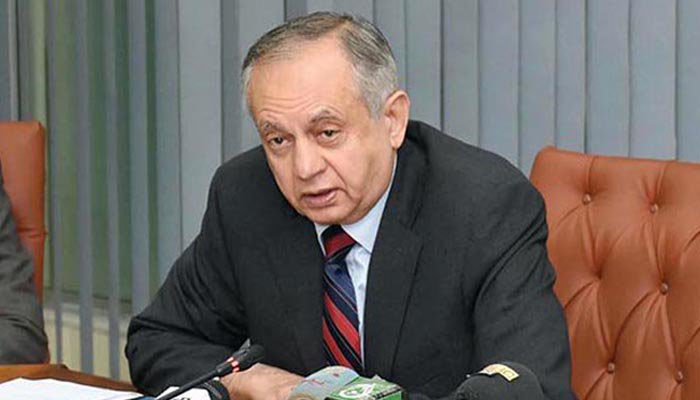
    ISLAMABAD: Adviser to the Prime Minister on Commerce Abdul Razak Dawood has said the State Bank of Pakistan (SBP) has called for deferring debt payments to one year, but commercial banks are not cooperating with the business community in this regard.

    “Commercial banks want more guarantees on the matter,” the Adviser said while briefing the National Assembly’s Standing Committee on Commerce on Wednesday.

    The government was in contact with the central bank in this regard, he added.

    Dawood said the Bangladesh government has approved loans for businesses on two per cent interest rate. “We are also mulling over recommendations in this regard,” he said.

    He said the textile sector was seeking permission to export masks but it would only be allowed after approval from the health ministry. “Currently we have banned the export of surgical or N-95 masks as it could create shortage within the country,” he said.

    He said they (the ministry) have devised an export policy after consultation with the prime minister and that the Trade and Development Authority Pakistan (TDAP) has been made responsible to pursue it.

    Talking to reporters after the meeting, Dawood said as predicted by the IMF and the WB, the coronavirus could bring the country’s exports down by $3 billion.

    “This month has witnessed a downfall of 70pc in exports as compared to the previous year,” he noted.

  • Traders in Sindh, KP, Balochistan announce to resume businesses tomorrow

    Traders in Sindh, KP, Balochistan announce to resume businesses tomorrow

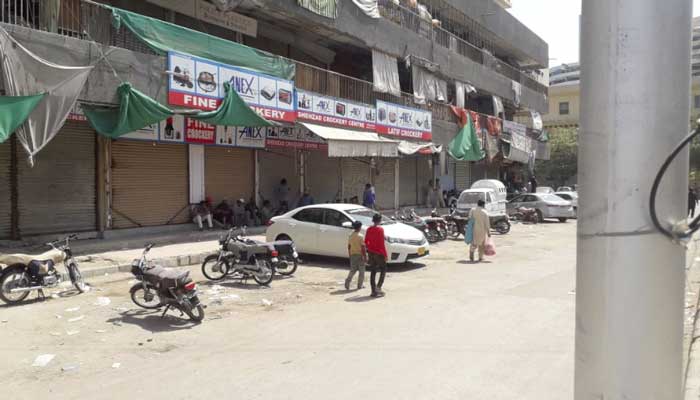
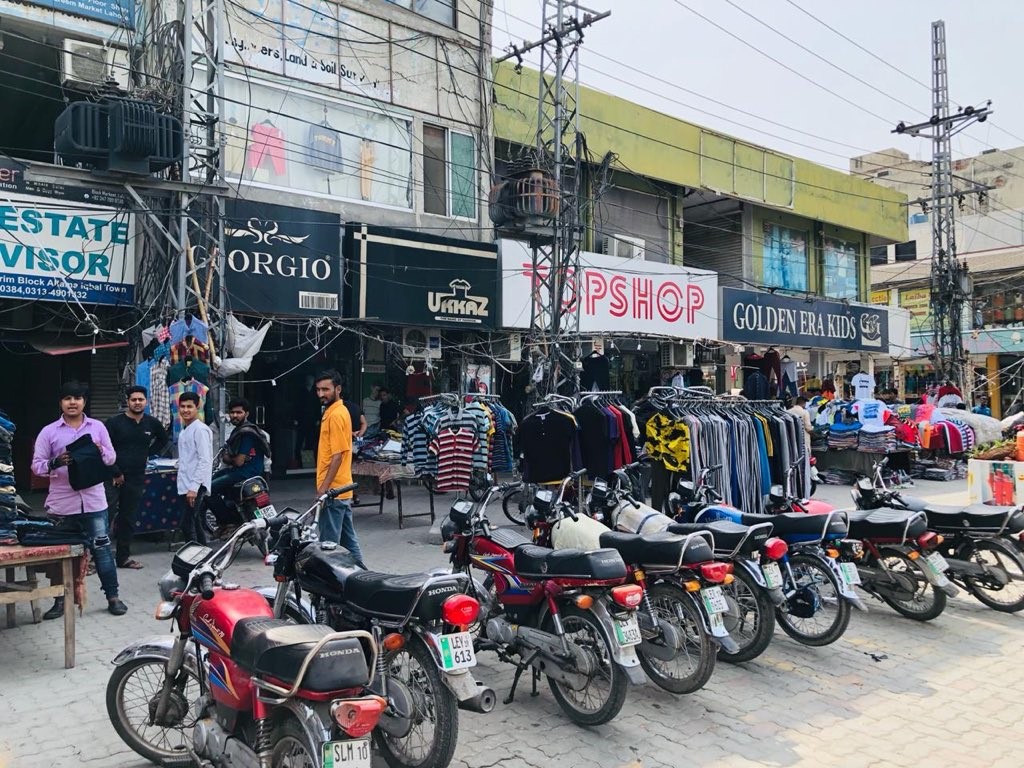
    Traders in three provinces-Sindh, Kyber Pakhtunkhawa and Balochistan- on Tuesday announced to resume their business operations from April 15, apparently challenging the extension in the coronavirus-led lockdown by the federal government.

    However, the business community in Punjab has urged government to permit activities for a limited time.

    The announcement comes from traders at a time when Prime Minister Imran Khan, in his address to the nation on Tuesday, extended the lockdown till April 30.

    The premier said some industries such as construction would be allowed to operate from Wednesday (tomorrow).

    Traders in Karachi said they would resume operations from April 15 and that they would follow preventive measures.

    A representative of the Karachi’s traders community told reporters that the business community couldn’t afford the imposed restrictions anymore.

    “The businessmen have paid their employees a month’s salary, but will we be able to do so if the lockdown extends,” he questioned.

    The representative said traders would hand over shops’ keys to [the officials at] the Chief Minister House and would protest outside the provincial chief’s office.

    He said the businesses in Sindh and Balochistan would resume operations by following precautionary measures from April 15 as traders couldn’t bear the lockdown restrictions anymore.

    The Sindh government had been informed regarding the decision to resume operations, he added.

    Furthermore, the KP traders they could not afford the lockdown further and would open shops tomorrow.

    United Business Group President Ilyas Bilour said small scale traders had been forced into starvation due to the lockdown.

    The labourers were severely affected due to the closure of business centres, he said.

  • Textile millers fear they may not survive Covid-19 crisis

    Textile millers fear they may not survive Covid-19 crisis

    LAHORE: Perturbed over fallout of coronavirus pandemic, the All Pakistan Textile Mills Association (APTMA) on Tuesday demanded the government to extend the date for sales tax returns and payments, suspension of interest charges for the quarter ended March 31, 2020 and deferment of energy bills for March and April 2020.

    APTMA’s Executive Director Shahid Sattar in his three separate letters written to Minister for Energy Omer Ayub, Governor State Bank of Pakistan (SBP) Dr. Reza Baqir and Chairman Federal Board Revenue (FBR) Nausheen Javed Amjad stated that the future outlook for textile markets is extremely bleak as currently the bulk of export orders already stand cancelled and where orders have not been cancelled, the foreign buyers are asking for long-term extended credit.

    The executive director maintained that western analysts have unequivocally classified textiles as one of the markets that would take years to recover to its pre-Covid-19 turnover. Textile is not an essential commodity and consumers preferences will necessarily change for the worse on non-essential consumer goods, once the market reopen. Sattar added that the domestic market for all practical purposes has completely collapsed with little hope that it would even recover to 50 percent of its pre-Covid-19 levels even by the end of the year. He added that the cash flow crisis is even more acute for indirect exporters who have not been paid anything out of the releases for sales tax etc.

    “As a matter of record these indirect exporters have not been paid a dime over the last three weeks and are unlikely to receive any payments from the director exporters,” Sattar stated.

    APTMA’s office bearer added that the direct exporters face a very stark choice between payment of salaries and wages (even if vide the new loan scheme), interest charges, energy bills and suppliers of intermediate products and raw materials.

    Sattar noted that indirect exporters or manufacturers of intermediate products are already in this crisis situation.

    The letters read that in the absence of cash flow from export or domestic sales, it is simply not possible to make payments for interest on all types of loan and advances for the quarter ended March 31, sales tax due on the April 15 (these are for the months of January, February and March) and RLNG/Gas and electricity for at least next three months. Sattar requested the SBP governor that under these grave circumstances advise financial institutions to defer payment of interest on all types of financing for one quarter at least.

    “We request that the SBP take this request seriously so that the economy may deal with the Covid-19 situation in an orderly fashion and avoid chaos and panic situations,” the letter to SBP governor reads.

    He requested the FBR chairman to extend the date for sales tax return and payments due on April 15, for the textile sector by at least a month and take urgent action in this regard.

    Meanwhile, he also requested the federal minister for energy to defer the payment of all energy bills for one quarter at least and take urgent action in this regard.

    In a separate letter to Ministry of Commerce (MoC) Secretary Sardar Ahmad Nawaz Sukehra, Sattar stated that the validity of the certificates issued by FBR for special energy rates were valid till March 30. Under the current Covid-19 created circumstances about validity of these certificates to June 30 is critical.

    He requested the secretary MoC for extension of validity of these certificates to be notified through the FBR. For fresh applications for regionally competitive energy rates, Sattar stated that the matter has been discussed many times and the new methodology is required to be approved and notified urgently.

  • KP’s small traders seek financial package to avert losses

    KP’s small traders seek financial package to avert losses

    PESHAWAR: Various trade bodies of Khyber Pakhtunkhwa on Sunday demanded the federal and provincial governments to include small businessmen and traders in the economic relief packages as they couldn’t afford more coronavirus-led lockdowns in the province.

    Small traders urged a comprehensive package, and otherwise warned they wouldn’t accept any further lockdowns and open their shops from April 14.

    They further demanded interest free loans of up to Rs1 million, relief from taxes, 75pc relief in utility bills and 20pc discount in daily commodities.

    According to traders, they were already hit hard by terrorism in KP, and now the government has shut down their businesses when conditions started improving.

    President of KP Trader Alliance Mujeeb-ur-Rahman told Pakistan Today that despite suggestions to KP Finance Minister Taimur Saleem about difficulties faced by small traders, no attention had been paid so far.

    He urged for a comprehensive package for small traders in exchange for more lockdowns in the province, saying if not compensated they would not accept any further closure of their shops.

    Mujeeb said due to the closure of businesses, not only big businessmen but also small traders have been affected.

    Small traders say they have right to be supported like major industries for which the federal government has announced Rs200b and the KP government Rs15 billion.

    They demanded to open matches, tobacco and honey factories to start activities by adopting precautionary measures to avoid the coronavirus spread.

    Pakistan Business Community KP has demanded to open businesses from 10am to 5pm, asking the administration to relax lockdown after April 14.

    They sought all security measures from the government and ensured that the traders would follow all precautionary measures.

    Traders asked the Sarhad Chamber of Commerce and Industries (SCCI) to provide a loan of Rs100,000 to small traders and urged the Chamber to talk to the State Bank for interest-free loans of Rs2.5 million for small traders for up to 15 years.

    The All Shoes Maker Association of KP in its meeting also announced to open shops from April 14, adding that terrorism affected traders could no more afford to close their shops.

    Haji Mamour Mansour of the All Pakistan Commercial Exporters Association (APCEA) also demanded relief package to cope with the ongoing difficult situation.

    He said 150 shops in gemstone market in Namak Mandi be allowed to open as most of their business is conducted via internet.

    Mansour claimed their business working would spread no virus, saying daily wagers were unable to earn their living due to the lockdown.

    He demanded Rs2 million worth urgent package to recover losses incurred to the gemstone business in the province.

  • Govt urged to restore supply chain operations to complete export orders

    Govt urged to restore supply chain operations to complete export orders

    LAHORE: The textile millers are not happy with the government’s decision to allow only opening of industrial units with confirmed export orders and urged the government on Saturday to allow indirect exporters (the entire supply chain) to resume operations along with the industrial units to complete export orders.

    Talking to Pakistan Today, Ahsan Bashir, a leading textile miller from Lahore, said that unlike other countries of the world the supply chain in Pakistan is not integrated and it is segregated.  In Pakistan if someone is making yarn, the others are making other raw materials, he added.

    “So, if the government allows only those industrial units with confirmed export orders they would still not be able to meet orders or operate as they would not be getting yarn or other essential raw materials because the complete supply chain will not be operational that’s why it is important to allow the complete supply chain to resume business.”

    Bashir explained, “For example if the government asks me (indirect exporter) for Letter of Credit (LC) of an export order I would not be able to present that but the industrial unit with LC needs raw material from us that is why it is important to allow complete supply chain to resume operations. Naveed Gulzar, a leading textile miller from Faisalabad, said that the industry needs to be opened gradually and this facility should be available to indirect exporters as well.

    “If some indirect exporter has some order he should also be allowed as without raw material and accessories suppliers, even the direct exporter with confirmed export orders cannot fulfil their commitment,” Gulzar said. The complete supply chain must be allowed to operate and markets could be time specific for e.g.10am to 5pm, he said. 

    Agreeing with them, All Pakistan Textile Mills Association’s (APTMA) patron-in-chief Gohar Ejaz said that all major buyers in Europe and United States of America (USA) have stopped shipments and only small orders for special needs are being processed.

    “It is not possible to operate in lockdown till the complete supply chain is operational,” Ejaz said. The patron-in-chief added that he does not see textile exports of more than $200 million in April against the monthly average of $1.2 billion.

    APTMA Punjab’s Vice Chairman Aamir Sheikh said that if the export orders are going to reduce by 50 percent that automatically means 50 percent of the textile labour force will lose jobs. Sheikh added that the government must look at the textile sector as the job generator in addition to dollar earners and also facilitate the domestic sales of textiles during the crisis period. “This means banning import of textiles and second-hand clothing etc and removing conditions like computerised National Identity Card (CNIC) which is required from all buyers for sale of above 50,000 which they refuse to give,” the vice chairman held.  

    He demanded that all restrictions and documentation requirements must be suspended till June 30. “In this way all textile mills could remain open without laying off anyone if domestic trade is facilitated.  They can target the 220 million local population in this way,” Sheikh maintained. 

    As per details, in a recent meeting of National Command and Control Centre (NCOC) it was decided that the Ministry of Commerce (MoC) will hold consultations with all the provinces for finalising the procedure for opening of the industrial units with confirmed export orders, and present its final proposal to the NCOC today.

    The MoC made a presentation on steps taken so far in the mindset of coronavirus pandemic to address issues of industries and opening of industrial units with confirmed export orders.

    The MoC proposed the procedures for considering applications of the industrial units with confirmed export orders for exemption from the lockdown.

    “Any such industries may apply either to the Deputy Commissioner of the district in which the industry is situated or to the regional office of the Trade and Development Authority of Pakistan (TDAP),” MoC proposed.

    The MoC added that the applicant will include the documents including LC of confirmed orders, proforma invoice of confirmed orders, confirmed purchase orders and undertaking on stamp paper of Rs100 from the exporter that the product will not be sold in the domestic and mentioned order is a bonafide as proof of the confirmed export order.

    The MoC maintained that the focal person of TDAP will examine and give his opinion to the focal person of the DC office concerned by the same means of communication, within 24 hours, whereby the district administration may take a decision on the application.

     “Where applications are received by MoC/TDAP, the same will be forwarded to the provincial focal person for further necessary action as outlined above,” the MoC stated.


  • Pak-Afghan trade limited to medicine, food only: Asad Umar

    Pak-Afghan trade limited to medicine, food only: Asad Umar

    Federal Minister for Planning Asad Umar on Friday said the decision to allow cargo movement between Pakistan and Afghanistan was limited to food and medicine only, which would be arranged thrice a week.

    The National Command and Operation Centre (NCOC) meeting chaired by Umar was informed that the supply of food items from Iran to four border districts of Balochistan had also been permitted.

    Umar told the participants that Pakistanis who wanted to return from Afghanistan would have to undergo testing and complete their quarantine period.

    He further said a strategy to deal with the pandemic in the coming days would be presented to Prime Minister Imran Khan on April 12 for its approval by the National Coordination Committee the next day.

    Health Minister Dr Zafar Mirza briefed the meeting about measures to enhance the present testing capacity.

    The participants of the meeting expressed their satisfaction over the improvement in the recovery rate of COVID-19 patients. They noted that the number of cases in the country was less than the estimates and that was a positive development.

    During the meeting, a plan of action prepared by the Pakistan Engineering Council in coordination with a clinical study committee for the indigenous production of ventilators was also presented.

    Umar stressed the need to synergise all efforts through a one-window operation. “While we endeavour for indigenous production, the focus concurrently should be on procurement through commercial channels from abroad,” he added.

    The meeting was attended by Interior Minister Ijaz Shah, Industries and Production Minister Hammad Azhar, Energy Minister Omar Ayub, Economic Affairs Minister Khusro Bakhtiar, National Food Security Minister Fakhar Imam, Adviser to the PM on Commerce Abdul Razak Dawood and Special Assistant to the PM on National Security Moeed Yusuf among others.

  • Gold hits 1-month peak fuelled by Fed’s new stimulus measures

    Gold hits 1-month peak fuelled by Fed’s new stimulus measures

    “Gold’s rallying because this monetary largesse will eventually have to be repaid and that payment may come as sudden higher inflation somewhere down the road.”

    Gold prices surged over 2.5% to their highest in a month on Thursday after the U.S. Federal Reserve announced a massive stimulus to combat the economic toll of the coronavirus pandemic.

    Spot gold jumped 2.5% to $1,686.85 per ounce by 1:31 p.m. EDT (1731 GMT), having earlier hit its highest since March 9 at $1,690.03. It has risen about 4.2% so far this week.

    US gold futures settled 4.1% higher at $1,752.80. “The Fed unveiled yet another howitzer from its arsenal offering substantial relief to small and medium sized businesses as well as municipalities,” said Tai Wong, head of base and precious metals derivatives trading at BMO.

    “Gold’s rallying because this monetary largesse will eventually have to be repaid and that payment may come as sudden higher inflation somewhere down the road.”

    The Fed rolled out a broad, $2.3 trillion effort to bolster local governments and small and mid-sized businesses to keep the U.S. economy intact as the country battles the coronavirus pandemic.

    Fed Chair Jerome Powell said the central bank will continue to use all the tools at its disposal until the U.S. economy begins to fully rebound from the harm caused by the outbreak.

    Data showed the number of Americans seeking unemployment benefits in the last three weeks has blown past 15 million, with weekly new claims topping 6 million for the second straight time last week as the pandemic has abruptly grounded the country to halt.

    More than 1.47 million people have been reported infected by the new coronavirus globally and 87,760 have died. “The economic impact of the pandemic is likely in any case to preoccupy markets for a very long time to come, even once the pandemic has eased,” Commerzbank analysts said in a note. “Gold is likely to profit from the unprecedented glut of central bank money and new debt.”

    Also helping gold, the dollar fell 0.6%, en route to a weekly dip. Holdings of gold by ETFs rose in March to a record high of 3,185 tonnes, worth $165 billion, the World Gold Council said on Wednesday.

    Major physical bullion hubs saw activity dwindle this week due to coronavirus-led restrictions, with strained supply chains cut off from soaring safe-haven demand in some regions. Elsewhere, palladium rose 0.2% to $2,179.13 per ounce, platinum rose 2.5% to $748.10 and silver rose 2.6% to $15.44 and were up over 6% so far this week.

    Most markets will be closed for Good Friday on April 10.


  • Mango exporters fear reduced shipments, lower prices amid virus lockdown

    Mango exporters fear reduced shipments, lower prices amid virus lockdown

    LAHORE: Mango exporters fear the coronavirus outbreak and the prevailing lockdown may delay mango exports, which may result in reduced export volumes this year and lower prices in local markets, Pakistan Today has learnt.

    Umair Mushtaq, a business development manager at Roomi Food that deals in mango exports, told this scribe that the Covid-19 could affect the entire process involved in the mango procurement- harvesting, processing, and packing.

    “The big challenge is the non-availability of commercial flights to transport mangoes. Cargo planes/freighters are working but their cost of freight is three times more than the normal flights. Airline freight rates are very high in mango season and this restricts exporters to meet demand in importing countries and compete on price,” he noted.

    Mushtaq further said, “The mango season is expected to be better than last season. However, due to the Covid-19 spread, exports may start off with a delay, may be in June 2020. This delay may result in an opportunity as fruit will attain good maturity around second week of June and shipments going at that time will be very fine-looking and ideal for export. Or due to Covid-19 exports may get more delayed, resulting in lower volumes exported this year. So we are in a 50-50 situation, cannot predict exactly what will happen and when export markets will open completely to accept Pakistani Mangoes.”

    “Last season more than 100,000 tons of mangoes were exported from Pakistan. Obviously targets this year were higher than 2019, Covid-19 might affect targets adversely, but nevertheless we are hopeful for best results this year,” he added.

    According to Mushtaq, they are the only exporters from Pakistan who export Vapor Heat Treated mangoes to Japan as Hot Water Dipped Treated mangoes go to South Korea, UK, and European countries.

    “Sorted and washed mangoes are exported to Arab Gulf States  of Saudi Arabia, UAE, Oman, Qatar, Kuwait, Bahrain and other adjoining countries.”

    About new international markets, Mushtaq said the company would like to see mangoes going to Italy, Spain, Greece, Russia, Ukraine, Poland and other countries in west. “We will love to see more and more mangoes going to China, Indonesia, Malaysia and other countries in east.”

    Another exporter from Multan, Muhammad Aslam says the Department of Plant Quarantine has set 20th May to start mango exports, but weather fluctuations usually lead to change in date with five to ten days every year.

    “I am not sure whether the date will be 10th or 20th of May,” he adds.

    “As far as exports are concerned, sea ports are open for shipments but lockdown is major issue everywhere. My potato containers were stopped in Colombo for almost 12 days,” Alsam said.

    “Similarly, we have sent potato containers to Dubai and containers have opened today because the perishable items cannot be stopped for a longer time.”

    According to Aslam, mango exports are expected to be up to 30pc less this year as compared to previous years and as a result the price of mango in local market will go down.


  • Govt urged to allow Kinnow exports to Afghanistan as border opens temporarily

    Govt urged to allow Kinnow exports to Afghanistan as border opens temporarily

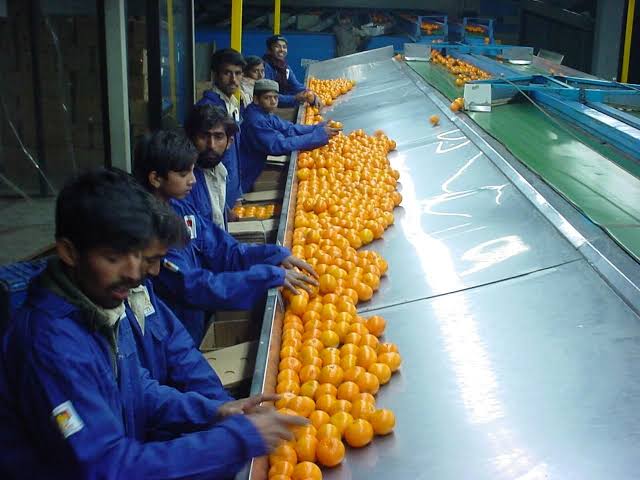
    ISLAMABAD: While the government has reopened the Pak-Afghan border at Torkham for a few days, horticulture exporters have urged the government to allow Kinnow exports to the neighboring country.

    In a letter to the Ministry of Interior (MoI), the All Pakistan Fruit & Vegetable Exporters, Importers and Merchants Association (PFVA) has requested the ministry concerned to allow the export of Kinnow to Afghanistan immediately.

    As the export of the perishable item has been halted after the lockdown in many importing countries, exporters wish to at least send the stranded consignments to Afghanistan.

    According to the letter, exporters can send over 800,000 cartons or 8,000 tonnes of Kinnow to Kabul while availing open border.

    “Keeping in view the sincere efforts of the prime minister to enhance exports of Pakistan to provide adequate financial support to our weak economy, we feel it’s the right time to promptly avail a unique opportunity during the time of the worldwide lockdown by exporting 800,000 cartons of Pakistani Kinnow to Afghanistan while the government has opened Torkham border for a few days on humanitarian ground,” said the letter.

    “We sincerely anticipate that our genuine and logical request keeping the national interest in view would be a favorable response,” PFVA said.

    Head of PFVA Waheed Ahmed says consignments of Kinnow could be exported to Afghanistan when all countries are allowing import of vegetables and fruits despite the lockdown and restrictions after the coronavirus pandemic.

    “We must at least continue exporting to Afghanistan and other neighboring countries.

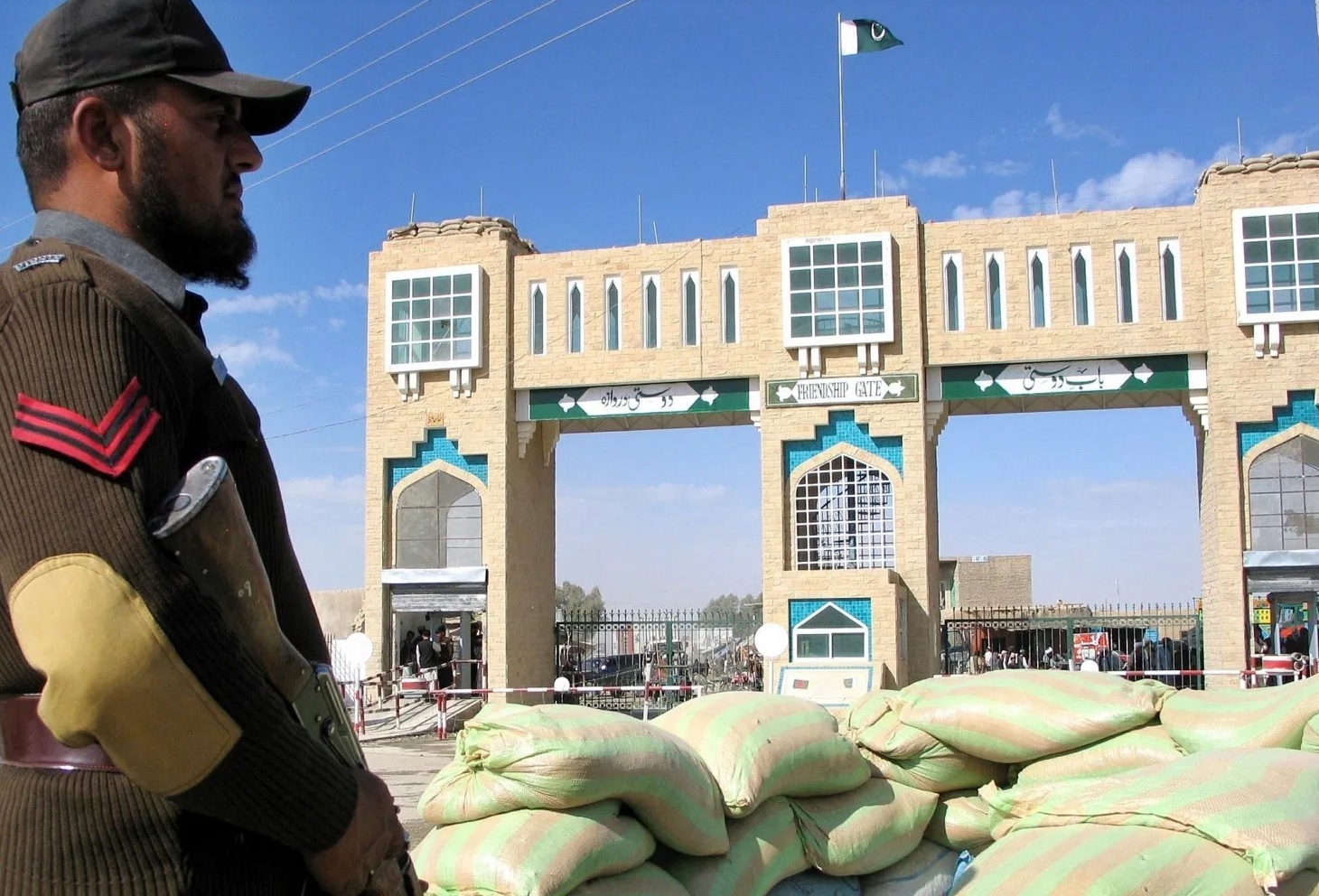
    Pakistan has opened the border on a request of the Afghan government to allow its nationals stranded at Chaman and Torkham borders. Hundreds of Pakistanis were also stuck in Spin Boldak and the other side of Torkham.

    Meanwhile, the association has also alerted all concerned ministries through a letter that the shipment of Kinnow worth $2.5 million has been stuck in Singapore as the Shipping Company- MSC- is not delivering the consignment on the given date.

    The company is further demanding $250,000 extra to take the fruit to destination of Philippine, which according to exporters is unfair, the letter states.

    Consignments departed from Karachi in the last week of February were scheduled to reach the Manila North Harbour Port in Philippines within two to three weeks, but they (consignments) have been still laying at the Transshipment Port for the last four to five weeks.

    As per the letter, exporters fear that since shipments are of fragile nature and this too much delay can compromise the quality of produce, the association requests the Ministry of Commerce (MoC) and others ministries concerned to take notice of the issue and resolve it early.

  • Global trade will plunge by up to a third in 2020 amid pandemic: WTO

    Global trade will plunge by up to a third in 2020 amid pandemic: WTO

    Global trade growth is expected to plummet by up to a third in 2020 due to the coronavirus pandemic, the World Trade Organisation said Wednesday, warning that the numbers would be “ugly”.

    “World trade is expected to fall by between 13 per cent and 32 per cent in 2020 as the COVID-19 pandemic disrupts normal economic activity and life around the world,” the WTO said in a statement.

    There were a wide range of possibilities for how trade would be hit by the “unprecedented” health crisis, it added.

    However, WTO chief Roberto Azevedo warned the downturn “may well be the deepest economic recession or downturn of our lifetimes”.

    In its main annual forecast, the 164-member WTO pointed out that trade had already been slowing in 2019, before the emergence of the novel coronavirus.

    But the virus has now infected some 1.4 million people since late last year, killing more than 80,000 and forcing governments across the world to take radical measures.

    More than half of humanity has been asked to stay at home and economic activity has ground to a virtual standstill in many places.

    Global trade, already hit by trade tensions and uncertainties around Brexit, is expected to register “double-digit declines in trade volumes” in nearly all regions this year, the WTO said.

    “This crisis is first and foremost a health crisis which has forced governments to take unprecedented measures to protect people’s lives,” Azevedo said in a statement.

    “The unavoidable declines in trade and output will have painful consequences for households and businesses, on top of the human suffering caused by the disease itself,” he said.

    – Dramatic downturn –

    Before the current crisis, trade tensions, uncertainty and slowing economic growth weighed on global merchandise trade, which registered a slight decline of 0.1 percent in 2019 after rising 2.9 percent a year earlier.

    The dollar value of world merchandise exports fell by three percent to $18.89 trillion, the WTO said.

    World commercial services trade fared better last year, with exports in dollar terms rising by two percent to $6.03 trillion, but the expansion was far slower than in 2018, when services trade increased by nine percent, said the WTO.

    But the situation has taken a dramatic turn since the new coronavirus first emerged in China late last year.

    The WTO said that while the global shock might invite comparisons to the financial crisis of 2008-2009, the situation now was worse.

    “Restrictions on movement and social distancing to slow the spread of the disease mean that labour supply, transport and travel are today directly affected in ways they were not during the financial crisis,” it said.

    “Whole sectors of national economies have been shut down, including hotels, restaurants, non-essential retail trade, tourism and significant shares of manufacturing.”

    Developments remained very uncertain, said the WTO.

    An optimistic outlook posits that a sharp drop in trade will be followed by a recovery starting in the second half of 2020, said the organisation.

    But the more pessimistic view is that the initial decline will be steeper and the recovery will be “prolonged and incomplete”.

    “Under both scenarios, all regions will suffer double-digit declines in exports and imports in 2020”, it said, adding that North America and Asia would be hardest hit.

  • LCCI seeks relaxation for small traders, shopkeepers

    LCCI seeks relaxation for small traders, shopkeepers

    Lahore: Lahore Chamber of Commerce and  Industry (LCCI) President Irfan Iqbal Sheikh has appealed to the government to give relaxation to small traders and shopkeepers.

    He urged the government to allow 9am to 5pm business in the markets.

    Talking to different delegations of traders, the LCCI president said that the government has taken a good step by allowing operations to the export-oriented industries but relief should also be given to the small traders and shopkeepers who are in deep trouble and facing severe financial crunch. 

    “These people are the backbone of the economy and playing a great role in providing employment and revenue”, the LCCI president said and added that allowing 5am to 9pm working hours would be a great favour that would enable them to face the challenges in the wake of coronavirus.

    The LCCI president said that if small traders and shopkeepers are not allowed to open their businesses, they will not be able to stand on their feet for long.

    Irfan Iqbal Sheikh informed the delegations the LCCI has already raised the issue at a high level and hope that soon the traders and vendors will get their businesses open with SOPs.

    Earlier, the delegations lauded the role of the LCCI for advocating the small traders and shopkeepers. They said that the economic downturn to the small traders is increasing due to prolonged lockdown and now they should be allowed to open their businesses from 9am to 5pm.