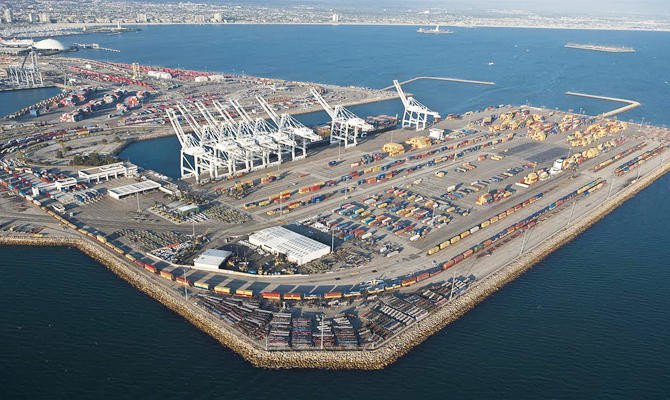
The official, who refused to be named, said that “the port holds great significance for India in its outreach to Afghanistan and central Asia.”
The official refused to comment when asked if the deal had been agreed to ease the pressure of sanctions from the US.
After the meeting in New Delhi, Akhoundi told reporters: “Now we are ready to hand over the port (Chabahar) to the Indian company to operate under an interim agreement.”
When the first phase of the port was inaugurated in December last year, it was hailed as the opening of a strategic route connecting Iran, India, and Afghanistan and bypassing Pakistan.
“Iran has been forced to woo its partners because of the trade sanctions by the US,” said Pranay Kotasthane, head of the geostrategic program at the Takshashila Institution, a Bangalore-based think tank.
He said that “this port is the key to fulfilling the goal of free and unfettered transport and transit linkages listed in India’s Strategic Partnership Agreement with Afghanistan.
“A pragmatic diplomatic approach is required to convince the US that if India is to take up greater responsibilities in Afghanistan, the US must not block Chabahar. We have long argued that Chabahar will be a game-changer for Afghanistan.”
Kotasthane said that the Chabhar port should not be viewed as a challenger to Gwadar port in Pakistan.
“Even China has welcomed this project, and Iran has invited Pakistan and China to join as well. So there is no reason to be overly sensitive to Pakistan’s outlook with regards to Chabahar,” he said.