Japan-South Korea trade spat threatens global tech market
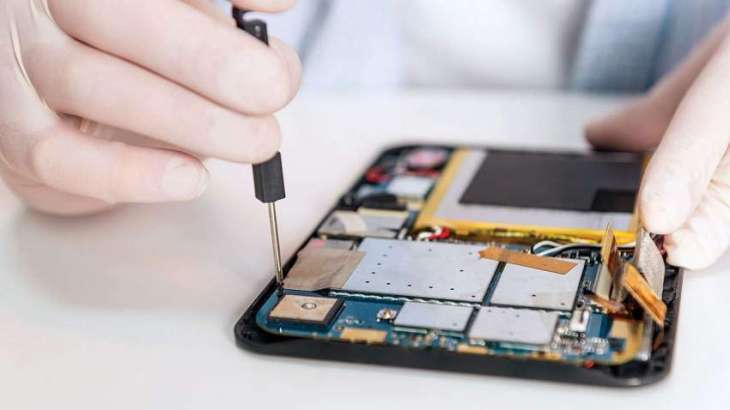
TOKYO: A simmering diplomatic row with Japan is threatening South Korea’s output of components that drive smartphones and computer displays, which analysts say could batter the global tech market and hike prices for consumers.
Tokyo last week said it would restrict exports
of three chemicals vital to South Korea’s world-leading chip and smartphone
industry in an escalation of a decades-long dispute over Japanese forced labour
during World War II.
And with the issue showing no sign of ending
any time soon, there are worries it could also delay the rollout of 5G
technology and futuristic folding screens.
“If this situation persists, there may be
reductions in production, which will drive up memory (chip) prices and
certainly drive up end-product prices in turn,” said Avril Wu, senior research
director at Taipei-based market intelligence firm TrendForce.
While South Korea holds stockpiles, shortages
could set in after three months, she told AFP.
South Korean President Moon Jae-in has called
the situation an “unprecedented emergency” and told business leaders to prepare
for a drawn-out crisis.
On Thursday, the country’s ruling party called
for an extra budget of 300 billion won ($250 million) to help local firms
survive the upheaval, more than double what the prime minister had asked for a
day earlier.
With Japan so far refusing to negotiate, the
news is bleak for top market players Samsung Electronics and SK Hynix.
The two firms supply tech titans Apple, Huawei
and Amazon, and together account for almost two-thirds of the world chip
market, according to the Hana Institute of Finance in Seoul.
EMERGENCY
SITUATION
“South Korea is the world leader when it comes
to chip-making, and Japan is the world leader in the manufacturing of the key
materials for chip-making,” said Ahn Ki-hyun, vice-president of the Korea
Semiconductor Industry Association.
“With this trade row, Japan and South Korea are
both losing the best partners. And neither of them will find good alternatives
for a very long time,” he added.
“Ultimately, this will bring a stagnation or
regression of the world’s most cutting-edge technology. The price of gadgets
may rise, as chips will likely be in short supply.”
Tech companies are already under pressure from
a weakening global outlook, while the chip sector is particularly suffering
from weak demand.
Japan’s new restrictions also apply to the
transfer of manufacturing technologies as well as the three chemicals, removing
them from a list that effectively allowed expedited shipments.
It means exporters will now have to apply for
permission for every batch they send to South Korea — a process that can take
up to 90 days each time.
Len Jelinek, executive director of
semiconductor research at IHS Markit, warned any reduction or elimination in
the availability of the materials would “significantly impede” production.
“Because of the volume of chemicals required
within the semiconductor manufacturing process, it is unlikely that the major
chip suppliers will be able to find suitable quantities from suppliers outside
of Japan,” he said.
Two of the chemicals targeted, hydrogen
fluoride gas and photoresists, are essential to making memory chips, while the
third chemical, fluorinated polyimide, is used for high-spec TV screens and
smartphone displays, including in hotly anticipated folding models.
Japan reportedly produces some 90 percent of
the world’s fluorinated polyimide, making it difficult for Korean companies to
find alternatives elsewhere.
A Samsung official told AFP the firm was
reviewing measures “to minimise further impact on our production” but declined
to comment further.
Another key manufacturer LG Display said it had
been testing fluorinated polyimide made in China and Taiwan to see if it can
replace Japanese supplies if needed.
DELAY TO
5G
End-products that could be affected by Tokyo’s
restrictions include Samsung’s Galaxy Fold — a top-end, foldable 5G smartphone
that its makers hope will revive a sector struggling for new innovations.
5G networks offer radically quicker transfers
of data and could enhance technologies such as autonomous driving, remote
medical diagnosis and mobile payments.
In April, South Korea became the first country
to launch nationwide 5G services, and in the same month Samsung rolled out its
Galaxy S10 5G, the world’s first available smartphone with the technology built
into it.
The smartphone giant has spent nearly eight
years developing the Fold, whose planned release earlier this year was delayed
because of screen problems.
But Park Jea-gun, an electronic engineering
professor at Hanyang University in Seoul, warned that if the trade row
continues it could impede such innovation.
“Reductions in chip production will slow
everything down — including internet-based businesses that seek to utilise 5G’s
significantly faster download speed, and solid 5G gadgets. And this will hurt
the world’s economy in the long run.”
Comments
No comments yet. Be the first to join the discussion!