February 27, 2024
CCI may approve Pakistan LPG Policy 2024

February 27, 2024
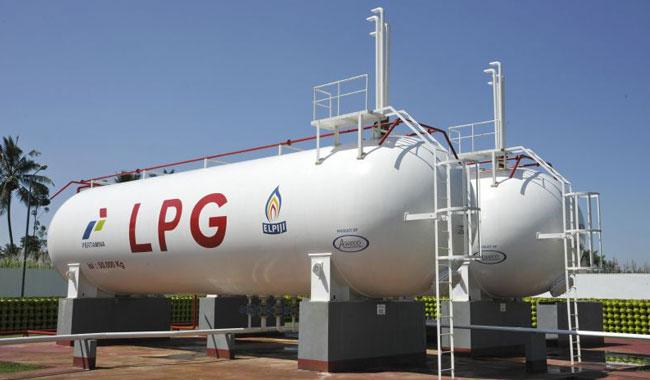
ISLAMABAD: In order to increase the share of Liquefied Petroleum Gas (LPG) in the overall energy mix as a replacement of natural gas, Pakistan LPG Policy 2024 has been formulated.
According to sources, the petroleum division has prepared a draft of new Pakistan LPG Policy 2024 which will be discussed in an important consultative session to be held on 27th February 2024. In this regard, Petroleum Division’s Directorate General of Liquefied Gases (DG LGs), in a letter dated 22nd February, 2024 to Managing Director (MD) PARCO, PRL and Chief Executive Officers (CEOs) of NRL, ARL and Cnergyico Ltd has shared draft Pakistan Liquefied Petroleum Gas (LPG) Policy 2024 and requested to attend the consultation session on draft Pakistan Liquefied Petroleum Gas (LPG) Policy 2024 which is scheduled on 27th February 2024. If the concerned stakeholders give a positive response to the draft Pakistan LPG Policy 2024, then this draft policy will be sent to Council of Common Interests (CCI) for further consideration and final approval, said sources.
It is relevant to note that by the year ending 2022, refineries produced total 203,407 Metric Ton (MT) of LPG as PARCO produced 172,437 metric ton of LPG, NRL 2,106 MT, PRL 15,648 MT, ARL 1,692 MT, BYCO 11,524 MT. Moreover, PPL produced 116,498 MT, OGDCL 294,619 MT and MOL produced 150,619 MT of LPG in 2022.
According to the draft policy, the declining domestic natural gas production, coupled with challenges in diverting expensive LNG/RLNG to the domestic sector, necessitates a strategic focus on LPG as a viable energy alternative. With more than 50% of LPG demand being met through imports by private and state-owned enterprises (SOEs), the policy aims to enhance domestic production while ensuring efficient import and distribution mechanisms.
The highlights of the LPG Policy 2024 include provisions for the production, disposal, marketing, and distribution of LPG. Producers are mandated to allocate a certain percentage of their production for specific purposes, including catering to remote areas and territories like AJK and GB. The policy emphasizes the deregulation of pricing regimes, enhancing market competitiveness, and preventing monopolistic practices within the LPG sector.
Furthermore, the policy outlines measures to enhance regulatory oversight, ensuring compliance with safety standards, quality control, and consumer protection. It calls for the establishment of a transparent licensing regime for LPG marketing companies (MCs) and distributors, coupled with stringent penalties for violations.
Importantly, the policy encourages digitization and modernization of the LPG sector, facilitating the integration and automation of supply chain data. This step aims to improve transparency, efficiency, and accountability across the entire LPG ecosystem.
Highlights of LPG Policy, 2024
Production of LPG:
E&P Companies, LNG Terminal Operators & utility companies shall assess and submit a report periodically to concerned regulator on commercially viable extraction/production of LPG.
Disposal of indigenous LPG by Producers:
All LPG producers will dedicate following percentage of their production without bidding process to;
- Up to 10% of their production to Suis (SNGPL & SSGCL) for their air mix plants and pre-qualified LPG Marketing Companies (MCs) for distribution in far-flung/hill areas
- 5% to pre-qualified LPG MCs for supplies in AJK and GB
- Remaining production to be marketed through its subsidiary(ies) or sale to any other pre-qualified MC(s) which are not allowed to resale it to any other MCs or their distributors
- LPG quantities to be disposed through competitive bidding under deregulated pricing regime.
- OGRA to develop a transparent pre-qualification criteria for auction of LPG on competitive basis, to be followed by all MCs.
- All producers shall pre-qualify Marketing & Distribution companies once a year
Marketing & Distribution:
Marketing Companies to obtain valid OGRA license and meet applicable terms and conditions for marketing of LPG
- OGRA to review its licensing regime within three months to specify minimum licensing requirements including investment, H&S standards, storage, cylinders, tankers/bowsers etc.
- MCs will be obligated to market their LPG quantities at their own and are not allowed to resale it to any other MCs or their distributors to avoid cartelization, windfall profits, impede competition and market distortion
- MCs to ensure that their distributors are marketing/selling LPG under their brand name only and MCs may register cases against violator under the applicable law
- LPG Sector’s SOEs (SNGPL, SSGCL, PSO, SSGC-LPG, Pearl Parco etc.) shall enhance their market footprint by increasing their retail networks/outlets
- MCs/ Distributors are allowed to sell their LPG at market price (i.e. deregulated pricing regime).
- Explosive Department shall develop strong inspection regimes of MCs and Distributors and feedback to OGRA
Marketing & Distribution:
OGRA shall take the following measures:
- Allow sale of LPG cylinders on petroleum filling stations subject to meeting safety requirements
- monitoring and ensure compliance for small cylinders safety standards and effective availability
- Register all the Distributors in the country within six (6) months. No sales shall be allowed by any un-registered Distributors
- Punitive actions against Distributors violating the rules (un-authorized and hazardous decanting)
Import and Export of LPG
- OGRA licensed MCs can import LPG as per LPG demand determined by Market.
- OGRA shall ensure quality of imported LPG from all sources. OGRA to review LPG specification within three months and develop effective enforcement.
- Export of surplus local LPG, if any, may be allowed by the Federal Government based on the recommendations of OGRA
Storage Facilities and Stocks of LPG
- OGRA shall review its existing licensing regime/terms within six (6) months to include clear investment requirements and other necessary conditions for marketing companies to meet minimum requirement of storage development, maintenance of stocks and cylinders commensurate to their sales volume
- OGRA shall ensure development of adequate storage facility and maintenance of stocks by every MC.
Digitization of LPG Sector
- OGRA shall develop and maintain web-based database of entire LPG sector - including production, import sales, import terminals, storage facilities, stocks and consumer price across the country, etc.
LPG Air-Mix Plants
- Due to substantial capital cost, recurring subsidies, and decision of the ECC dated 26th March 2020 to shelve the LPG Air Mix projects, Government will not commission any new LPG Air-Mix Plant (LPG AMP) in future except those which are near completion.
- Tariff for LPG AMP, which are already in operation or near completion, will be determined by the Federal Government from time to time in accordance with a framework of weighted average cost of gas (WACOG).
- The private sector will be free to set up LPG AMP on commercial considerations at their own costs and liabilities subject to OGRA’s licensing and without claim to LPG supply quota, otherwise available for LPG AMP developed and operated by Sui Companies.
- Tariff for LPG AMP, developed and operated by private sector, will be deregulated.
LPG Use in Auto Sector
- OGRA to develop & announce comprehensive LPG Auto Fuel Regulations for LPG use in three wheelers and public service vehicles/vans/buses.
- OGRA may give special permission to qualified fuel/ CNG stations to install LPG kits in autos subject to compliance to pre-defined safety regulations and inspection checks from HDIP or any other party authorized by OGRA.
Improvement in Regulatory Framework
- OGRA shall issue license for LPG regulated activities, 3 years provisional licence followed by operational licence for 15 years upon meeting the conditions.
- OGRA to conduct performance audit of existing non compliant MC within six months for validation, penalization or cancellation of licence.
- OGRA to update LPG specification, technical and safety standards of LPG supply chain.
- OGRA to publish a list of authorized manufacturers of LPG equipment including storage tanks, bottling plants, cylinders etc. duly approved by HDIP or any other 3rd party.
- MCs shall provide certificates duly mentioning the serial number of their cylinders to OGRA before 31st December of each year confirming that the cylinders have been properly tested as per standards set by OGRA.
- OGRA to settle disputes between its licensees and users/parties relating to commercial/ regulated activities, protect consumers rights – shortage, price hike, anti-hoarding, anti-cartelization etc.
- OGRA to ensure safety standards, control un-authorized decanting
- OGRA to take action against violators of its rule, regulations and licence conditions
- Governance LPG Policy 2024
Demarcation of Functions Between Policy Maker and the Regulator
- The role of Petroleum Division shall be limited to policy making.
- OGRA shall play its effective regulatory role and take necessary measures as deemed appropriate in line with this Policy and OGRA Ordinance.
- OGRA shall make and/or amend its ordinance, rules, and regulations, wherever necessary to implement this policy
- OGRA’s decisions shall be subject to appellate review
- An appropriate “Appellate Tribunal” shall be established to enable the aggrieved party(ies) to challenge the actions and decisions of the regulator
Salient Features of Draft LPG Policy, 2024
- Enhance Domestic LPG Production: 10-year tax holiday for new LPG production, Zero Petroleum Levy, 5% GST instead of 18%.
- Enhance Infrastructure and Stocks: Zero import duties and taxes on imported plants/machineries/equipment’s as per SRO. 678(I)/2004-FBR.
- Market Liberalization and Competitiveness: Deregulation of LPG Pricing
- Enhanced supply of low cost imported LPG: Zero Advance Income Tax instead of 5.5%, Reduced GST from 10% to 5 % which will be gradually reduced annually 1% to 0%
- Making SOEs Competitive: SOEs will be facilitated for Partial exemption from PPRA Rules, 2004
- Improving Governance: Improving safety, quality of the product and equipment.
- Digitization: Digitization, Integration and automation of LPG supply chain data.
It is pertinent to mention that the domestic natural gas production is declining @ 8-10% per annum, and diverting expensive LNG/RLNG to domestic sector is not a viable option due to involved subsidies, circular debt and huge receivables etc.
LPG is a cash product, more than 50% of demand is being met through imports by private MCs and SOEs. No Govt. subsidy/cross subsidy is involved in LPG supply chain and no circular debt issues are associated therewith even involvement of SOEs. LPG accounts for 1-1.5% of total primary energy supply. OGRA licensed companies are 280 and 12,000 distributors. LPG consumption is increasing at a CIGAR of 7.5percent in last five years. Demand surge in winters due to NG shortages. Punjab is the highest consumer with 60%, followed by Sindh and Balochistan (15%) and KPK, Northern Areas & AJK with 25%.
The author is a an investigative journalist at Profit. He can be reached at [email protected].
View all articles →6 Comments
No comments yet. Be the first to join the discussion!