
February 26, 2026
REEV or BEV? why one customs code has become Pakistan’s next auto fight
A dispute over range-extended electric vehicles dictates who gets to define what counts as an electric future in Pakistan

February 26, 2026
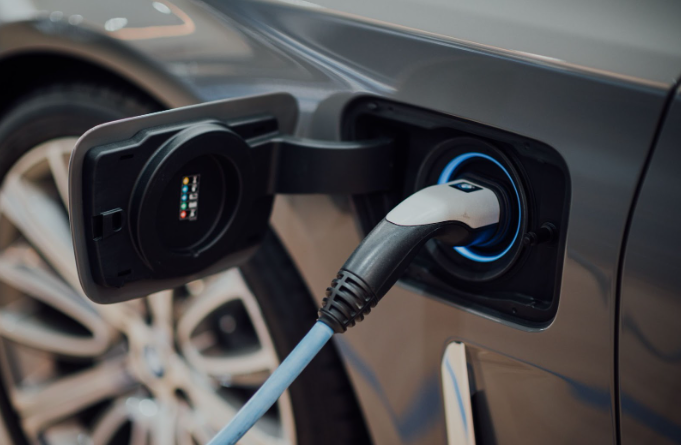
At the first glance, this dispute looks like a technical customs matter. A committee classified range-extended electric vehicles, or REEVs, in the same tariff category as battery electric vehicles, or BEVs, upon which local assemblers objected.
Even the Pakistan Automotive Manufacturers Association, or PAMA got involved and wrote to the Federal Board of Revenue, or FBR, arguing that this is the wrong category and that it could distort the market.
But behind these simple abbreviations and categories lies a deeper fight over taxes, incentives, local assembly, and what the state wants the next generation of vehicles in Pakistan to look like.
To understand why the dispute matters, it is important to decode the alphabet soup first.
A BEV, or battery electric vehicle, runs entirely on electricity stored in a battery and uses only electric motor propulsion. There is no petrol engine, no diesel engine, no tailpipe emissions when the vehicle is operating.
Pakistan’s older Electric Vehicle Policy from 2019 was written around this cleaner idea of electrification: less oil use, lower emissions, and more reliance on electricity instead of imported fuel. The policy framed EVs as a way to reduce Pakistan’s oil import bill, use idle grid capacity, and cut emissions.
A PHEV, or plug-in hybrid electric vehicle, has both a battery and an internal combustion engine, or ICE. It can run on electricity for a limited distance, but it can also switch to fuel-powered driving. Pakistan’s draft New Energy Vehicles Policy for 2025-30 recognizes PHEVs as part of the broader “NEV” universe for some vehicle segments, provided they can travel at least 50 kilometres in pure electric mode on a single charge with zero tailpipe emissions during that electric run.
A REEV, or range-extended electric vehicle, sits awkwardly between those two categories. Like a BEV, it is propelled by an electric motor. But like a hybrid, it also carries an internal combustion engine. The difference is functional: in a REEV, that engine does not directly turn the wheels. It acts as a generator, charging the battery or sustaining the electric system when the battery runs low.
In other words, the engine is on board, but it is not supposed to be the thing that is mechanically driving the car. That distinction is exactly what customs authorities seized on. Pakistan Customs said that under the current HS 2022 structure, classification is based on propulsion. Since a REEV is propelled exclusively by electric motor(s), the WCO-backed view is that it falls under subheading 8703.80 for now. And that makes sense for the most part because after all, it is in fact the electric motor that is driving the car.
But this is where the customs dispute begins to matter financially.
When the Customs Classification Committee placed REEVs under HS Code 8703.8090, the tariff line used for electric four-wheelers, it essentially gave it a discount.
Under Pakistan’s concessionary regime for EV imports, that category has enjoyed lower customs treatment. The Board of Investment’s summary of the concession shows that electric four-wheelers under 8703.8090 were allowed at 10% customs duty until June 2022 and then at 25% customs duty from July 2022 through June 2026. It has been reported that this is the same 25% duty bracket at the centre of the current dispute.
PAMA’s objection is that REEVs should instead be treated like hybrids, the HEV kind. It says the relevant line is HS Code 8703.6023, a hybrid category carrying a 50% duty in this case.
Its argument is straightforward, if a vehicle contains an internal combustion engine, even if that engine is “only” a generator, then it is not a pure electric vehicle and should not receive the same treatment as a BEV. PAMA has framed the issue as one of misdeclaration under the Customs Act, saying the importer declared the vehicle as 8703.8090 while the exporter in China classified it under the hybrid code.
Why the assemblers don’t like the new classification
The reason PAMA feels so strongly about this “misdeclaration” is because the difference is not just semantic. It is a duty gap large enough to alter the economics of importing a vehicle into Pakistan.
If REEVs are allowed under the BEV tariff line, importers get access to a lower-duty channel intended for electric vehicles. That makes these cars cheaper to bring in and potentially cheaper to sell. Giving competition to the assemblers’ by cutting their margins.
Pakistan’s 2019 EV policy was built on the logic of reducing fuel imports and emissions, while encouraging adoption of vehicles that run on battery power. It estimated large annual savings from EV penetration through lower fuel use, lower maintenance, reduced emissions, and additional charging revenue. But that policy was written in a period when the country’s official EV imagination was more straightforward. When electric meant battery-driven and no other complication was part of the array.
A REEV complicates that idea because it still carries a fuel tank, still carries an engine, and still has emissions once its generator comes into play. In the view of assemblers, extending BEV-style incentives to REEVs stretches the meaning of “electric” too far.
There is also another case to be made for REEVs. The lower tariff structure, under the earlier NEV policy was also put in place to reduce emissions, and vehicles causing emissions. The new classification bypasses that, by enjoying the tariff structure of an EV, while being a vehicle that produces carbon emissions.
The Customs’ side
Yet customs authorities are not making an environmental argument. They are making a classification argument.
Pakistan Customs’ public notice says the issue was taken to the World Customs Organization process and that, under the existing HS 2022 framework, REEVs are classifiable under 8703.80 because propulsion is effected exclusively by electric motor(s).
The notice also records that hybrid vehicles under headings 8703.40 to 8703.70 are understood as those where the engine contributes to propulsion, whereas REEVs do not fit that mechanical structure. The notice further says the WCO process has already prospectively addressed the distinction through a new dedicated subheading, 8703.81, in the HS 2028 amendment package, but that classification remains unchanged until HS 2028 takes effect on January 1, 2028, unless a domestic subheading is created earlier.
That last point is crucial. Customs is effectively saying that under the current tariff language, this is the closest fit; if policymakers want a different outcome, they must change the domestic framework or wait for the new global code architecture in 2028. That shifts the fight from customs interpretation to the policy maker and in general the fiscal policy.
And that is where the stakes are really high.
The fiscal policy argument
Pakistan’s draft NEV Policy 2025-30 shows that the government’s thinking is already evolving beyond BEVs. The draft explicitly says the policy covers BEVs, PHEVs, REEVs and fuel-cell electric vehicles as part of a broader “NEV” umbrella.
For four-wheelers and larger segments, it already accepts PHEVs that meet a 50-kilometre pure electric threshold. That means the state is moving away from the narrower 2019 framework and toward a more layered idea of electrified mobility. But the draft does not automatically answer the customs question. A vehicle can be technologically part of the NEV transition and still be taxed differently depending on what the fiscal authorities want to encourage.
For assemblers, that distinction matters because Pakistan’s local industry runs on a fragile policy bargain. Completely built-up imports, or CBUs, are fully assembled vehicles imported ready to sell. Completely knocked-down kits, or CKDs, are disassembled kits brought in for local assembly. Pakistan’s auto industry has long depended on giving some degree of tariff advantage and policy support to local assembly over ready-made imports. The EV regime did the same by offering concessional treatment to specific categories of electric vehicles and EV assembly.
The older EV recommendations included low duties on EV-specific CKD parts and lower-duty CBU channels for EVs for a specified period. If REEVs can enter through the lower-duty BEV route, assemblers worry that importers may use that channel to bring in cars that are not truly zero-emission while undercutting local assembly economics across BEV, hybrid, plug-in hybrid, and even conventional segments. That worry is not entirely self-interested. It also reflects a real policy dilemma.
A REEV can be seen in two opposite ways. One view is that it is a practical bridge technology for markets where charging infrastructure is weak. In a country like Pakistan, where charging networks are still nascent and range anxiety is real, a REEV offers electric driving without the fear of being stranded. The other view is that a REEV is precisely the kind of compromise technology that can dilute the shift to genuinely zero-emission transport by allowing fossil-fuel dependence to survive under an electric badge.
Pakistan’s own policy environment captures that tension. The Engineering Development Board is currently running implementation work under the NEV framework, including the Pakistan Accelerated Vehicle Electrification programme for FY2025-26, while the country is also debating its next broader auto policy for 2026-31. That means the classification dispute lands at exactly the wrong (or right) time, depending on your side, just as the state is deciding what it wants to protect, subsidize, and define as the future of mobility.
Not just whether one importer pays 25% duty or 50%. The bigger issue is whether Pakistan wants to classify vehicles by how they mechanically move, by how they emit, or by what kind of industrial ecosystem it wants to create.
Customs has chosen propulsion under the current HS language. Assemblers are arguing for a stricter industrial and environmental reading. The government, eventually, will have to decide whether incentives meant for electric vehicles should follow engineering logic, fiscal logic, climate logic, or domestic-manufacturing logic.
That is why this argument matters. In a functioning industrial policy, abbreviations are architecture. And in Pakistan’s auto sector, the difference between a BEV and a REEV is quickly becoming the difference between a lower-duty import, a higher-duty one, and a much larger argument about what the country is really trying to build.
4 Comments
No comments yet. Be the first to join the discussion!


