March 17, 2026
Pakistan factory output grows 5.75% in eight months, January output jumps over 10% YoY
Automobiles, garments, petroleum and cement drive industrial expansion as QIM hits 144 in January

March 17, 2026
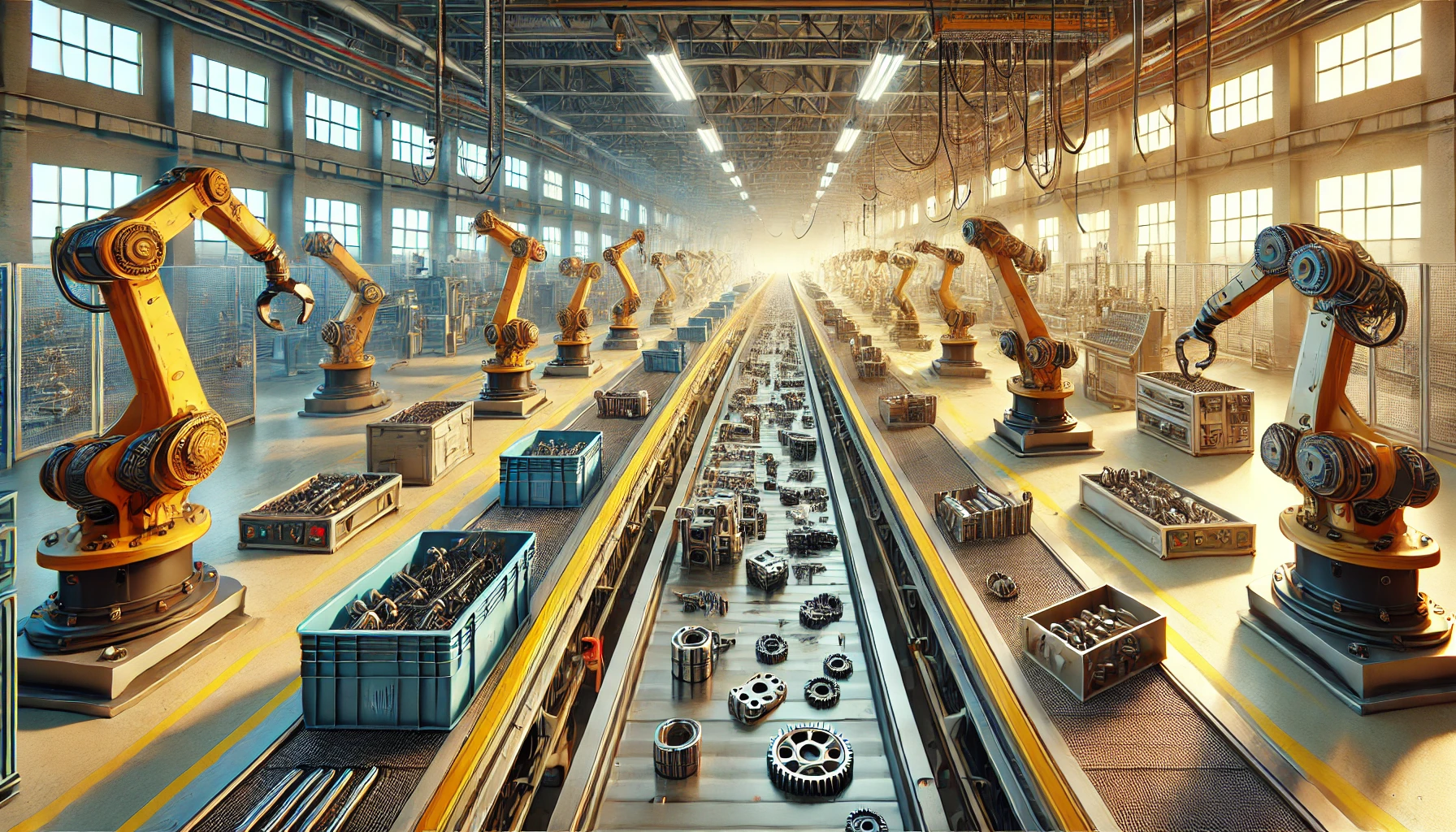
Pakistan’s Large Scale Manufacturing Industries (LSMI) recorded a growth of 5.75% during July–January FY2025-26, with output accelerating sharply in January 2026 as the Quantum Index of Manufacturing (QIM) rose to 144.00, marking a 10.54% increase year-on-year and a 12.08% rise compared to December 2025.
The cumulative QIM for July–January FY2025-26 stood at 121.46, compared to 114.85 in the same period last year, reflecting broad-based recovery across key manufacturing segments.
On a monthly basis, industrial output showed strong momentum, with January’s index significantly higher than 130.27 recorded in January 2025 and 128.48 in December 2025.
Sector-wise data indicates that automobiles emerged as the strongest-performing segment, posting a 67.31% increase in January and 67.38% growth over the July–January period.
Garments also showed notable expansion, rising 10.82% in January and 8.02% cumulatively, while cement output increased by 10.83% during the month and 11.49% over the seven-month period.
Petroleum products recorded a 2.36% increase in January and a stronger 11.71% growth over July–January, indicating sustained demand in the energy sector.
Other sectors that contributed to growth included sugar, which rose 24.25% in January and 6.95% cumulatively, as well as cotton yarn and cotton cloth, which posted modest gains of 1.59% and 0.14% respectively for January.
In contrast, fertilisers declined by 1.09% in January and 1.26% over the cumulative period, while iron and steel output contracted by 8.87% in January and 5.10% during July–January.
The overall 5.75% growth in LSMI was supported primarily by garments (1.34 percentage points), automobiles (1.61 points), petroleum products (0.85 points), cement (0.64 points), and food (0.58 points).
Additional contributions came from tobacco (0.16 points), textiles (0.28 points), electrical equipment (0.25 points), other transport equipment (0.24 points), and furniture (0.18 points).
However, several sectors exerted downward pressure on overall growth. Pharmaceuticals reduced growth by 0.29 percentage points, iron and steel by 0.22 points, chemicals by 0.11 points, machinery and equipment by 0.07 points, and paper and board by 0.04 points.
Detailed sectoral trends show that food production increased by 3.28% during July–January, while beverages rose 5.54% and tobacco expanded by 10.71%.
Textiles recorded 1.65% growth over the cumulative period, while wearing apparel rose 8.02%, indicating relatively stronger performance in value-added segments.
Non-metallic mineral products, which include cement, grew by 10.44%, while electrical equipment increased by 9.97%, reflecting improved industrial demand.
Automobile manufacturing remained a key driver, supported by a 67.38% rise during the July–January period, alongside a 40.59% increase in other transport equipment.
Furniture output also expanded by 13.05% cumulatively, while other manufacturing, including football production, rose by 24.99%.
On the declining side, leather products contracted by 1.02% during July–January, while wood products fell by 1.42%.
Chemical products posted a 1.52% decline, fertilizers dropped by 1.26%, and pharmaceuticals recorded a sharper contraction of 4.82% over the period.
Iron and steel products declined by 5.10%, while machinery and equipment recorded the steepest contraction at 18.83% during July–January FY2025-26.
0 Comments
No comments yet. Be the first to join the discussion!