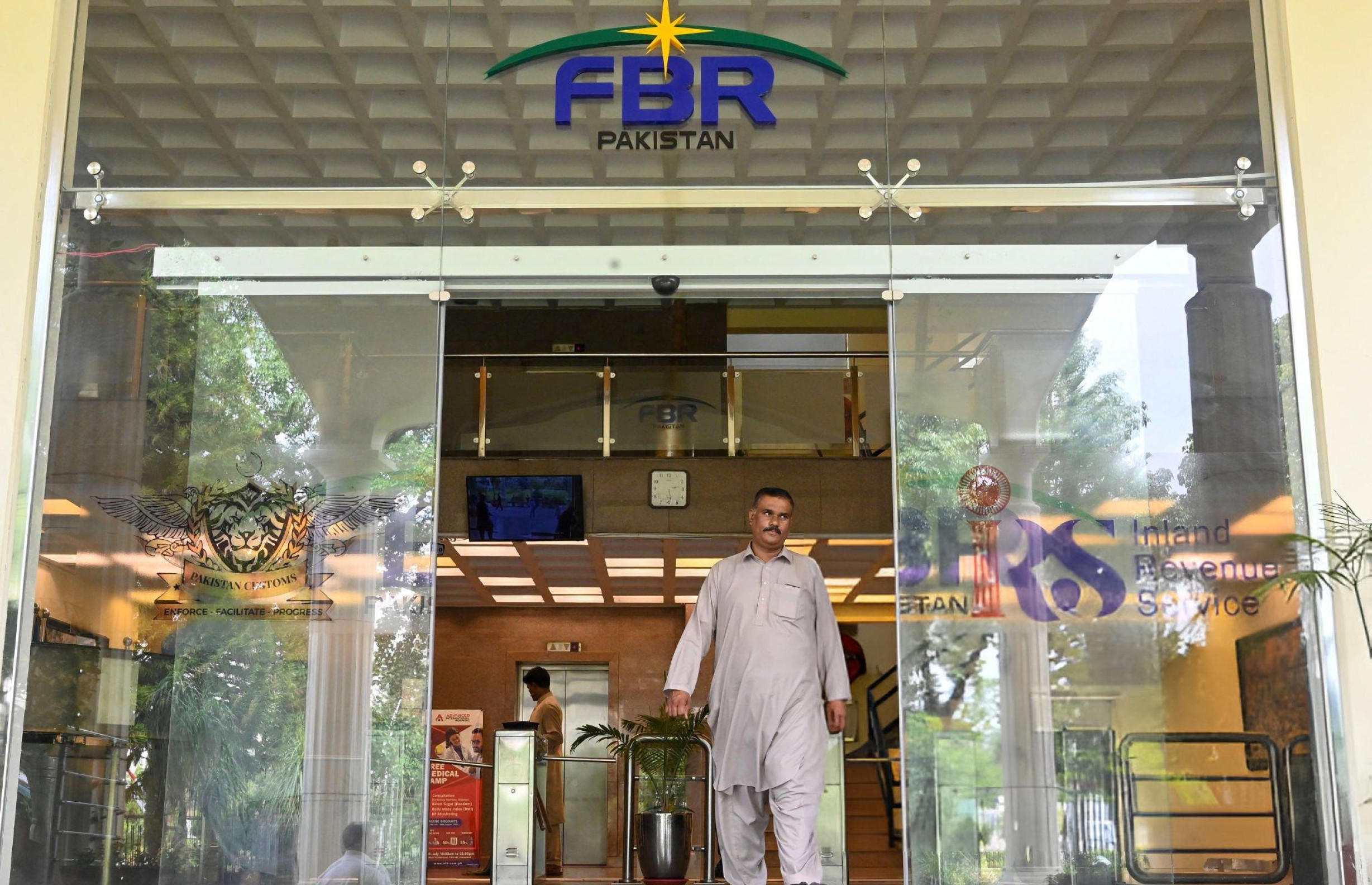
National Faceless Centre approved as government moves to curb tax officials’ discretionary powers
Finance Minister Aurangzeb says new system will reduce human intervention in tax administration; FBR expects faceless audits, digital monitoring and automated case allocation to cut corruption and collusion


The Senate Standing Committee on Finance on Sunday approved a proposal to establish a National Faceless Centre, as the government moved ahead with plans to reduce the discretionary powers of tax officials and digitise tax administration.
Reviewing the Finance Bill 2026 at Parliament House, Finance Minister Muhammad Aurangzeb told the committee that the proposed faceless system would help eliminate collusion and corrupt practices within the tax machinery by reducing direct interaction between taxpayers and Federal Board of Revenue (FBR) officials.
“Our effort is to minimise human intervention,” the finance minister said, adding that powers were being restructured to improve transparency and efficiency.
Under the proposed framework, taxpayer cases will be assigned automatically through algorithms, while audits and assessments will be conducted electronically. Officials said the system would significantly reduce face-to-face interaction between taxpayers and tax officers.
FBR Member (Strategic Transformation) Dr Hamid Ateeq Sarwar told the committee that audit, assessment and adjudication functions would be separated to prevent a single official from exercising multiple powers over the same taxpayer.
Under the new mechanism, an officer conducting an audit would not be allowed to assess the same taxpayer, while final orders would be issued by a separate official.
He said the chances of corruption could decline by as much as 75% once the faceless system is fully implemented.
The Finance Bill also proposes the creation of the Directorate General (Field Compliance), Inland Revenue, which will be responsible for addressing digital compliance issues in the field.
According to Dr Sarwar, the directorate's officials will focus on monitoring production cameras, Point-of-Sale (POS) systems and Digital Eye installations at manufacturing facilities. They will also respond to technical issues involving connectivity, cameras and integration systems.
He said FBR currently has Inland Revenue officials deployed at 84 sugar mills and cement factories, a practice the authority intends to phase out through digital monitoring systems.
“We want to remove tax officials from cement and sugar factories,” he said.
Officials of the new directorate will use body cameras during inspections, with all interactions recorded to minimise opportunities for harassment and collusion.
Dr Sarwar said the proposed system would effectively handle enforcement functions currently performed by around 500 Inland Revenue officials in field formations.
He added that taxpayer cases could be handled across jurisdictions, meaning a Karachi-based taxpayer could be audited by an officer in Lahore and vice versa.
FBR officials informed the committee that orders issued through the National Faceless Centre would not be challengeable on jurisdictional grounds. However, physical verification of businesses, assets and investments would continue where required.
The committee members raised questions regarding implementation.
Senator Sherry Rehman expressed concern over internet connectivity issues and their impact on taxpayers, noting that disruptions could create difficulties for businesses relying on digital systems.
She cited a recent visit to a shop in Islamabad where the POS system was not functioning because of internet problems.
Senator Talha Mahmood questioned the shift from traditional enforcement mechanisms, while Senator Saleem Mandviwala asked how field enforcement requirements would be managed under a faceless system.
Responding to these concerns, Aurangzeb said digitalisation did not mean the complete elimination of human involvement.
Referring to his banking experience, he said automated systems could generate reports, but analysis and decision-making would still require human oversight.
The finance minister also noted that the planned rollout of 5G services was expected to improve internet connectivity and support the government's broader digitalisation agenda.
During the meeting, FBR officials disclosed that approximately 1,000 business units had been sealed over the past year as part of enforcement actions.
Following detailed deliberations, the Senate Standing Committee on Finance approved the proposal to establish the National Faceless Centre.
Comments
No comments yet. Be the first to join the discussion!