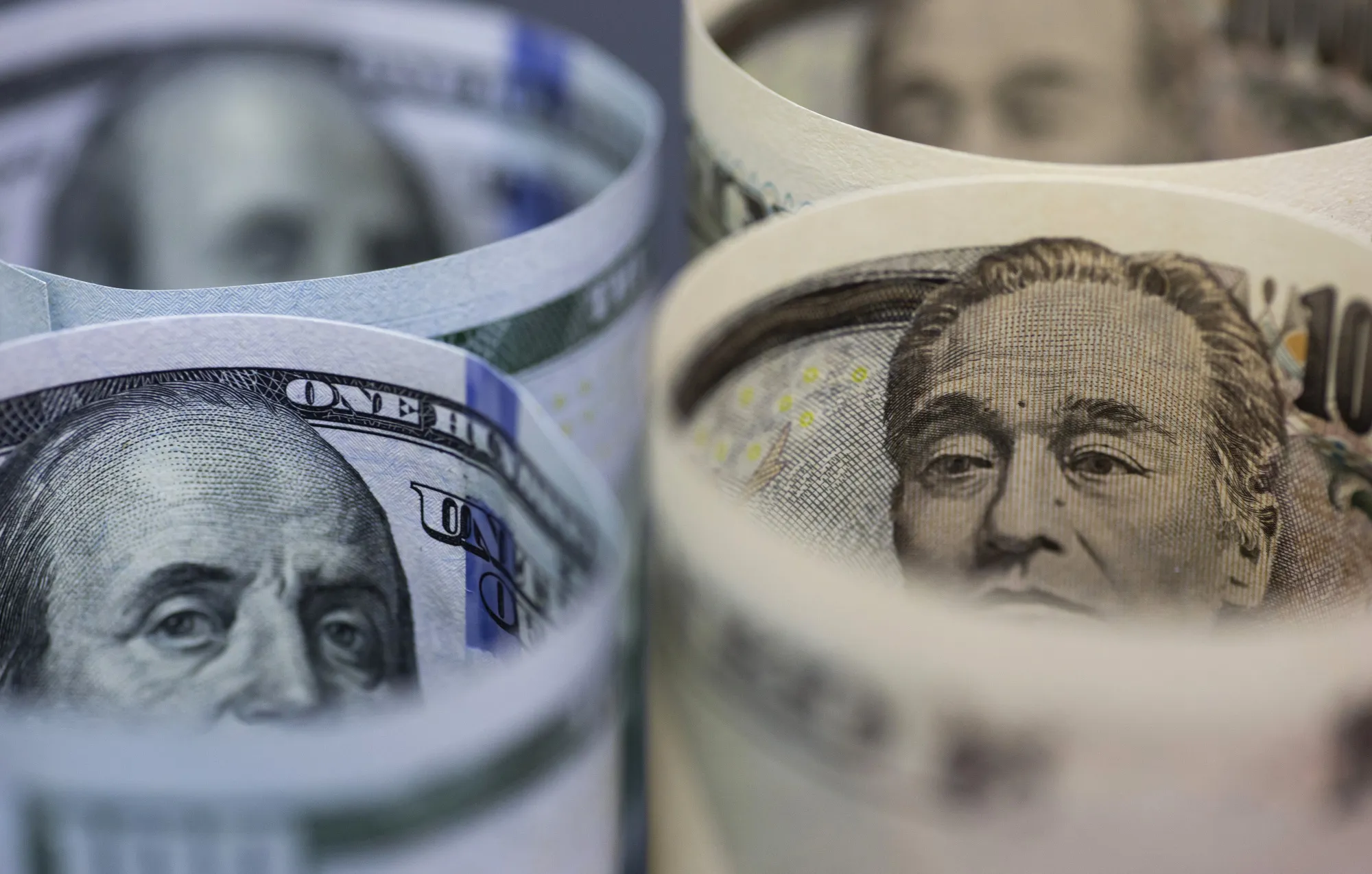
Yen strengthens as Japan pushes pension funds towards domestic assets
Currency rises 0.6% against the dollar as proposed investment shift raises prospects of stronger inflows into Japanese markets


SINGAPORE: The yen rose on Friday after Japan said it was considering measures to encourage pension funds to increase investments in domestic financial assets, raising expectations of stronger demand for the currency.
Japanese Finance Minister Satsuki Katayama said the government was pursuing steps that would include substantially higher investment in Japanese assets by the Government Pension Investment Fund, one of the world’s largest pension funds.
The yen gained 0.6% to 161.44 against the dollar following the announcement. It had previously been trading near 40-year lows, keeping markets alert to possible intervention by Japanese authorities.
The currency also strengthened against other major peers. The euro fell 0.34% to 184.93 yen, while the British pound declined 0.27% to 217.06 yen.
Fabien Yip, market analyst at IG, said a change in pension fund allocations could generate significant inflows into yen-denominated assets because about 50% of the funds’ strategic allocation is currently invested overseas.
He said the move could support the yen over the longer term while also benefiting Japanese equities and bonds.
The dollar weakened as the yen advanced, falling 0.3% against a basket of currencies to 100.61.
Elsewhere, currency markets remained cautious as renewed tensions in the United States-Israeli war on Iran raised concerns over energy prices and global inflation.
Investors had initially appeared to look past the renewed conflict as oil prices declined and equities advanced, but the collapse of a ceasefire between the United States and Iran added uncertainty to the outlook.
Thierry Wizman, global foreign exchange and rates strategist at Macquarie Group, said markets were assessing whether Iran could return to a wider conflict with the United States and its allies in an effort to reinforce its position over the Strait of Hormuz.
The dollar was on course to end the week largely unchanged, as safe-haven demand was offset by weaker expectations of an interest rate increase by the Federal Reserve.
The euro gained 0.25% to $1.1459, while sterling rose 0.3% to $1.3451 and was set for a weekly increase of more than 0.7%.
The Australian dollar advanced 0.27% to $0.6960, while the New Zealand dollar climbed 0.58% to $0.5789.
The New Zealand dollar was heading for a weekly gain of more than 1.4% after the Reserve Bank of New Zealand raised interest rates and indicated that further tightening could follow.
Westpac expects the central bank to increase rates by 25 basis points in September and December, with the cash rate projected to peak at 4% in September 2027.
Kelly Eckhold, Westpac’s chief economist, said the timing of future rate increases remained uncertain and that a September 2026 move was not guaranteed.
Comments
No comments yet. Be the first to join the discussion!