FBR proposes three-wing tax model to curb collusion and close compliance gap
PRAL data shows 8,697 people hold Rs750 billion in deposits despite reporting no income, while 98.9% of major depositors understate bank flows
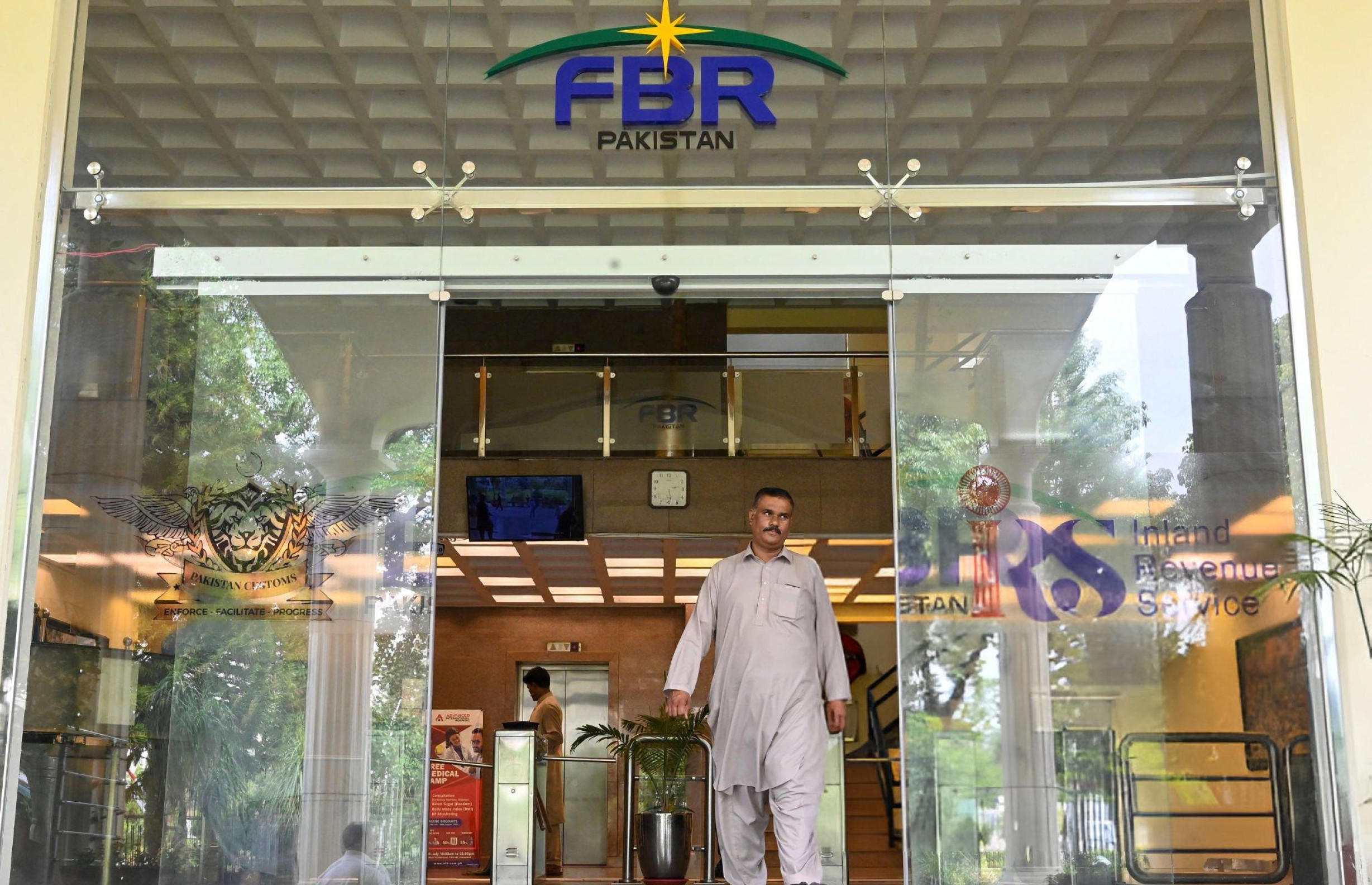
The federal government has proposed dividing Federal Board of Revenue’s Inland Revenue Service into three separate wings for audit, assessment and field enforcement as part of a phased tax administration overhaul aimed at addressing Pakistan’s tax compliance gap and reducing opportunities for collusion, The News reported.
The proposed operating model would be implemented over a period of more than three years and is aligned with Organisation for Economic Co-operation and Development’s Tax Administration 3.0 framework.
According to official documents, the existing system allows the same officer to exercise audit, assessment and enforcement powers over a taxpayer, leaving no structural separation between the three functions.
The proposed model would permanently divide these responsibilities among three independent wings with separate statutory powers and non-overlapping jurisdictions.
The government developed the framework after studying tax administration systems used by India, Australia, Singapore, the United Kingdom, the Netherlands, the World Bank and OECD members.
Pakistan Revenue Automation Limited data cited in the diagnostic report showed that 8,697 individuals with combined bank deposits of Rs750 billion had declared zero income. It also found that 98.9% of around 359,000 individuals holding bank deposits exceeding Rs10 million had reported income below their actual banking flows.
Around 80% of individuals included among the top 5% of property purchasers by value were already registered taxpayers but had materially understated their income or assets, according to the documents.
Three-wing structure
Under the proposed arrangement, a National Faceless Audit Wing would conduct all risk-based audits through centralised, digital and anonymous proceedings. Audit cases would be assigned through algorithms, with the identity of the officer remaining undisclosed to the taxpayer throughout the process.
The wing would also monitor withholding and advance tax payments through the Central Data Hub and prepare reports based on desk-based or detailed audits.
However, it would not have the authority to issue tax demands or recover outstanding amounts.
A separate National Assessment Wing would exercise quasi-judicial powers, including issuing formal assessment orders and show-cause notices, processing exemptions and sanctioning refunds.
The assessment wing would neither conduct audits nor undertake field enforcement.
A Field Operations Wing would execute confirmed tax demands, prosecute cases, register taxpayers, expand the tax base and conduct physical verification and field operations.
It would also collect economic intelligence and transmit the information to the Central Data Hub.
Field officers would not be allowed to assess cases, adjudicate disputes or modify confirmed tax demands. Verification assignments would be allocated through algorithms to limit repeated contact between taxpayers and individual officers.
Revenue measures
The plan identifies eight separate revenue pathways, of which the first three are either being piloted or are close to launch.
During fiscal year 2026-27, rules-based systems would compare property, vehicle and banking data with tax declarations to identify under-reporting among existing taxpayers.
Economic transaction blocks would require filers and non-filers to settle their tax position before completing certain property and vehicle transactions.
A Sales Tax Compliance System would compare digital invoices with monthly sales tax returns to identify ghost buyers, under-reporting businesses and sellers that disappear from the tax system.
Its initial rollout would be limited to sectors where integration between the Central Data Hub and Risk Engine is more developed.
Within two years, FBR plans to establish a dedicated High Net-Worth Individuals Cell using wealth profiles generated through the Central Data Hub.
Information on utility consumption, travel, lifestyle and field intelligence would also be used to identify remaining non-filers.
Digital platforms
The operating model would be supported by the Central Data Hub and IRIS 3.0, both being developed by Pakistan Revenue Automation Limited.
The Central Data Hub would combine income, wealth, banking, property, vehicle and other third-party information linked to each taxpayer’s computerised national identity card or national tax number.
Data would be obtained from National Database and Registration Authority, State Bank of Pakistan, Securities and Exchange Commission of Pakistan and other prescribed sources.
IRIS 3.0, being co-designed with EY, would serve as the next-generation case management and workflow platform.
All proceedings under the faceless system would begin through either a Central Data Hub or Risk Engine alert, or a direct action initiated by the taxpayer, removing officers’ discretion to select cases.
Separate artificial intelligence-enabled risk engines would be established for income tax and sales tax and federal excise duty regimes.
The system would also support pre-filled tax returns, automated registration through transaction alerts, digital invoicing, digital payments and taxpayer communication through SMS, email and WhatsApp.
Taxpayers would receive access to a real-time self-service dashboard, while Field Operations Wing offices would continue to provide in-person services.
Tax rules would be converted into executable business rules for risk-based case selection, while an artificial intelligence quality agent would review 100% of draft audit reports.
National Faceless Audit Wing officers would receive sector-specific training, while National Assessment Wing staff would be trained in quasi-judicial procedures.
Field Operations Wing officers would focus on enforcement, verification and economic intelligence.
The model would require legislative amendments to establish the three-wing structure and its restrictions in law.
According to the proposed model, separating officer identities and making audit, assessment and enforcement functions mutually exclusive would serve as the central mechanism for limiting collusion in Pakistan’s tax administration.

Our monitoring team diligently searches the vast expanse of the web to carefully handpick and distill top-tier business and economic news stories and articles, presenting them to you in a concise and informative manner.
View all articles →Comments
No comments yet. Be the first to join the discussion!