NA committee objects to mango export delay to June 1, flags impact on early crops
Standing Committee on National Food Security flags potato crisis, says farmers forced to sell below cost; warns losses may hit cultivation, food security
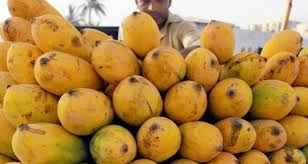
The National Assembly Standing Committee on National Food Security and Research expressed dissatisfaction over the Ministry of Commerce’s decision to extend the start of Pakistan’s mango export season to June 1, 2026, from the earlier May 10 deadline.
The NA Standing Committee on National Food Security met on Thursday under the chairmanship of Syed Tariq Hussain and discussed matters related to the development of the agriculture sector in the country.
The committee noted the adverse impact of the Ministry of Commerce’s move on early mango varieties such as Dussehri and Sonaro, which are ready for harvest and export during this period, potentially causing financial losses to growers and exporters. It directed that the Commerce Secretary attend the next meeting in person to enable on-the-spot decision-making.
On a point of order regarding the potato crop crisis, the committee expressed concern that, despite its timely intervention, the ministry failed to implement necessary measures to protect farmers, who were compelled to sell their produce below production cost, resulting in financial losses.
The committee cautioned that such persistent losses could discourage potato cultivation in the near future, posing risks to agricultural sustainability and food security.
It further noted that the ministry had been directed three months earlier to take immediate actions, including exploring new trade opportunities, identifying alternative export routes, facilitating multiple-entry visas for exporters, and improving transportation and logistics; however, no meaningful progress has been observed.
In view of this, the committee directed the ministry to convene an urgent meeting on Monday at the Foreign Office with the Ministry of Foreign Affairs and other relevant stakeholders, including the Ministries of Commerce, FBR, and Customs, to develop a coordinated strategy to enhance agricultural exports, particularly for potatoes and upcoming crops such as mangoes, maize, and rice.
The committee also expressed concern over frequent transfers of the Secretary, Ministry of National Food Security and Research, and stressed the importance of continuity in leadership, directing that officials complete their tenure.
The Ministry of Foreign Affairs informed the committee of its readiness to facilitate engagements with importing countries, while emphasising the need for sustained follow-up and inter-ministerial coordination.
The committee directed the ministry to provide an update in the next meeting on mango export MOUs, potential agreements, ongoing negotiations, alternate trade routes, visa facilitation, and transportation arrangements.
It was also directed that representatives from NLC and the Ministry of Communications attend the next meeting.
The Ministry of Commerce informed the committee that the ban on mango exports has been extended until May 30, 2026, compared to the earlier date of May 10.
The committee expressed dissatisfaction with this decision, noting its adverse impact on early mango varieties such as Dussehri and Sonaro, which are ready for harvest and export during this period, potentially causing financial losses to growers and exporters.
The committee directed that the Commerce Secretary attend the next meeting in person to enable on-the-spot decision-making.
The Vice President of the Multan Mango Growers Association apprised the committee that Pakistan’s annual mango production ranges between 1.6 million and 2 million tonnes, of which only around 5% is exported due to limited value addition, while 95% is consumed domestically.
He noted that while standardised mango-based products such as nectar and juice previously contained 30–50% and 15% fruit content, respectively, there has recently been an increase in synthetic mango-flavoured beverages.
He expressed concern that such products may contain harmful ingredients and called for their withdrawal from the market.
Taking note, the committee directed the ministry to obtain reports from the World Health Organisation, the Ministry of Health, and other relevant institutions, and submit a consolidated report within five days.
It further directed that the Ministry of Science and Technology and the Pakistan Standards and Quality Control Authority be invited to the next meeting for technical input.
On rice exports, the committee was informed that the sector recorded growth in the previous year despite regional challenges.
However, concerns were raised over increasing competition following the lifting of restrictions on Indian rice exports, resulting in more competitive pricing.
The committee emphasized the need for a strategy to enhance export competitiveness and directed the Rice Exporters Association to submit proposals to improve performance, reduce costs, enhance quality, and strengthen market access.
Comments
No comments yet. Be the first to join the discussion!