May 4, 2026
Burhan Mirza and Pakistan’s skill economy experiment
Burhan Mirza emphasis on the skills economy in Pakistan through his Skills360 and Coach360 platform but is there any evidence of this experiment in practice?

May 4, 2026
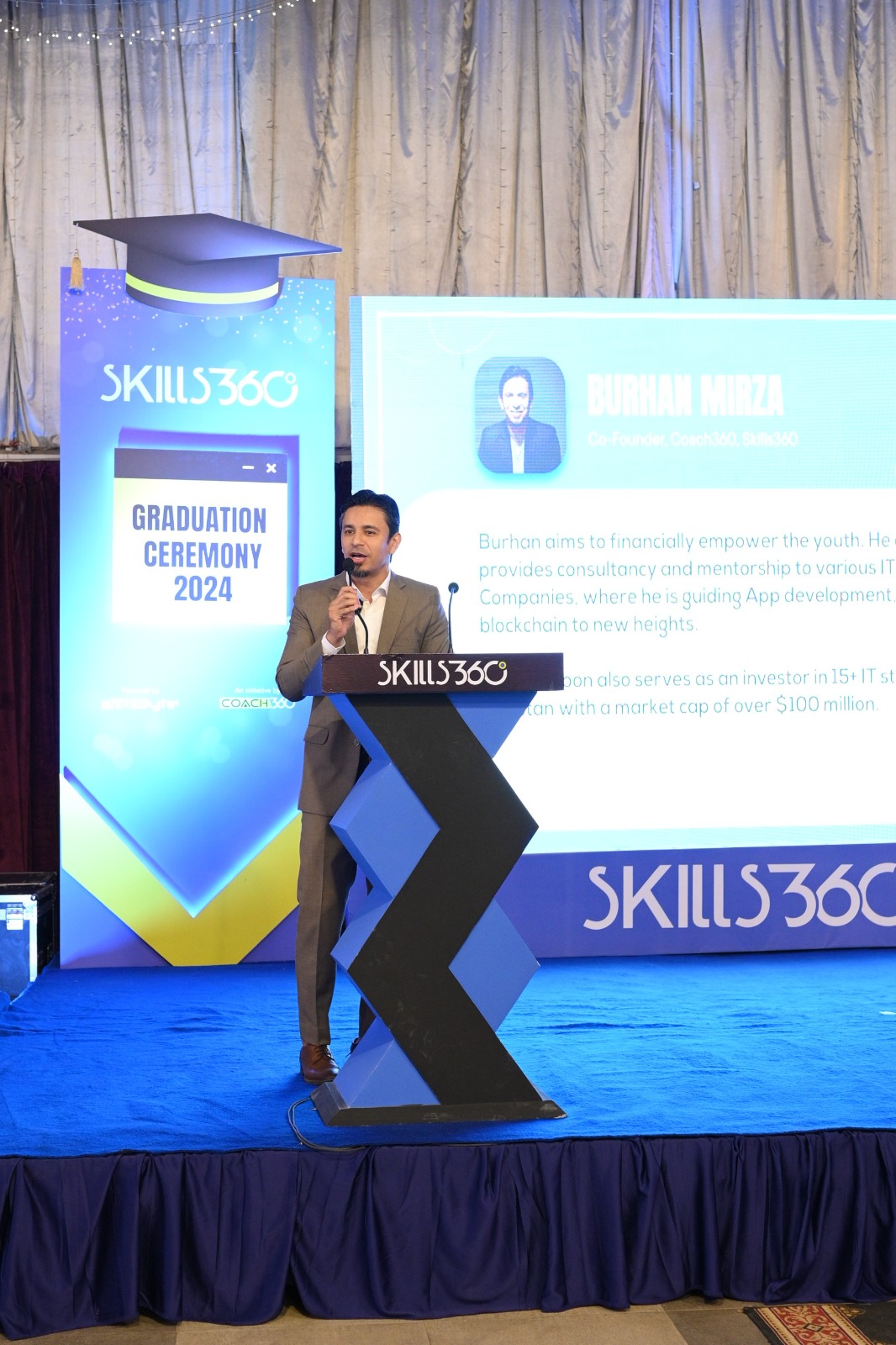
Muhammad Burhan Mirza is one of those names you keep running into if you follow Pakistan’s startup, skills training, or LinkedIn coaching circles for more than a few weeks. Depending on who you ask, he is either an investor building a portfolio across early-stage companies, or a mentor trying to fix a broken education-to-employment pipeline in Pakistan.
The truth, as usual, sits somewhere in the middle.
At the center of it are two recurring ideas he keeps coming back to through his platforms like Skills360 and The Coach360. First, that formal education in Pakistan is not aligned with real job markets. Second, that skills, not degrees, are becoming the real currency for young people trying to enter the workforce.
In an interview featured by Business recorder, Mirza has repeatedly framed the issue in blunt terms. He has suggested that the system is producing “qualified but unemployable” graduates, and that the solution is not more degrees but more exposure to applied skills. That framing has become a consistent theme in his public work.
But before he became associated with skills platforms and mentoring content, Mirza’s career path followed a more typical entrepreneurial trajectory, at least on the surface.
He is a Pakistani entrepreneur and investor associated with multiple early-stage ventures across tech, services, and digital education. Publicly available information places him as being involved in more than a dozen companies, although the depth of his role in each varies. In some cases, he is described as an investor. In others, more of an advisor or strategic partner.
There is no widely verified single “breakout” company attached to his name in the traditional sense, which is important to note because it shapes how his profile is perceived. Instead of being defined by one large exit or founding story, his presence is distributed across multiple smaller ventures and platforms.
One of the more structured parts of his ecosystem is Skills360. It is positioned as a digital learning platform aimed at closing Pakistan’s skills gap, especially for students and early-career freshies who are trying to break into freelancing, digital work, or remote employment to “earn in dollars” as one of their social media posts suggests.
Skills360 focuses on short, applied learning modules rather than academic-style courses. Think practical skills like digital marketing basics, freelancing fundamentals, and entry-level tech literacy. In a country where universities often struggle to update curricula at the pace of industry change, this kind of model has found an audience. Skills360 essentially produces “Skill diplomas” to its graduates and top performing students are also given internships to their IT companies.
Mirza’s argument, as he has shared in interviews, is relatively straightforward. Education systems are slow, but the job market is not. So students have to supplement formal education with practical skills if they want to stay competitive.
At the DisruptHR Karachi as reported in Dawn’s Aurora Magazine, Burhan Mirza reinforced a similar idea in a more applied context, arguing that the real shift is already happening in how people learn and work, and that waiting for formal systems to catch up is less effective than actively building skills through practice and exposure.
Alongside Skills360, he also runs The Coach360, which is more mentorship-focused. If Skills360 is about skills, Coach360 is about direction. It leans into career counseling, decision-making frameworks, and general professional guidance.
This combination is not unusual in Pakistan’s current digital economy. The gap between formal education and employment is large enough that mentorship platforms, coaching content, and online learning tools have all grown into parallel education systems of their own.
But Mirza’s approach also sits inside a bigger ecosystem shift, not just a personal brand.
Pakistan’s education system is often criticized for producing graduates who struggle with employability. Employers frequently point to gaps in communication skills, digital literacy, and practical training. At the same time, the country produces hundreds of thousands of new graduates every year entering a relatively constrained job market. That mismatch is what platforms like Skills360 are trying to respond to.
Mirza has also built a presence through public speaking and media engagement. He recently appeared at a TedxMaju event on the theme of “The Power of Chaos” where he talked about his corporate experience and a case study of Zeeshan Rao, a security guard who earned a diploma of Graphic Designing from Skills360 and now works at a renowned IT company in Karachi, a recent post from an attendee of the event details it.
Supporters of this skills model argue that impact in early-stage education platforms is not always immediately quantifiable. Exposure, mindset shifts, and access to information are often cited as intangible but meaningful outcomes.
Mirza’s own framing tends to align with that perspective. He has often emphasized that the goal is not to replace universities but to complement them, especially in areas where formal systems are slow to adapt.
Still, questions remain around scale and consistency. Can platforms like Skills360 move beyond individual success stories and into repeatable outcomes at scale? Can mentorship-driven models remain effective as they grow larger and more commercial?
These are not questions specific to Mirza alone. They sit at the center of Pakistan’s broader experiment with alternative education models.
In that sense, his profile is less about a single individual story and more about a larger shift underway in how education, skills, and employment are being redefined in the country.
Whether that shift produces long-term structural change or remains a parallel system for self-driven learners is still an open question.
0 Comments
No comments yet. Be the first to join the discussion!