Pakistan’s outstanding sovereign guarantee exposure projected to cross Rs5 trillion by June 2027
Government plans Rs907 billion in guarantees for Reko Diq, ML-3, C-5 power project and other projects; power sector accounts for 56% of current exposure

Pakistan’s outstanding sovereign guarantees and other contingent liabilities reached Rs4.32 trillion by the end of March 2026 and are projected to exceed Rs5 trillion by June 2027 as the government plans additional support for major energy, mining and infrastructure projects.
The government plans to issue guarantees worth Rs907 billion during fiscal year 2026-27, including the final quarter of FY26.
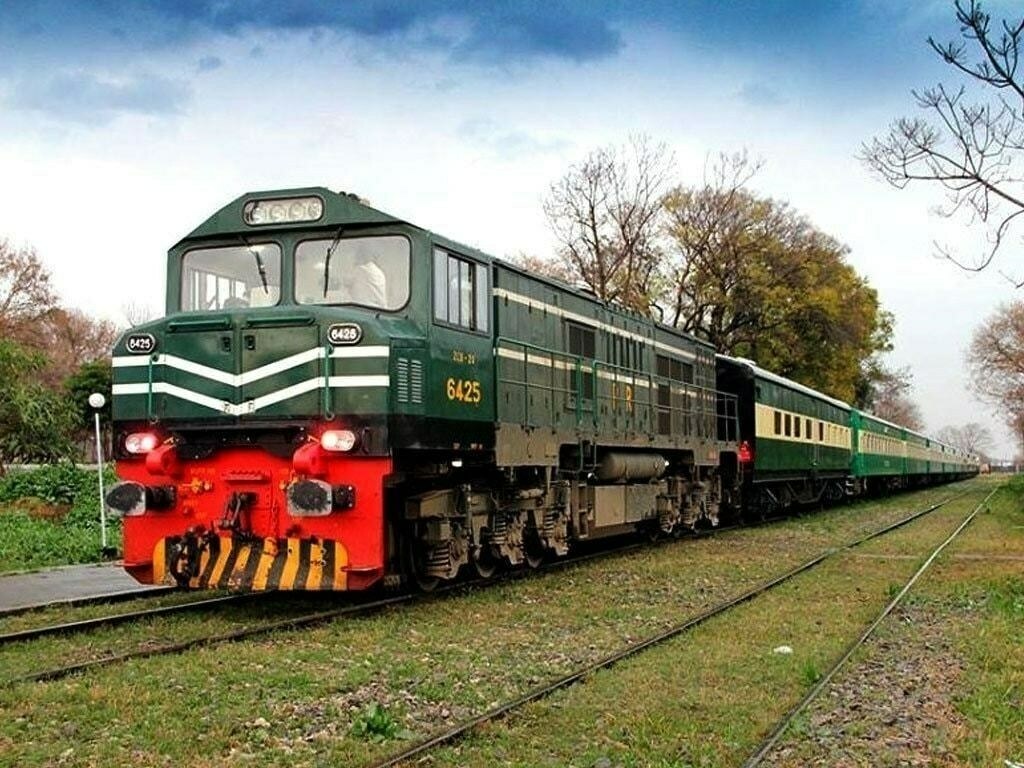
The proposed commitments include Rs223 billion for the Reko Diq mining project, Rs221 billion for the C-5 power project and Rs113 billion for the ML-3 railway project.
Another Rs90 billion has been set aside for public-private partnership projects, while Rs80 billion is planned for credit guarantee schemes.
The proposed guarantee envelope also includes Rs50 billion each for the Water and Power Development Authority, Pakistan State Oil and miscellaneous or contingency requirements.
The National Grid Company of Pakistan may receive guarantees worth Rs19 billion, while Rs10 billion has been proposed for the Export-Import Bank of Pakistan.
The guarantees are primarily issued on behalf of state-owned enterprises to help them secure financing at lower costs, access concessional loans and fund infrastructure and operational requirements.
Although sovereign guarantees are not counted as direct public debt, they could become government liabilities if the borrowing entities fail to meet their repayment obligations.
Net guarantees projected at Rs683 billion
During the first nine months of FY26, the government issued or rolled over guarantees worth Rs769 billion, equivalent to 0.61% of gross domestic product.
The amount remained below the statutory annual ceiling of 2% of GDP prescribed under the Fiscal Responsibility and Debt Limitation framework.
After adjusting for an estimated Rs224 billion in repayments against existing guaranteed loans, net guarantee issuance is projected at Rs683 billion.
This would increase the outstanding stock from Rs4.32 trillion to around Rs5.005 trillion by the end of June 2027.
Power sector dominates exposure
The power sector accounts for Rs2.43 trillion, or 56%, of the government’s existing guarantee portfolio. The concentration reflects continued sovereign-backed borrowing by power-sector entities, including the Central Power Purchasing Agency-Guaranteed.
Circular debt, payment delays and liquidity constraints across the electricity supply chain have kept the power sector the largest source of contingent fiscal exposure.
Commodity operations represent the second-largest category, accounting for Rs895 billion, or 21%, of outstanding guarantees.
These guarantees support procurement and storage operations undertaken by the Trading Corporation of Pakistan and the Pakistan Agricultural Storage and Services Corporation.
Major state-owned entities
At the institutional level, the Pakistan Atomic Energy Commission has the largest exposure, followed by the Central Power Purchasing Agency-Guaranteed and PASSCO.
Pakistan State Oil and the Water and Power Development Authority are also among the principal recipients of sovereign guarantees because of their roles in energy and infrastructure financing.
Guarantees linked to the aviation sector stand at Rs269 billion, while financial-sector exposure amounts to Rs166 billion. Other categories account for another Rs567 billion.
Interest rate and maturity risks
Around 51% of guaranteed obligations carry floating interest rates, while the remaining 49% are based on fixed rates. Most of the underlying loans have maturities of around five years, creating continuing refinancing and rollover requirements.
The planned guarantees for FY27 are expected to expand the government’s contingent exposure further, with energy, mining, railways and state-owned enterprises remaining the main sources of risk.
Comments
No comments yet. Be the first to join the discussion!