
Nestle Pakistan: Better times expected
New products may improve revenue picture while a decline in interest rates could significantly boost the company’s bottom line

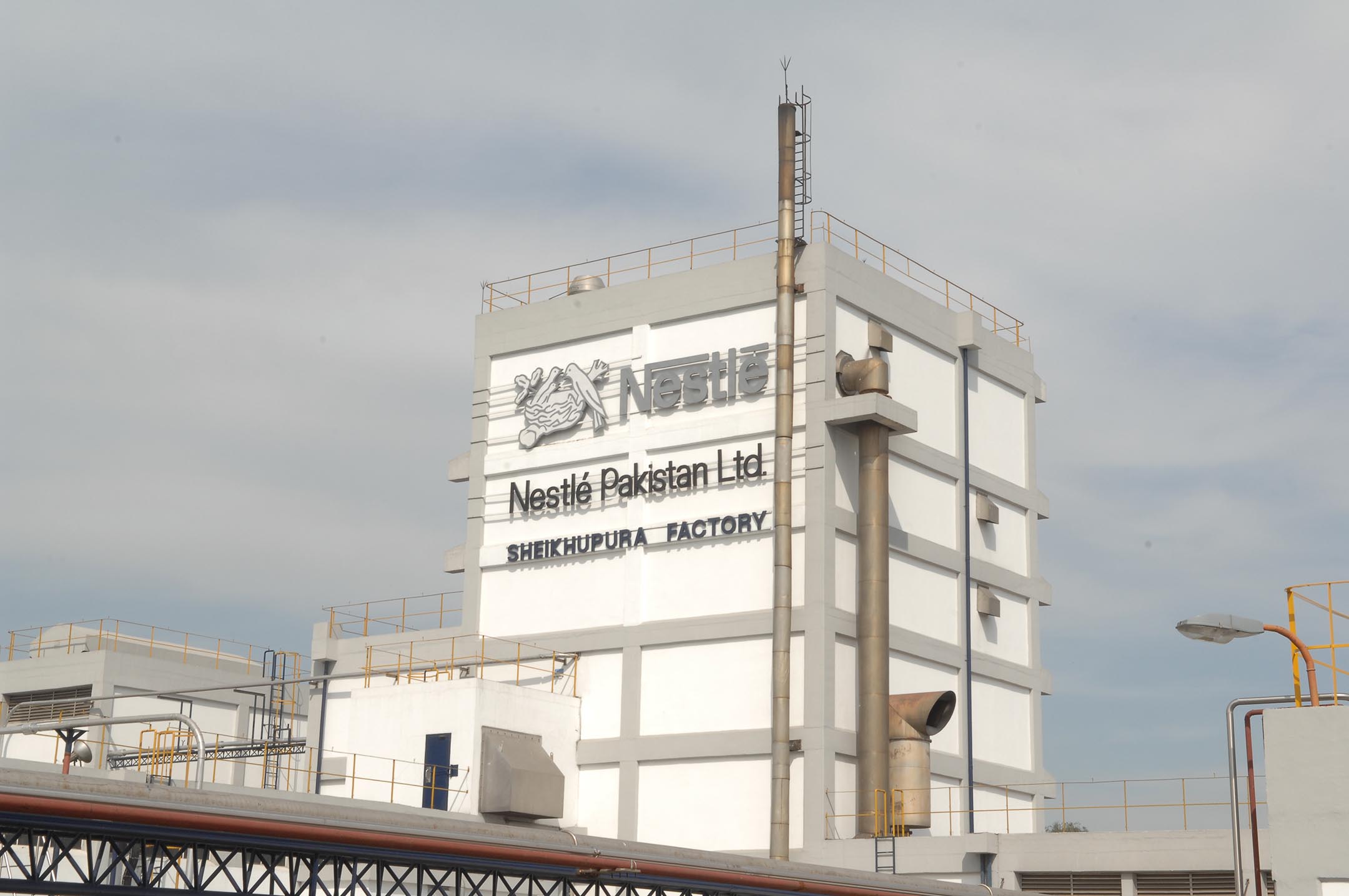
Since 1992, Nestle Pakistan has become a mainstay in the Pakistani food processing industry. It has over 400 employees in Pakistan, and four factories. It sells evenly across Pakistan, with 35% of revenue coming from the south (Sindh and Balochistan), 34% from the centre (Punjab) and 28% from the north market (KPK, GB, FATA and AJK). For all intents and purposes, Nestle has practically become synonymous with ‘milk’, as 77.2% of its products fall in the milk and nutrition category.
And yet, as its management state in the latest corporate briefing for equity research analysts held on September 4, things are not looking that great for Nestle. The company’s profitability declined by 13.3% year-on-year in the first half of calendar year 2020 to Rs3.9 billion, from Rs4.5 billion in the same period last year.
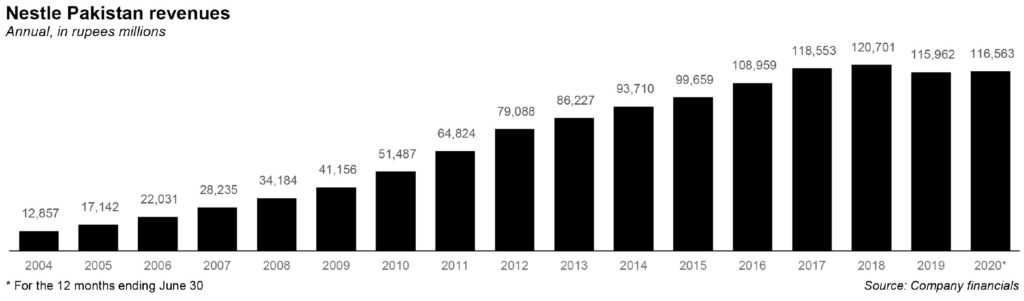
Similarly, total revenue in the first half of the calendar year rose only 1% in Rs58.4 billion, from the Rs57.8 billion recorded in the same period last year. While the dairy and nutrition segment grew by 8.1% year-on-year in the first half of the calendar year, there was a 20% decline in sales of beverages. The decline in revenue also happened despite an increase in prices of the Milkpak brand this year.
According to a September 4 report by Muhammad Ashraf and Usman Arif, equity research analysts at Foundation Securities, a securities brokerage firm, Nestle’s management attributed decline in profitability to three reasons. First, the costs for raw milk and sugar rose this year. Secondly, there was a 10% year-on-year average rupee depreciation this year. Third, beverage consumption declined drastically because of country wide lockdowns, particular in the second quarter of the calendar year.
The pandemic not only affected beverages but also exports. According to a report sent to clients by Taurus Securities on September 4, Nestle’s exports suffered due to closure of trade routes and border, with significant decline witnessed in trade with Afghanistan in particular. The domestic demand for ‘on-the-go’ and ‘out-of-home’ category also fell due to the lockdowns.
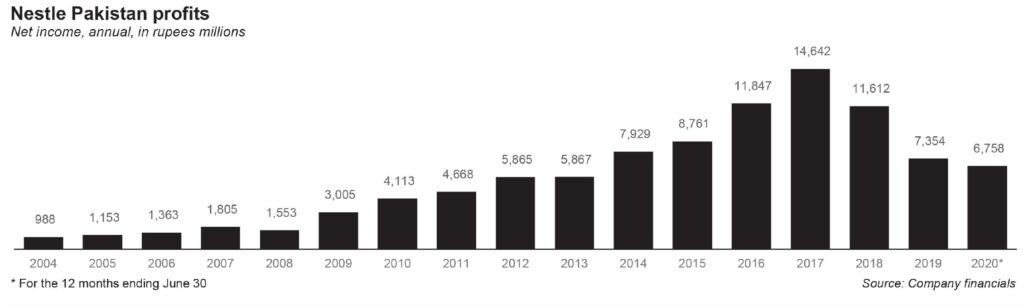
And it is not just the pandemic that caused problems. In the first half of this year, the company’s administrative costs increased by 26%, while its financial costs increased by 25%. The company said that most of the finance cost was due to higher debt levels, and increase in interest rates.
According to Ashraf and Arif, the company said “its current level of debt (Rs30.7 billion) will remain at these levels in future, while it will benefit from the recent 625 basis points cut in policy rate.”
Accordingly, margins have remained under pressure as well, and declined by 0.7 percentage points year-on-year in the first half of 2020. Again, Nestle had to explain itself, laying blame on the fact that there wasn 18% increase in raw milk prices; that there had been an increase in sugar prices; that packaging and direct material costs had risen due to a 10% rupee devaluation (around one-third of those costs are affected by the exchange rate), and that input costs had risen due to inflation in the country (this is despite the fact that average inflation actually decreased this year).
There are, however, three silver linings.
Firstly, Nestle still has a very comfortable share across different products in Pakistan. Its top brand Milkpak commands 37% of the packaged milk market; Everyday has a 41% share of the tea whitener segment and Fruita vitals and Nesfruta command 36% of the fruit juice and beverages market.
The company did note, however, that Nestle is currently in the second position in the packaged milk category due to an increase in the market share of Olpers, owned by Frieslandcampina Pakistan, formerly known as Engro Foods.
Secondly, Nestle was still experimenting during the tumultuous first half of the year, introducing new products like flavoured yogurt, Nestle Active, Nescafe chilled coffee to the Pakistani market, that might be expected to grow in the coming months.
Thirdly, the company believed that the dairy and nutrition segment actually benefited from the outbreak of Covid-19 (perhaps the few companies in the world that can boast that in this climate). There was a change in customers preferences towards packaged milk because of the pandemic, and there were also increased sales through e-commerce channels, which bodes well for the e-commerce landscape in the country.
That is why Ashraf and Arif are optimistic about Nestle, saying the company is expected to benefit from the conversion of consumer preferences from loose milk to packaged milk products; the recovery in beverages the economy reopens; the price hike of Milkpak in the second half of the year; and the (probable) decline in finance costs due to the 625 basis point cut in the benchmark interest rate by the State Bank of Pakistan.
That interest rate cut, in particular is likely to have a significant impact on the company’s financials in the latter half of the current year. Most bank loans in Pakistan are variable rate, with rates resetting at least once a year, and occasionally even more frequently than that.
Nestle Pakistan paid Rs3,556 million in interest on its debt for the 12 months ending June 30, 2020 which represents a 41% increase over the Rs2,522 million it paid in the preceding 12 months. Given the near halving of interest rates, that could yield a nearly Rs1,700 million in annual savings in interest expenses, which would flow through to the bottom line of the company.
Comments
No comments yet. Be the first to join the discussion!


