
New power purchase agreements expected to hit Hub Power Company hard
The revised agreements will lower the company’s cash flow and render its business more prone to market risk than is currently the case

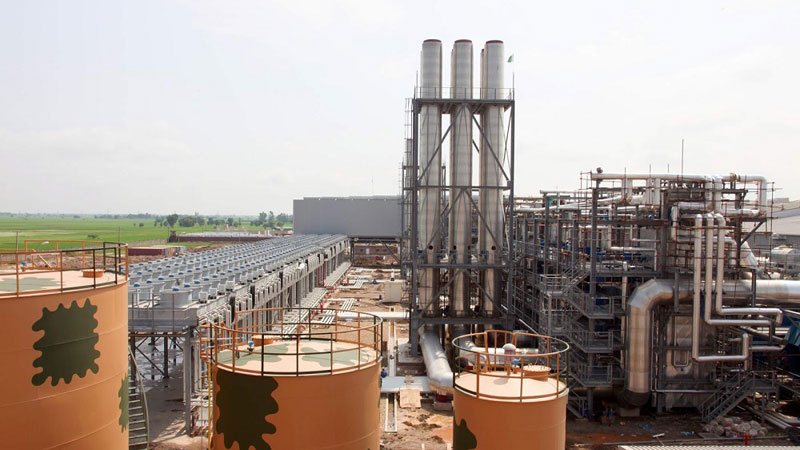
Things are just not going well for Hub Power Company. Earlier in the summer, construction on two of its three flagship CPEC projects was temporarily halted because of the Covid-19 pandemic. Now, the new deal between the Pakistani government and independent power producers (IPPs) announced in August, threatens to derail the earnings of the company.
But first, let us examine Hub Power’s structure. Hub Power is Pakistan’s oldest private independent power producer, founded in 1991 and with a total installed capacity 1,601 megawatts. Though it is headquartered in Karachi, its three main segments – Hub Plant, Narowal Plant and Laraib Plant – are flung across Pakistan. The first is an oil-fired power station with a net installed capacity of 1,292 megawatts (MW) located in Mouza Kund, Balochistan; the second is a 225 MW oil-fired power station in Mouza Poong, Punjab; and the third is a 84 MW of hydroelectric power station in Azad Kashmir.
Together, the annual power generation capacity of Hub Power is approximately around 8.7% of the national electricity demand in Pakistan. Now, along with these subsidiaries, Hub Power also has three growth projects that fall under the China Pakistan Economic Corridor (CPEC).
The first is China Power Hub Generation Company (CPHGC), which is a joint venture between Hub Power (which owns 47.5% of the venture) and China Power International Holding. This was developed with an estimated investment of $2 billion, and is expected to generate 9,000 gigawatt-hours (GWh) of electricity a year, or enough electricity for four million Pakistani homes. For context, that would be equal to about 7.3% of all electricity produced in Pakistan last year.
Construction for this power plant began in March 2017, and it commenced operations in August 2019.
The second project is Thar Energy Ltd (TEL). This is a 330 MW lignite-fired power plant in Thar. Hub Power currently has a 60% share in the project. Lignite is a type of coal, and the most common type found in the Thar coalfields. It has a very low energy density (the amount of heat it can produce when burnt) compared to other types of coal. As of March 2020, the company’s management estimates that 55% of the construction progress on TEL facilities had been completed.
Finally, the ThalNova Power Thar Ltd. project. This is another 330 MW lignite-fired plant, also in Thar, of which Hub Power holds 38.3% of the total shareholding. The project is expected to start operations in January 2022.
Now, renegotiations of the return on equity, due to the government deal, will affect at least four of the six projects, according to Ailia Naeem, an equity research analyst at AKD Securities, an investment bank, in a research note sent to clients on September 4.
For context, because the government owns the main entity that purchases nearly all of the electricity produced by private sector power generation companies, it regulates the market for energy quite heavily, including guaranteeing a specific rate of return for investors who set up such power plants. Those rates of return – and the broader agreements that underpin them – have come under fire in recent years for being overly generous to power companies, leading the government to seek renegotiations with the power companies last month.
First, the Hub Plant. According to the agreement signed with the government, the project company equity will be fixed at Rs168 to a dollar, meaning the return on equity the company is allowed to charge will be calculated using this fixed rupee amount rather than the previous arrangement where the company was allowed to adjust the amount of return on equity it charges the government based on the average rate of the US dollar against the Pakistani rupee. Effectively, this agreement breaks the link to the US dollar for electricity pricing.
Additionally, the existing fixed operating and maintenance (O&M) component of a tariff will be reduced by 11%. This is the amount of money power companies charge to ensure that they have enough cash to pay for any maintenance expenses incurred. It is not directly linked to actual expenses incurred.
Second, the Narowal Plant. Under the deal signed with the government, the Narowal Plant agreed to three items: that the return on equity would be changed to 17% in Pakistani rupees, instead of 15% in US dollars, with the dollar equity converted to the rupee at the rate of Rs148 to a dollar; that the late payment surcharge would be lowered to 2% in the first 60 days; and that any savings from operating and maintenance (O&M) or fuel efficiency will be shared with the government.
According to Naeem, “Our back of the envelope calculation indicate fixing RoE components at the aforementioned levels for Narowal and Base Plant would result in downward revision of our valuation by Rs10 per share.”
Not only that, but the Narowal plant is expected to switch to a ‘Take and Pay’ agreement as opposed to a ‘Take or Pay’ agreement currently in place. The choice of conjunction here is key: under the former, the government-owned buyer is legally obligated to pay for goods on delivery; in the latter, a buyer agrees to buy the good even if they do not need it, i.e. the seller is always guaranteed revenue.
This switch, according to Naeem, will result in another downward revision of Rs7.19 per share in AKD’s valuation.
“We currently maintain our Hub Power target price at Rs160 per share, where incorporating fixed the return on equity for the Base and Narowal plants will bring down our target price of Rs143 per share, still implying a Buy stance at last close,” says Naeem.
The renegotiation of the return on equity is still ongoing for the CPEC power projects CPHGC and TEL. Currently the proposals include a rescheduling of the debt component (in which case, cash flow would be neutral), or that return on equity be reduced to 13% (in which case, cash flow is negative). In that case, the two plants would contribute 36% and 75% to Hub Power’s portfolio in fiscal year 2022 and where the two plants contribute 36% to Hub’s power portfolio cumulative return on equity in fiscal year 2022, and 75% by fiscal year 2028.
Finally, there is some concern about the implications of a tax change. In the 2020 financial results of Hub Power, there was a deferred tax charge of Rs3.9 billion. This was recorded at 25% of the s13.7 billion share of income from CPHGC.
The government of Pakistan has increased the withholding tax on dividends to 25% for 2015 IPPs to 15% for 1994 plants, and 7.5% for 2002 plants.
“While HUBC is recording the tax charge, the management will likely contest higher WHT on dividends for 2015 plants,” says Naeem.
Comments
No comments yet. Be the first to join the discussion!


