
Agriculture: Our Winter of Discontent
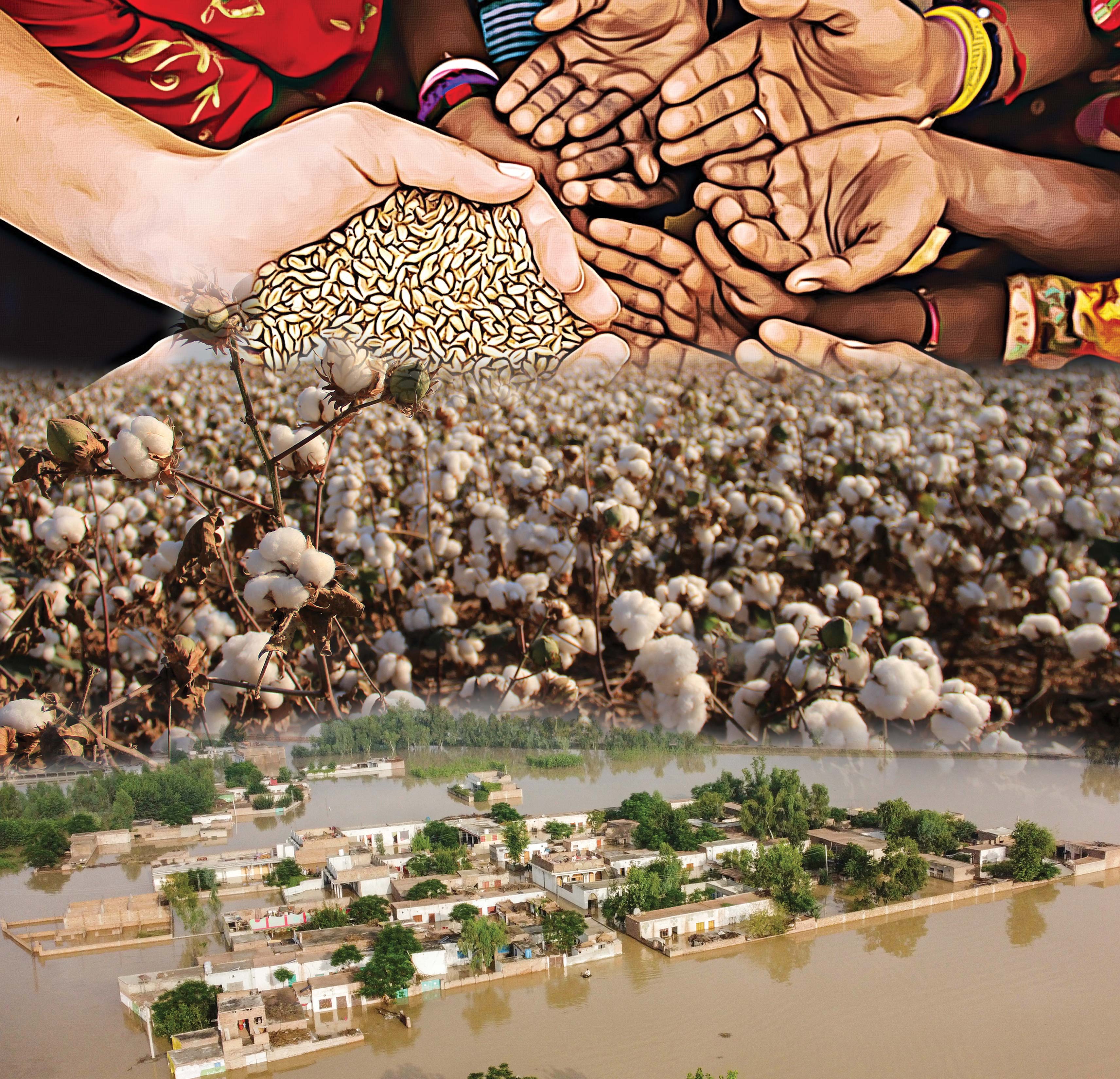
This is the story of two different days at the same place in the same year. In May 2022, reports began to emerge that the cotton crop in Sindh was wilting. In Sanghar, one of the largest cotton producing districts in Sindh with cotton grown on 300,000 acres of agricultural land, less than 200,000 acres were being used to cultivate cotton. And on the 200,000 acres that were being used to grow cotton, crop performance was abysmal.
While the cotton crop in Sanghar suffered, other agricultural areas dependent on the down-river water from the Indus were affected as well. In Thatha, fishing villages were left without any source of livelihood as the nearly three kilometre stretch of river that crossed the region dried up completely and was replaced by huge deposits of sand. At the Kotri Barrage of the Indus in Sindh, water levels had fallen from 15,000 cusecs of water to barely over 2000 cusecs.
Figures from May this year showed that a major dip in the Indus of 10,000 cusecs (an outflow of 105,000 cusecs on May 19 and 95,000 on May 20) occurred at Tarbela dam, raising fears that the dam may have hit dead levels. Its inflows plunged to 77,900 cusecs on Friday from 98,000 cusecs on May 14. These flows are to be used Taunsa upstream in Punjab and in Sindh. The dam’s level stood at 1,406 feet on May 20 against 1,414 feet on May 16.
All of these are signs of the times. And while they are warning signs, they are not indicators that can help us predict the future.
Subscribe to Continue Reading
The rest of this article is available exclusively to subscribers.

Abdullah Niazi is senior editor at Profit. He can be reached at [email protected]
View all articles →2 Comments
No comments yet. Be the first to join the discussion!


