Six MoUs signed during Vice-Premier He Lifeng's visit. What do they entail?
MoU on Strengthening Workers' Exchange Programme was signed between the All-China Federation of Trade Unions (ACFTU) and BoI, Pakistan
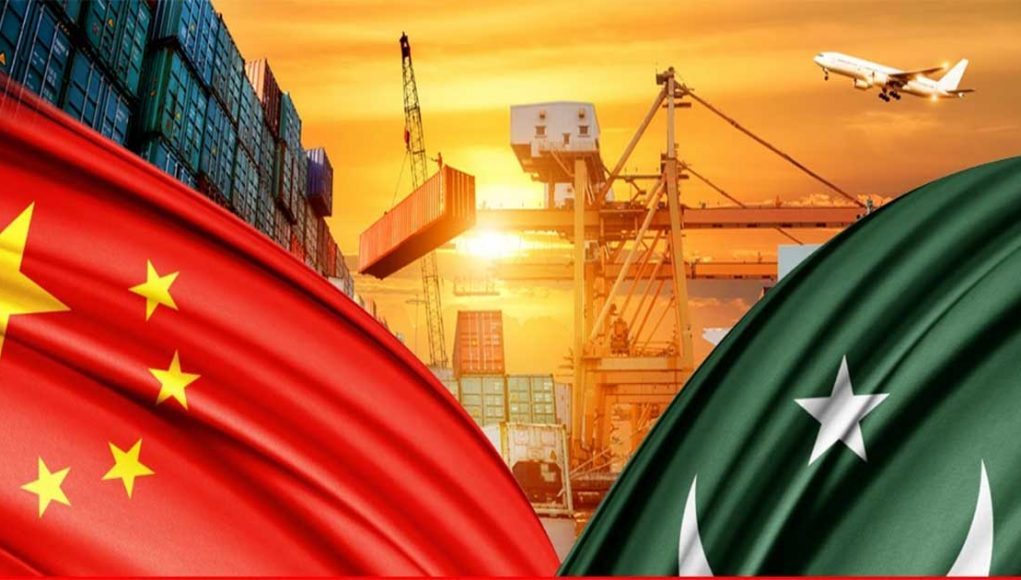
ISLAMABAD - In a significant move to enhance bilateral cooperation and foster stronger economic ties, Pakistan and China signed six memorandums of understanding (MoUs) on Monday. The occasion marked the 10-year celebrations of the China Pakistan Economic Corridor (CPEC), a multi-billion-dollar initiative aimed at bolstering infrastructure and connectivity between the two brotherly countries.
As per details shared by officials of Ministry of Planning and Development, the the MoUs were formalized at a ceremony held at the Prime Minister's Office, following a meeting between Chinese Vice-Premier He Lifeng and Prime Minister of Pakistan, Muhammad Shehbaz Sharif. Vice-Premier He Lifeng's three-day visit to Pakistan commemorates the decade-long partnership between the two nations in implementing the CPEC.
The signing ceremony witnessed the presence of a high-level Chinese delegation, led by the Chinese Vice Premier, along with members of the federal cabinet and senior officials from various ministries.
Among the signed documents, one included the minutes of the 11th Meeting of the Joint Cooperation Committee (JCC) on CPEC, which took place on October 27, 2022. This document outlined the decisions and outcomes of the meeting and was signed by Mr. Cong Liang, Vice Chairman of China's National Development and Reform Commission (NDRC), and Professor Ahsan Iqbal, the Minister for Planning, Development & Special Initiatives of Pakistan.
Knowledge sharing:
Another MoU aimed to establish an Expert Exchange Mechanism within the Framework of the CPEC. The objective was to facilitate knowledge sharing between the Ministry of Planning, Development & Special Initiatives of Pakistan and the NDRC of China. Through this mechanism, Chinese experts would provide intellectual support and consultation for capacity-building cooperation between the two governments, contributing valuable solutions to help Pakistan meet international standards more effectively. The MoU was signed by Mr. Cong Liang, Vice Chairman of the NDRC, and Professor Ahsan Iqbal, Minister for Planning, Development & Special Initiatives.
Export of Chilles
Furthermore, an essential agreement on the Protocol of Phytosanitary Requirements for Export of Dried Chilies from Pakistan to China was signed. This protocol defined the phytosanitary requirements for the export of dried chilies from Pakistan to China, ensuring smooth trade in agricultural products. The signatories for this protocol were Ms. Pang Chunxue, Chargé d'Affaires of the Chinese Embassy in Pakistan, and Mr. Zafar Hasan, Secretary of the Ministry of National Food Security & Research of Pakistan.
Infrastructure development
Additionally, the MoU on the Acknowledgement of Receipt of Realignment of KKH Phase-II (Thakot-Raikot) Project Feasibility Study Final Report was also signed. This document acknowledged the receipt of the final report on the feasibility study for the realignment of the KKH Phase-II (Thakot-Raikot) Project, a vital part of the CPEC infrastructure development. The document was signed by Ms. Pang Chunxue, Chargé d'Affaires of the Chinese Embassy in Pakistan, and Mr. Asim Ameen, Member Planning of the National Highway Authority, Ministry of Communications of Pakistan.
Workers exchange
Moreover, a MoU on Strengthening Workers' Exchange Programme was signed between the All-China Federation of Trade Unions (ACFTU) and the Board of Investment, Pakistan, under the ambit of CPEC Industrial Cooperation. The goal of this MoU was to facilitate workforce exchange programs associated with CPEC projects, focusing on skill development, technical training, language courses, and Chinese experience sharing in Special Economic Zones (SEZs) development. This initiative aimed to enhance the competitiveness of CPEC's workforce and attract Chinese industrial relocation to Pakistan.
Lastly, an agreement was reached on the Announcement of the Minutes of the 21st Conference of Technical Committees on Promoting the (ML-1) Project. The ML-1 project is a crucial element of the CPEC, expected to transform Pakistan's transportation system significantly. Both Pakistan and China are dedicated to advancing the strategic ML-1 initiative, ensuring cost-efficiency, justified capital investments, and maximized economic returns, following a systematic and phased approach.

The writer is a member of the staff at the Islamabad Bureau. He can be reached at [email protected]
View all articles →4 Comments
No comments yet. Be the first to join the discussion!