Reko Diq's logistical challenges cast shadows on promised wealth
RMDC reluctant to use Gwadar port for shipping ores; alternate routes prove to be no better
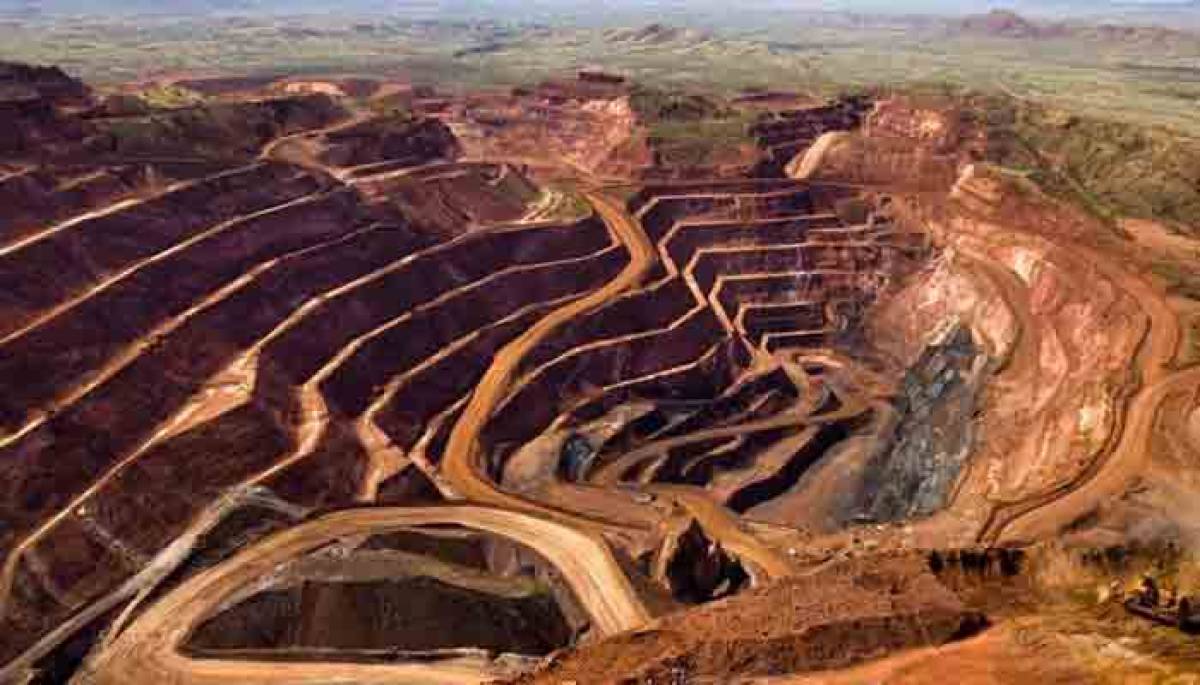
As the Reko Diq saga unfolds, the latest developments shed light on intricate logistical challenges, questioning the feasibility of the “gold mine”. In a recent twist, as reported by media reports, a federal government panel has urged Reko Diq Mining Company (RDMC) to reveal its technical requirements, stirring concerns about the project's ambitious transportation plans.
The recent developments suggest that the road to Reko Diq's success may not be as smooth as anticipated. RDMC's reluctance to use Gwadar Port introduces a new layer of complexity, raising questions about the feasibility and efficiency of the chosen transportation methods.
The Potential of Reko Diq
After navigating the labyrinth of legal challenges over ownership of the mine, an agreement was reached in December 2022. The project was divided into two phases, with a total projected capex cost of $7 billion, with the first phase requiring $4 billion and the second phase requiring $3 billion. In addition, the project’s total entry amount is $2.2 billion, bringing the entire project size to $9-10 billion.
Annual copper output was predicted to be between 650 and 700 million pounds per annum for the first ten years, increasing to 800 to 850 million pounds per annum when phase 2 is completed. Furthermore, gold production was estimated to be 300,000 to 350,000 ounces on yearly basis for the first ten years (first phase) before increasing to 450,000 to 500,000 oz. following the planned expansion.
By the end of 2022, the closing of the Reko Diq deal seemed like a monumental triumph for Pakistan. The legal hurdles were cleared, and Barrick Gold Corporation enthusiastically declared its commitment to transforming Reko Diq into a world-class mine, anticipating significant economic benefits for both the company and Pakistan
Barrick President and Chief Executive Mark Bristow's vision of a world-class, long-life mine generating substantial economic gains and benefiting Pakistani stakeholders appeared promising. The touted benefits included increased copper production, employment opportunities, regional economic growth, and investments in Balochistan's development.
Scrutiny Over Transport Plans; Choosing Between Operating Costs and Feasibility
Come 2024, the project, once again seems to be marred by logistical and infrastructural shortcomings, a concern that has always been there. The project site is fairly remote and access to shipping is extremely difficult.
Sources within the Planning Commission revealed to Business Recorder that a Sub Committee meeting, chaired by General Zahir Shah, was held on December 27, 2023. All stakeholders, including RDMC's Country Director and their Railway connectivity consultant, Eric Peiffer, attended the meeting. RDMC expressed support for transporting the load via Railway lines (ML1 & ML3) and exporting it from Port Qasim after studying facilities available there.
The country Director RMDC informed that as per project timelines, the project will have financial close by March 2025. As of now, neither does the Gwadar port have a bulk container terminal nor does it have the optimal amount of ship traffic. Under the present circumstances it would not be feasible for them to use this port, whereas in the long-term plan they would prefer using Gwadar port when the situation improves.
Member Planning Commission informed that the commission, under the guidance of the SIFC, was already working on the connectivity to Gwadar Port to Chaghi District for shipping purposes.
However, the proposed route to Karachi is also not easy. Major logistical intricacies become apparent as RDMC plans a branch railway line from Noukandi to the project site (almost 80 kms). This would allow them to use the existing railway infrastructure of Noukandi-Rohri-Karachi.
The branch railway also requires RMDC to substantially invest in a dedicated rolling stock (locomotives and wagons) and containers. Foreseeing two trains of twenty wagons each per day, increasing to five trains a day, the feasibility study requests crucial data from Pakistan Railway.
The problem is more than just the branch railway line. The Secretary of the Railway Board unravelled that there are further complexities on ML1 and ML-3, where a mix of trains, including passengers and freight, congest the ML1. Operational hurdles on ML-3, marked by step gradients limiting load capacity to 300 tons per train, necessitate a piecemeal transport approach, extending turnaround time by over 10 days and hiking operational costs.
Adding to the intrigue, the use of Banking Locomotives, as planned by RMDC, further elevates costs, while the 400-km Noukandi section requires substantial upgrades, with lingering challenges even post-rehabilitation.
The mere distances to Karachi and Gwadar ports from Noukandi, hint at very high potential operating costs if Port Qasim is favoured. The balancing act between existing limitations and long-term aspirations becomes pivotal in finalising the medium and long-term routes.
It also does not help that the road options for Reko Diq are deemed unviable due to an overloaded Quetta-Karachi section. The pragmatic alternative points towards utilising the existing railway network, albeit with a hefty $200 million upgrade.
Discussions around road connectivity reveal ongoing progress in the Noukandi-Mashkel section's construction. The future hinges on the processing of PC-1 for Mashkel-Panjgur and upgrading Panjgur to Gwadar sections, waiting for increased volumes to trigger action.
The debate between Port Qasim and Gwadar Port intensifies, considering the operating cost implications over the next 45 years. The direct route from Noukandi to Gwadar Port is significantly shorter than the route to Port Qasim, potentially minimising operational costs.
It is important to remember here that a similar problem prevailed in the case of the Saindak silver mine located in Chaghai. The silver ore extracted from the mine has to be transported 1,127 km from the site to the port in Karachi by trucks. The costs associated with using trucks had an adverse effect on the bottom line and overall feasibility of the project.
In a bid to address these challenges, a Sub working group for railway connectivity, having representatives from each stakeholder, has been formed to meet every two weeks, reviewing progress and resolving bottlenecks.
Water and Electricity Woes
Another historical concern, water supply, continues to be a critical issue. The Risk Assessment Report from 2007 highlighted water as the project's "most critical" challenge, emphasising the need for a sustainable water source for the next 45 years in the remote mining location. Developing infrastructure and ensuring a consistent water supply remain formidable tasks. Something that is yet to be revealed by the RMDC.
The supply of electricity to the region has also emerged to be another grave concern. Initially requiring 150 MW by 2028, the appetite is set to double by 2031, reaching an impressive 300 MW.
Studies present three potential transmission routes to plug into the National Grid. The options range from the Dadu-Khuzdar-Panjgur-Reko Diq line (880 km at $385 million) to the China Hub-Awaran-Panjgur-Reko Diq line (820 km at $405 million) and the Mustang-Dalbidin-Reko Diq line (530 km at $320 million). All these come at a significant cost that has to be borne by the stakeholders.
After an animated debate, the meeting decided to unbox the technical requirements. The Country Director of the Provincial Disaster Management Committee (PDMC) is greenlit to share the intricate details, from initial and peak transportation volumes to power, gas, and water needs.
The way forward
As Pakistan delves into the complexities of Reko Diq's logistical challenges, it is essential to keep in mind Pakistan's chequered past with poorly executed projects, corruption, and inefficiencies. The transparency and efficiency in handling such a colossal venture will be critical in determining whether Reko Diq becomes the economic boon or encounters obstacles that impede its transformative potential.
As of now the Railway division will share its feasibility of the Panjgur-Gwadar Railway and the Power division will share its details on the proposed transmission lines to the Reko Diq project site.
The next steps, including resolving logistical challenges and addressing infrastructure needs, will play a decisive role in shaping the narrative of Reko Diq’s contribution to Pakistan's economic landscape.
The author is a Business and Finance journalist at Profit and can be reached via email at [email protected] and via twitter @shahnawaz_ali1
View all articles →16 Comments
No comments yet. Be the first to join the discussion!