However, the price collapse is also affecting China as it has forced Chinese companies like battery giant CATL to suspend production at certain mines.
Europe aims to reduce its dependence on imports from China and other countries of lithium and other materials essential to the green transition.
Fernandez said the low price "constrains our ability to diversify our supply chains on a broad, global scale" and also hurts countries such as Portugal that need investment to develop these industries.
Falling prices have forced many global lithium producers to scale back production and cut jobs.
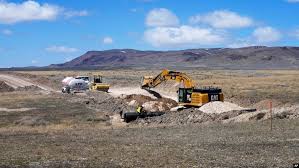
Portugal, with some 60,000 tons of known reserves, is already Europe's biggest producer of lithium, traditionally mined for ceramics.
Along with neighbouring Spain, the country wants to take advantage of local lithium deposits, aiming to cover the entire value chain from mining and refining to cell and battery manufacturing to battery recycling.
Several mining companies in Portugal have been looking for financing, customers and suppliers to crank up projects.
"We want to help them, and we think we can... lithium mining companies, everywhere, have to survive this difficult phase that was created by predatory pricing," Fernandez said.
China's Premier Li Qiang in June used his address at a World Economic Forum meeting in Dalian to hit back at accusations from the United States and EU that Chinese firms benefit from unfair subsidies and are poised to flood their markets with cheap green technologies.
Trade tensions intensified last Friday when the European Union said it would press ahead with hefty tariffs on China-made electric vehicles to counter what it sees as unfair Chinese subsidies, after a year-long anti-subsidy investigation. China on Tuesday imposed temporary anti-dumping measures on imports of brandy from the EU.