SBP governor sees macroeconomic stability lasting two years, rules out aggressive rate cuts
Jameel Ahmad says cautious monetary policy to continue despite political calls for bold easing
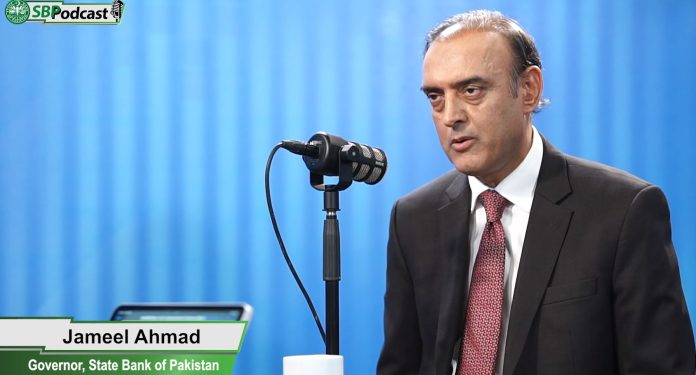
Governor State Bank of Pakistan Jameel Ahmad said Pakistan’s current phase of macroeconomic stabilisation is expected to hold for at least the next two years, while making clear that the central bank will avoid unconventional or aggressive reductions in the policy rate.
Speaking during an in-camera briefing with journalists, the governor said Pakistan has moved past the most acute phase of its economic crisis and entered a period marked by improved external balances, easing inflationary pressures, and recovering foreign exchange reserves. He said the stabilisation momentum is expected to continue over the medium term.
Ahmad said the central bank has effectively completed two stages of its recovery strategy: crisis containment and restoration of relative stability. He added that the next phase will focus on facilitating development finance initiatives aimed at supporting productive sectors and long-term growth, even though development finance does not traditionally fall within the core mandate of the central bank.
On monetary policy, the governor said stability remains the primary objective. Responding to questions about calls for a bold cut in the policy rate, he stressed that decisions will remain data-driven and cautious. He warned that aggressive easing could reverse recent gains and disrupt inflation management.
Discussing growth trends, Ahmad noted that Pakistan’s average GDP growth over the past three decades has remained around 3.7%. He said the central bank’s priority is not rapid expansion but sustainable growth anchored in productivity gains and structural reforms.
He said the current account deficit, which reached 4.7% of GDP in 2022 with a shortfall of $17.5 billion and foreign exchange reserves falling below $16 billion, has steadily improved. The deficit narrowed to 3.3% in 2023 and 2.2% in 2024 before turning into a surplus in 2025, largely due to higher remittances. Going forward, the central bank expects the current account to remain within a range of 0% to 1% of GDP.
Inflation has stabilised within a 5% to 7% band, contributing to a more predictable macroeconomic environment, he said. Foreign exchange reserves have also improved, even as monthly imports rose from about $5.5 billion to nearly $6 billion alongside economic recovery.
On exports, Ahmad said overall growth remains modest, though non-food exports are expanding at a pace of around 5% to 6%. He noted that rice exports declined sharply, falling 47% to $973 million during July–December FY26 compared with $1.827 billion in the same period of FY25.
He said recent government measures, including a Rs4.4 per unit cut in electricity tariffs, changes to the Export Finance Scheme, and issuance of Blue Passports for leading exporters, are expected to support industrial activity and export performance over time.
Commenting on Pakistan’s reliance on the IMF, Ahmad said the country’s future beyond the current programme will depend on fiscal discipline and economic behaviour after the programme ends. Pakistan is currently under a $7 billion Extended Fund Facility, scheduled to conclude between September and October 2027.
He also addressed the perception that lower policy rates automatically translate into savings for the government. Ahmad said that while debt-servicing costs may fall, lower interest rates also reduce central bank income. He noted that the SBP transferred around Rs2.4 trillion in profits to the government last year, but this is expected to decline to about Rs2 trillion this year due to lower interest rates.

Our monitoring team diligently searches the vast expanse of the web to carefully handpick and distill top-tier business and economic news stories and articles, presenting them to you in a concise and informative manner.
View all articles →Comments
No comments yet. Be the first to join the discussion!