February 9, 2026
Chinese tech drives farm yield gains, cuts losses in Pakistan, expert says
Hybrid rice and canola projects, mechanisation and village oil processing cited as key pillars for productivity and export growth

February 9, 2026
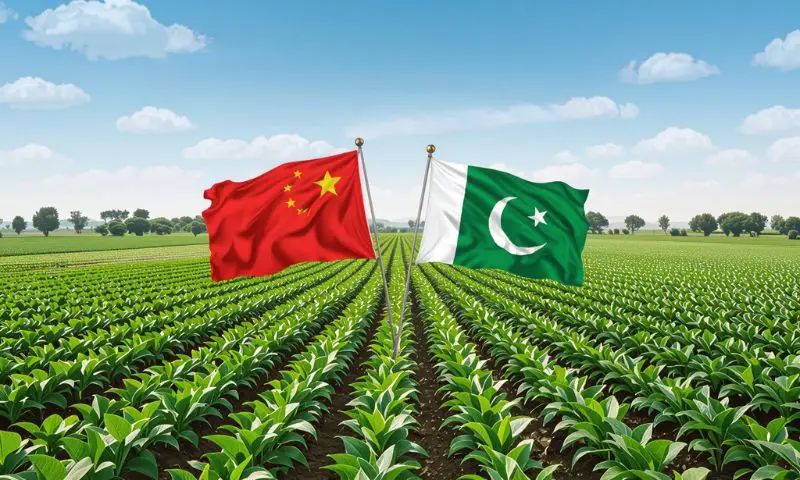
Chinese agricultural technologies are reshaping Pakistan’s farming sector by boosting yields, reducing post-harvest losses and creating new income streams for rural households, according to an industry executive.
Zhou Xusheng, Country Director of Wuhan Qingfa Hesheng Agricultural Development Company, said Pakistan’s heavy dependence on edible oil imports remains a major national challenge, with the country importing about 90 percent of its needs at an annual cost of roughly $4 billion. He said the first hybrid canola variety was registered in Pakistan in 2019 after nearly a decade of joint research, and the project was formally incorporated into the China–Pakistan Economic Corridor in 2025.
Hybrid canola delivers higher yields and improved oil content while requiring fewer chemicals and less fertiliser, benefiting farmers and soil health, he said. Zhou added that small and micro oil extraction units are being introduced to allow villages to process canola locally, enabling families to grow and process crops simultaneously. Under the model, women can operate extraction machines, sell oil, use high-protein by-products for livestock and contribute directly to household income.
He said post-harvest losses in canola can reach 30–40 percent due to limited mechanisation, but specialised Chinese harvesting equipment has reduced losses to 5–10 percent. He said similar machinery could significantly increase effective yields and incomes for Pakistani farmers, adding that Chinese enterprises see strong potential for further investment in modern harvesting technologies.
On rice, Zhou said hybrid varieties were among the earliest breakthroughs in bilateral agricultural cooperation. He noted that Pakistan has moved from the world’s seventh-largest rice exporter to fourth and is approaching third place. Since 2010, the adoption of hybrid rice has lifted average yields from about 50–60 mounds per acre to 90–100 mounds, with some farmers achieving higher output.
Hybrid rice has strengthened exports and generated jobs across seed supply, agrochemical marketing, cultivation, processing and overseas sales, he said, adding that future cooperation will focus on improving rice quality to help exporters access higher-value markets.
Zhou said China’s demand for imported agricultural products is rising, driven by shrinking farmland and growing consumption, and Pakistan’s climate and soil make it well suited for crops such as GD and sesame if yields and quality improve. He said agriculture remains central to Pakistan’s economic development and deeper cooperation in seeds, machinery, processing and market access could help farmers achieve higher productivity and better livelihoods.
Our monitoring team diligently searches the vast expanse of the web to carefully handpick and distill top-tier business and economic news stories and articles, presenting them to you in a concise and informative manner.
View all articles →0 Comments
No comments yet. Be the first to join the discussion!