
In Gilgit Baltistan, farming is slowly dying out. Meet the school teacher and banker fighting back
Water woes, labour shortages, a lack of financing, and the growing appeal of the tourism sector have ravaged GB’s indigenous agriculture. Can relying on innovative farming techniques and high value produce change the tide?
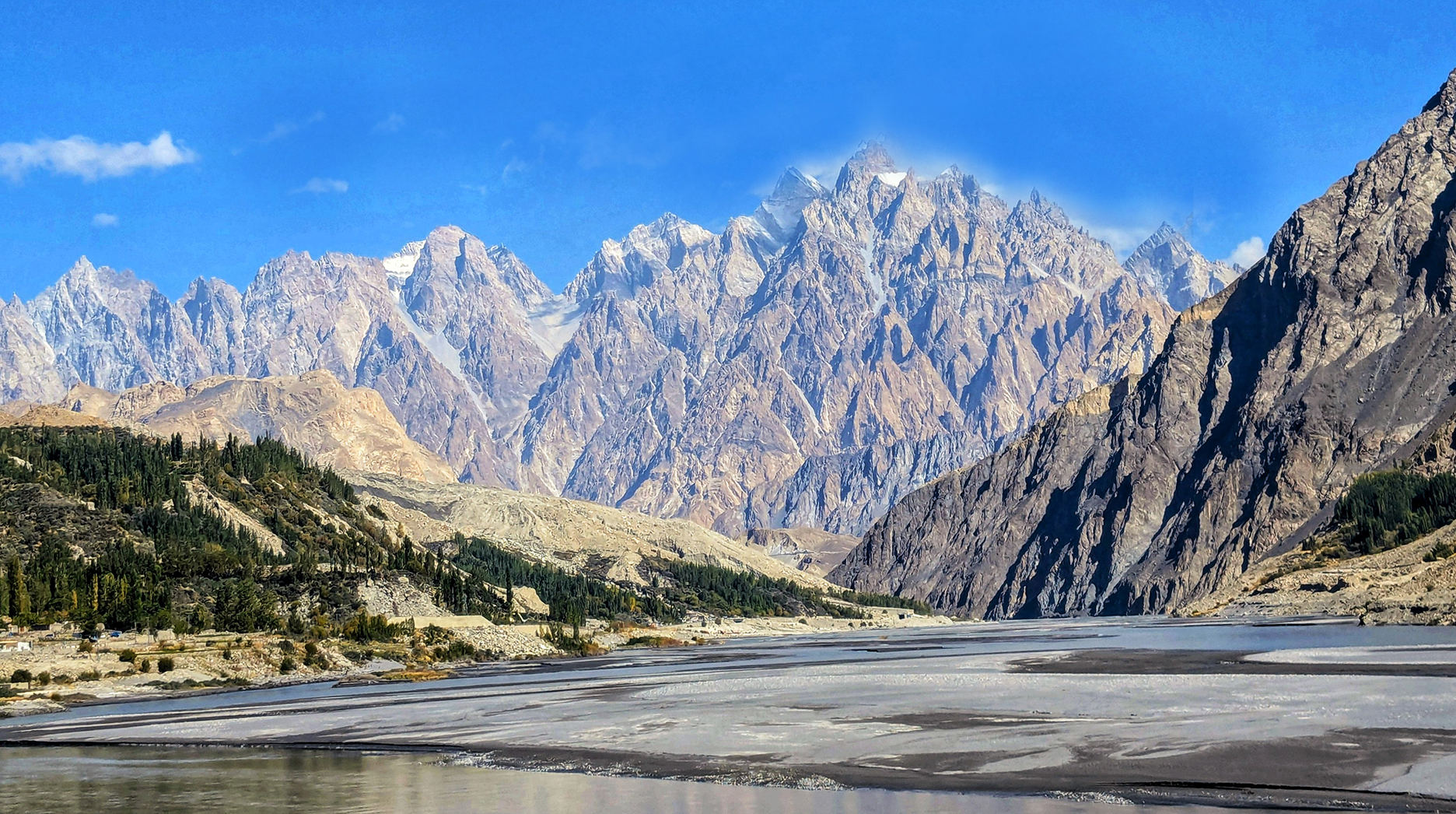
To a passing tourist, the landscape of Gilgit-Baltistan (GB) is a study in cinematic contrast: jagged, snow-capped peaks that rise high above valleys that bustle with a fragile green life. The existence of this greenery feels like an act of defiance against this high-altitude desert, where the air is thin and the sun burns bright. Despite all this, sheer cliffs of grey and brown rock hide terraced slopes containing orchards of apricot, cherry, and apple that produce fruit of a quality found almost nowhere else on earth.
The landscape hides a heartbreaking economic paradox; here in a region that grows the world’s most expensive apples and the sweetest apricots, the agricultural economy is being stifled due to multiple reasons including lack of market linkage and access to finance. These bottlenecks coupled with others have seen harvest worth millions sold at peanuts or worse fed to livestock because it cannot reach a market.
A few months ago, we navigated this landscape from the markets of Skardu to the orchards of Gulmit at the foothills of the Passu Cones and everywhere in-between. On paper, the mission and objectives were simple; we were to study and map the agricultural value chain of GB and design solutions to address the bottlenecks but plans on paper are rarely anything but simple. The reality we saw was a complex web of innovation, failure, resilience and systemic neglect. The story we brought back is not just about a single missing piece of financial access or market linkages but of a broken chain, where everyone involved speak mutually unintelligible languages.
To understand the present, we must first look at the past, where for generations, the valleys of GB followed the familiar pattern of subsistence wheat farming but this was upended when the government introduced subsidized wheat. This allowed farmers to almost stop farming wheat and turn to more commercially viable crops. Today, organic wheat has vanished in the region and survives in isolated areas like Shimshal, which remains "probably one of the only places in the world where you will get organic wheat" because the soil and seeds remain untainted by commercial mixing. The shift to the commercial crops has been further complicated by the relentless pressure of land fragmentation. Already constrained by the landscape, the farmlands have sliced once-sizeable estates into unmanageable slivers with average orchard sizes of just under to an acre. Lastly, farming is increasingly being viewed as a ‘menial job” by the younger generation, leaving the land to wither with the aging generation. Despite all of the challenges, there are still many in GB who are trying their best to make agriculture thrive against the odds.
Subscribe to Continue Reading
The rest of this article is available exclusively to subscribers.

Hasan Saeed is one of the organisers of Bookay, one of the biggest book forums in the country. He tweets at hasansaeed6 and can be reached at [email protected].
View all articles →Comments
No comments yet. Be the first to join the discussion!


