UBL shatters records as the first bank ever to post a pre-tax profit exceeding Rs. 100 billion in a single quarter
How a perfect bond timing and a massive deposit engine collapsed a year’s worth of performance into a single record-breaking quarter.

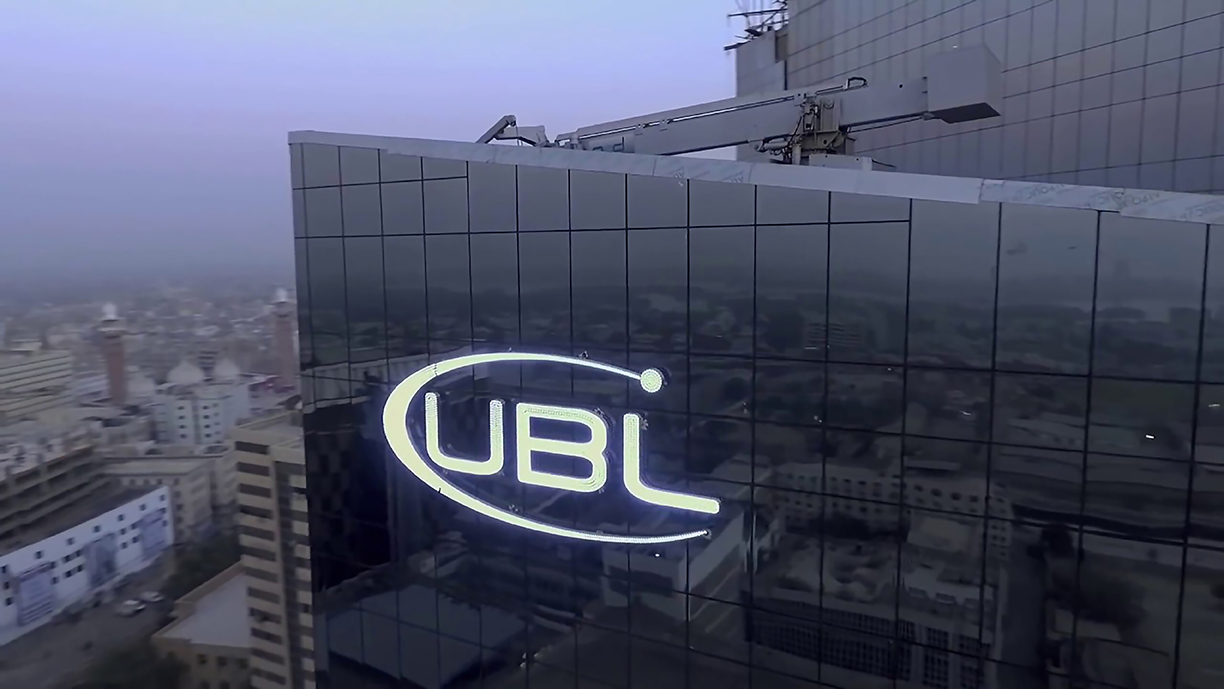
KARACHI: United Bank Limited (UBL), which last year became the second largest bank in Pakistan in terms of deposits, has reported a pre-tax profit of Rs 102.07 billion for the last quarter. This is the first time any Pakistani bank has crossed the Rs 100 billion barrier for a quarterly profit.
The headline number is immediately eye-catching. Pakistan’s other “Big Five” banks usually have a range for annual profits between Rs 120 billion to Rs 180 billion for a full twelve month cycle. Last year, UBL had posted a profit of Rs 75.33 billion in the same period last year. This in itself was impressive, but this year’s quarterly profits for the period ending March 31st 2026 marks a 35.5% increase year on year. But how did UBL achieve this feat?
All in the timing
This quarter was all about timing for UBL. It was a case of getting in, getting out, and shutting the door at exactly the right moments. At the center of it was a rare market opportunity. When the State Bank cut interest rates to 10.5% and the government repaid its $1.3 billion Eurobond in early 2026, investors began to feel better about Pakistan’s risk outlook. When risk falls and interest rates come down, older government bonds carrying higher returns suddenly become much more valuable. Their prices rise because they start to look unusually attractive compared to newly issued debt. To sum it up: Pakistan’s sovereign risk premium was lowered, and the market price of older, high-yield bonds soared.
The bank managed a "Gain on securities - net" of Rs. 30.54 billion—a more than five-fold increase over the Rs. 5.83 billion recorded in the same period last year. And this was not just a number created by accounting. The most important clue is that only Rs. 2.22 billion of that gain was unrealised. The rest, roughly Rs. 28.32 billion, seems to have been turned into actual profit through sales — meaning cold hard cash.
The move ended up being a sophisticated play in the government bond market.
But the second half of the story is just as important as the first. After taking profits, the bank appears to have shifted into protection mode. It moved Rs. 303.37 billion into amortized cost securities, a category that allows bonds to be carried on the books without daily market revaluation. The bank’s financials reveal a net investment of Rs. 303.37 billion into "Amortized Cost" securities during the quarter. This move effectively acts as an accounting shield; by shifting these funds into this category (often referred to as "Held to Maturity"), UBL is no longer required to "mark-to-market" these specific bonds.
This proved critical when geopolitical tensions in late March caused secondary market yields to spike from 11.10% toward 12.70%. Had these bonds remained in trading portfolios, the drop in market price would have forced the bank to record massive revaluation losses. Instead, UBL "locked in" its position, ensuring the quarter's record gains remained intact.
Seen simply, UBL did two things very well. It recognized a brief window when old bonds became unusually profitable, and it closed that window behind it before the market reversed. That combination of timing and caution is what made the quarter stand out.
The deposit engine and net interest growth
Of course there was some aggressive maneuvering behind the surge in profits. UBL increased the bank’s scale and robust core earnings. Over the preceding twelve months, UBL’s deposit base nearly doubled, jumping from Rs. 2.6 trillion to over Rs. 5.17 trillion by the start of 2026. By the end of March 2026, deposits had climbed further to Rs. 5.39 trillion. This allowed UBL to capture a 13.8% market share of total industry deposits, firmly establishing it as the second-largest bank in Pakistan.
The bank's core profitability mirrored this growth, as Net mark-up/interest income rose to Rs. 99.42 billion for the quarter, an 18% increase over the Rs. 84.23 billion recorded in the same period last year. This growth was driven by a significant increase in interest earned, which reached Rs. 323.52 billion. Additionally, Fee and commission income saw a healthy rise to Rs. 7.84 billion, up from Rs. 6.47 billion in Q1 2025, further diversifying the bank's revenue streams.
However, the President, Muhammad Jawaid Iqbal in an investor briefing on Wednesday clarified that UBL is not pursuing growth for the sake of rankings. Addressing the possibility of overtaking HBL as Pakistan's largest bank, he stated that the bank is not interested in "growth without profitability."
"We have no ambition to be No. 1," he remarked, adding that the bank would not mind slipping to No. 4 if that proved to be a more profitable position. The strategy remains focused on acquiring cheap current account deposits rather than pursuing high-interest, loss-making deposits simply to show balance sheet growth.
The tax bite
Of course, the pre-tax profits represent what UBL got right. But despite the expansion and the timing, UBL like all other banks is operating in a difficult tax environment. The post-tax profits for the quarter are a bit of a nightmare for a bank that has otherwise gotten everything right. Out of the Rs. 102.07 billion earned, UBL set aside Rs. 53.09 billion for taxation, representing an effective tax rate of over 52%.
Consequently, the Profit After Taxation (PAT) for the quarter stood at Rs. 48.98 billion. Although this is a significant jump from the Rs. 35.60 billion profit after tax recorded in the same quarter 2025, it underscores a landscape where the government remains the primary beneficiary of banking sector windfalls. Despite this heavy tax outgo, the bank’s bottom line was strong enough to fund an interim cash dividend of Rs. 8 per share (160%). A more rationalised tax regime is likely to have spelled even better dividends for the bank’s shareholders.
The stress test
A significant portion of the recent investor briefing was dedicated to the risks lying ahead. The president provided a candid sensitivity analysis for the bank's bond portfolio. He revealed that according to UBL’s internal stress tests, if interest rates were to rise by 1 percentage point (100 basis points) across all tenures, the bank expects a hit of approximately Rs. 8 billion on its bond portfolio.
However, he characterized this potential loss as "not a big deal," pointing to the bank’s strong interest and fee income as a more than sufficient buffer.
Another factor in this is UBL’s international footprint and the buffer it has gotten from the business it acquired from SilkBank. UBL’s President expressed optimism that regional geopolitical tensions would subside soon, minimizing the impact on the bank's Gulf operations. Even if volatility persists, UBL has a strategic fallback: the Silkbank portfolio.
The bank plans to offset potential international headwinds by aggressively recovering bad loans inherited from the Silkbank amalgamation. This "recovery cushion" is expected to stabilize the bottom line, allowing the bank to maintain its dividend payouts at the same levels as last year.
Generational transition and leadership renewal
The announcement of these landmark results coincided with a formal handover of power at the top of the institution. Lord Zameer M. Choudrey, CBE, SI Pk, has been appointed as the new Chairman of the Board. In a significant generational transition, he succeeded his uncle and the Bestway group’s founder, Sir Mohammed Anwar Pervez.
Simultaneously, the Board reaffirmed its confidence in the current executive strategy by re-appointing Mr. Muhammad Jawaid Iqbal as President and CEO for a fresh three-year term. With total assets now reaching Rs. 12.73 trillion , this leadership team enters its new mandate having delivered the single most profitable 90 days in the history of Pakistani banking.
6 Comments
No comments yet. Be the first to join the discussion!