FCC questions Punjab’s 6% royalty on cement, seeks impact on prices
Court observes royalty applies to minerals, not to finished products; Additional Advocate General of Punjab asks for time to seek fresh instructions
A three-member bench of the Federal Constitutional Court (FCC), headed by Justice Syed Hassan Azhar Rizvi, questioned the Punjab government’s revised royalty mechanism on limestone and argillaceous clay used in cement manufacturing, observing that charging royalty on a finished product appeared, prima facie, to have the effect of a tax.
The bench heard the case related to the royalty rate for mineral title holders with mining leases under large-scale mining for cement manufacturing. During the proceedings, Justice Rizvi observed that the government could levy royalty on minerals, but imposing it on a finished product such as cement raised legal questions.
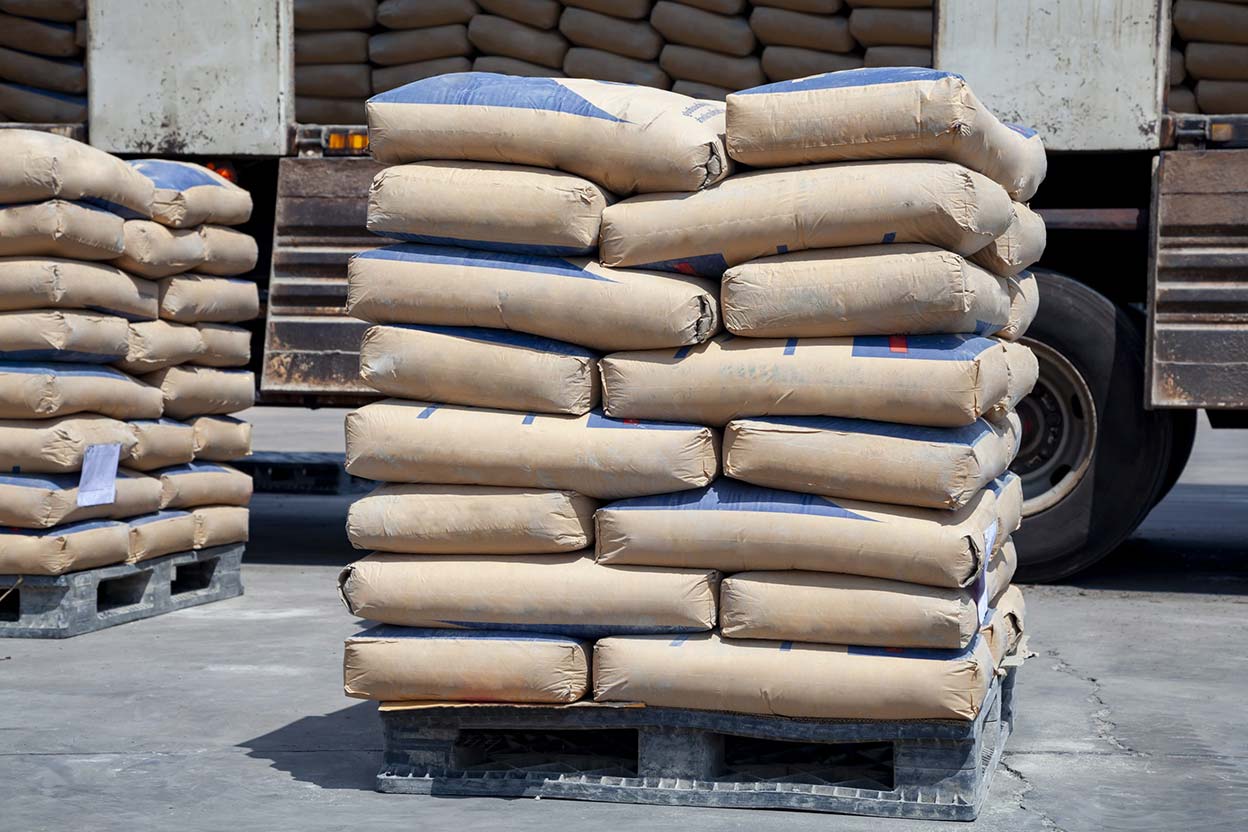
He remarked that royalty should be charged on minerals and not on cement bags, and directed law officers to inform the provincial government that the current method did not appear appropriate.
The dispute relates to Punjab’s decision to revise the royalty structure on limestone and argillaceous clay used by cement manufacturers.
The Lahore High Court had upheld the Punjab government’s revised structure, under which royalty on limestone was fixed at 6% of the ex-factory sale price of cement, replacing the earlier fixed rate of Rs250 per tonne on minerals in Financial Year 2024 for Punjab-based manufacturers.
The FCC bench also sought details on the possible increase in the price of a cement bag because of the levy.
One of the members of the bench observed that any royalty imposed on cement bags would ultimately be passed on to consumers, as factory owners would recover the additional cost from the market. Such a measure would affect consumers rather than factory owners.
The Additional Advocate General of Punjab requested time to seek fresh instructions from the provincial government. The court accepted the request and adjourned the hearing.
In June last year, a three-member Supreme Court bench headed by Justice Naeem Akhtar Afghan had granted relief to Punjab-based cement manufacturers by halting the enforcement of the Lahore High Court verdict.
The matter was later transferred to the Federal Constitutional Court after the 27th Constitutional Amendment.
Ahsan Bhoon, appearing for Flying Cement Company Limited, argued that the government could collect royalty only on minerals and that royalty on a finished product amounted to a tax. He contended that imposing royalty on cement bags was equivalent to collecting excise duty twice.
Punjab-based cement manufacturers, including Bestway Cement Ltd (BWCL), Maple Leaf Cement Factory Ltd (MLCF), Fauji Cement Company Ltd (FCCL), Pioneer Cement Ltd (PIOC) and DG Khan Cement Company Ltd (DGKC), had challenged the royalty change in court.
Their lawyer argued that the Punjab government had unilaterally increased the royalty, which would raise cement prices in the province. He also argued that any halt in cement sales would damage the industry.
Industry analysts estimate that the 6% royalty, based on net-of-tax retention prices, translates to Rs1,350 to Rs1,400 per tonne. This is nearly Rs1,000 higher than the fixed-rate royalty of Rs350 per tonne recently adopted by Khyber Pakhtunkhwa.
Analysts said the difference could affect the 79-million-tonne cement industry, which already operates with different cost structures in northern and southern regions. They said the royalty gap gives Khyber Pakhtunkhwa-based producers a cost advantage in Punjab’s cement market.
According to analysts, producers based in Khyber Pakhtunkhwa could undercut Punjab-based manufacturers by Rs25 to Rs30 per bag in competitive urban markets such as Lahore and Rawalpindi.

Our monitoring team diligently searches the vast expanse of the web to carefully handpick and distill top-tier business and economic news stories and articles, presenting them to you in a concise and informative manner.
View all articles →Comments
No comments yet. Be the first to join the discussion!