Pakistan eyes INSTC membership as Russia backs Gwadar link under new 2030 cooperation plan
Pakistan plans to join the INSTC as Russia backs a Gwadar Port connection. Islamabad and Moscow also plan to sign an economic cooperation program through 2030 to boost trade and resolve payment issues.
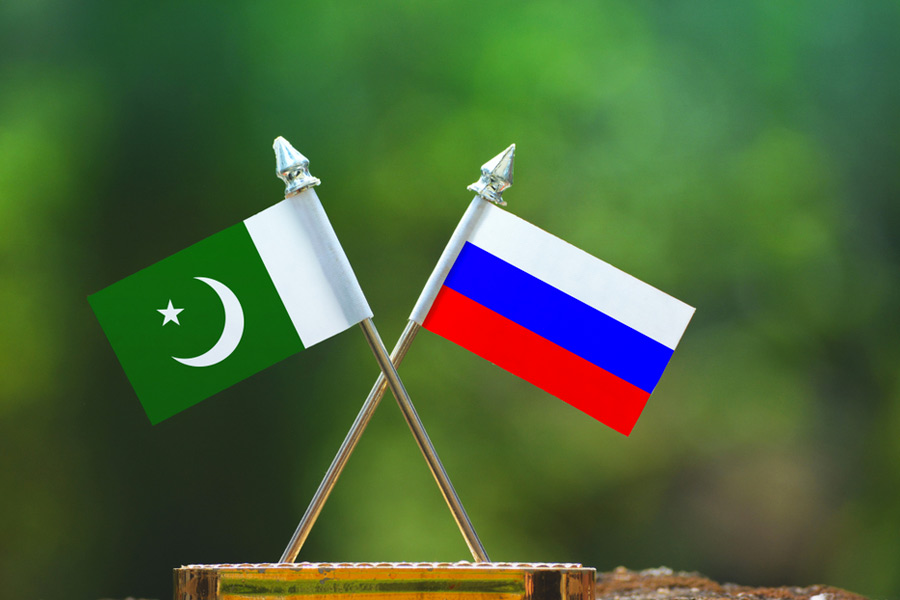
Pakistan is preparing to join the International North-South Transport Corridor (INSTC), while Russia has expressed support for integrating the trade route with Gwadar Port as the two countries work toward expanding economic and strategic cooperation under a framework extending to 2030.
The development was highlighted by Federal Minister for Energy Sardar Awais Ahmed Khan Leghari during a webinar titled “Pakistan-Russia Bilateral Relationship at the Cusp of Shifting Global Order,” where he outlined the growing momentum in ties between Islamabad and Moscow.
Leghari said both countries have agreed to sign the Program of Economic Cooperation between the Russian Federation and Pakistan for the Period until 2030, aimed at boosting trade and addressing longstanding challenges, including payment and settlement mechanisms.
A major theme of the discussion was regional connectivity. The minister confirmed Pakistan’s intention to become part of the INSTC, a 7,200-kilometre multimodal transport network that combines maritime, rail and road links connecting India, Iran, Azerbaijan, Russia, Central Asia and Northern Europe.
He welcomed recent remarks by Russian Deputy Prime Minister Alexey Overchuk supporting a connection between the corridor and Pakistan’s Gwadar Port, describing the proposal as a strategic link that could strengthen regional transport integration and complement broader Eurasian connectivity initiatives.
According to Leghari, bilateral relations have undergone a significant transformation over the past two decades, with historical mistrust dating back to the Soviet era largely replaced by cooperation in trade, energy, defence and technology.
He noted that the relationship has received sustained backing from both countries’ leadership, pointing to four recent meetings between Prime Minister Shehbaz Sharif and Russian President Vladimir Putin.
As co-chairman of the Pakistan-Russia Intergovernmental Commission (IGC), Leghari said regular engagement with Russian Energy Minister Sergey Tsivilev has helped expand cooperation across multiple sectors. He described the IGC as the principal platform driving bilateral collaboration.
The minister said both countries are also maintaining structured dialogue on security, strategic stability and counter-terrorism, while coordinating positions at forums such as the United Nations and the Shanghai Cooperation Organisation (SCO) in support of a more inclusive multipolar global order.
He added that Russian officials have acknowledged Pakistan’s diplomatic efforts in easing tensions between Iran and the United States, with President Putin previously recognising Pakistan as an important stakeholder in international affairs.
Leghari further highlighted the recent signing of the Russia-Pakistan Readmission Agreement in Bishkek, saying the accord is expected to simplify visa procedures and encourage greater business interaction and people-to-people exchanges.
He concluded that strengthening Pakistan-Russia ties would contribute not only to bilateral economic growth but also to wider Eurasian integration and regional stability.
Comments
No comments yet. Be the first to join the discussion!