Audit flags over Rs25bn exposure in BISP payments to 600,000 ineligible beneficiaries
Auditor General finds payments to government employees, pensioners, vehicle owners and duplicate beneficiaries due to weak data controls
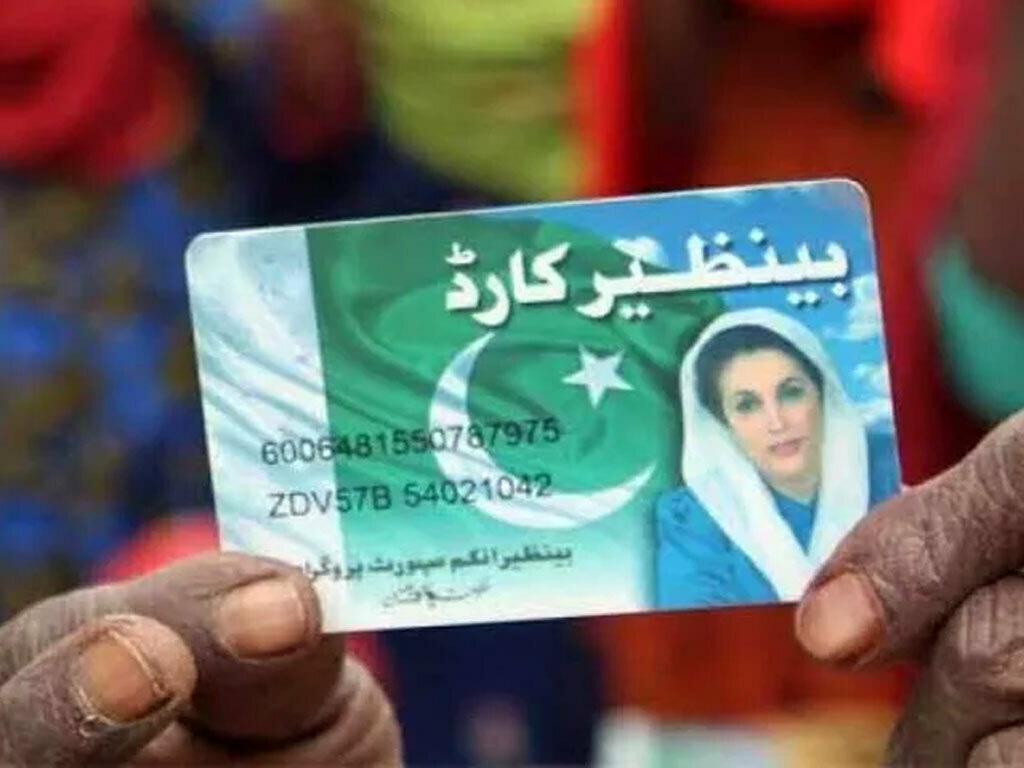
The Auditor General of Pakistan has flagged irregularities in the Benazir Income Support Programme, identifying more than Rs25 billion in financial exposure linked to over 600,000 ineligible or compromised beneficiaries during FY2024-25, The News reported.
According to the BISP audit report 2025-26, weaknesses in the BISP Management Information System, particularly spouse data profiling, resulted in payments to government employees, pensioners, vehicle owners, duplicate beneficiaries and cases with missing or inconsistent CNIC records.
The audit found that Rs515.712 million was paid to 12,078 government employees, pensioners or their spouses under the Unconditional Cash Transfer Programme, despite a December 24, 2019 federal cabinet directive excluding civil servants and their spouses from the programme.
The payments included Rs25.20 million to 673 active government employees in grades 1 to 16, Rs0.09 million to eight grade-17 employees, Rs402.80 million to 9,124 spouses of active employees in grades 1 to 16, and Rs2.54 million to 87 spouses of employees in grades 17 to 20.
The audit also found Rs7.41 million paid to 218 active pensioners in grades 1 to 16, Rs0.70 million to 22 pensioners in grades 17 to 18, Rs74.16 million to 1,847 spouses of pensioners in grades 1 to 16, and Rs2.81 million to 107 spouses of pensioners in grades 17 to 20.
The Departmental Accounts Committee directed BISP to block these beneficiaries and start recovery proceedings.
A separate test-check of 275,000 vehicles registered in Islamabad found that 1,719 beneficiaries owning vehicles above the prescribed threshold received Rs69.744 million in UCT payments. The audit noted that the nationwide figure could be higher because Islamabad represents only part of national vehicle registrations.
The report also pointed to duplicate payments under BISP’s Benazir Taleemi Wazaif programme. It found that 165 fully sponsored schools under Pakistan Bait-ul-Mal were also enrolled under BISP, resulting in duplicate stipend payments of Rs17.690 million.
Another 278 government employees were irregularly enrolled as higher secondary students under Taleemi Wazaif, leading to conditional transfers of Rs2.546 million to their families.
Field verification of 22 selected schools in Punjab, Sindh and Khyber Pakhtunkhwa found that all 23 sampled beneficiaries had either completed their studies or were no longer enrolled.
The audit also flagged major data weaknesses. In 5,558 cases, a single spouse Computerized National Identity Card was linked to up to seven different female beneficiaries, involving Rs239.035 million.
It also found that 596,252 beneficiaries had no spouse CNIC recorded, involving disbursements of Rs25,459.960 million.
System limitations allowed multiple Proxy Means Test scores against identical Heads of Household in 97,179 cases. This led to the irregular enrolment of 18,964 beneficiaries in FY2024-25, with an estimated misallocation of Rs533.536 million.
The audit further found Rs104.734 million paid to 7,020 women whose marital status was recorded as married since 2017 but who were later confirmed as unmarried through the 2023-24 Dynamic Survey.
Another Rs17.374 million was disbursed in cases where five to 10 married female beneficiaries were recorded under one household.
The Departmental Accounts Committee directed BISP to sign an MoU with Pakistan Bait-ul-Mal for API integration to prevent duplicate payments.
BISP was also told to obtain data clarifications from the National Database and Registration Authority, introduce independent verification of spouse relationships, conduct inquiries to fix responsibility and physically verify 10% to 15% of high-density married female households.

Our monitoring team diligently searches the vast expanse of the web to carefully handpick and distill top-tier business and economic news stories and articles, presenting them to you in a concise and informative manner.
View all articles →Comments
No comments yet. Be the first to join the discussion!