June 29, 2026
Easypaisa built a bank out of phone shops, cash counters and trust. Where does it go next?
After bringing millions into Pakistan’s digital payments system, Easypaisa faces the harder task of making them active banking customers — and proving that a bank built on agents, apps and trust can go where branches never did
June 29, 2026

There is a strange irony at the heart of the Telenor story. If Telenor succeeds in selling its 55% stake in Easypaisa Digital Bank, the Norwegian telecom giant may ultimately be remembered in Pakistan not for the telecom company it built, but for the bank it created.
That is not how the story began. When Telenor entered Pakistan in 2004, it came as a telecom operator. The Norwegian company had years of proven success in the field. The objective in Pakistan was straightforward: build a network, acquire subscribers and establish a position in one of the fastest-growing mobile markets in the world.
For years, that is exactly what happened. Telenor invested heavily in network expansion, distribution and customer acquisition. Alongside Mobilink, Ufone, Warid and later Zong, it was part of a telecom industry that expanded mobile connectivity across the country.
Over time, however, Telenor executives began exploring an adjacent problem. Mobile phone adoption was increasing rapidly, but access to formal financial services remained limited. In many parts of the country, telecom networks reached customers who had little interaction with the banking system.
Workers in cities could communicate easily with family members in rural areas but often relied on informal channels to send money. Many small businesses operated entirely in cash. Large sections of the population remained outside formal finance.
Nearly two decades later, the result of that exploration is Easypaisa Digital Bank. What began as a branchless banking service in 2009 has evolved into one of Pakistan's first operational Digital Retail Bank (DRB). EasyPaisa says it has more than 60 million registered users and processes trillions of rupees in annual transactions.
The timing is notable. Telenor is reportedly exploring the sale of its stake in Easypaisa at a point when the institution is entering a new phase of its development. In many ways, Easypaisa has become larger than the company that created it which makes the timing of Telenor's potential departure particularly fascinating: most companies are sold after they have reached maturity. Easypaisa appears to be entering a new phase altogether.
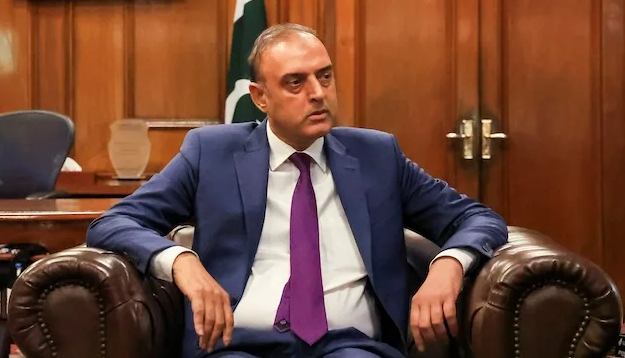
"When we started, we were trying to solve a problem in telecommunication. We were not trying to build a digital financial services platform," says Irfan Wahab Khan, chairman of Easypaisa Digital Bank and former chief executive of Telenor Pakistan. Over the past two decades, Khan has been at the heart of Telenor’s Pakistan journey, from its roots in communication tech to its banking pivot.

The story of Easypaisa is closely linked to Khan's own journey inside Telenor, where he moved from strategy and corporate affairs into leadership roles spanning telecommunications and financial services. But it is also a story about how a telecom operator, regulators, a microfinance bank and later a global fintech investor helped build one of Pakistan's largest digital financial institutions. Profit sat down with Irfan Wahab to look back at Telenor’s history in Pakistan, how it arrived at the threshold of Easypaisa Digital Bank, and what the future might hold.
Looking Beyond Telecom
When Telenor secured a telecom licence in Pakistan in 2004, Khan says he joined as the company's first local management hire, serving as executive vice president for strategy and corporate affairs. The company launched commercial operations in 2005 and expanded rapidly.
This was the time when mobile penetration across Pakistan was increasing quickly, competition among operators was intense and subscriber growth remained the industry's primary focus. By 2007, Telenor had crossed 10 million subscribers.
During this period, Khan says he became increasingly interested in whether mobile technology could be used to expand access to financial services.
Pakistan's banking sector had historically concentrated on urban centres and higher-income customers. Large sections of the population remained unbanked or underbanked, particularly in rural areas. Estimates at the time suggested that more than 75% of Pakistanis had little or no access to formal financial services.
At the same time, telecom operators had spent years building extensive retail and distribution networks. Thousands of retailers sold airtime, registered subscribers and handled customer interactions on behalf of operators. The question being explored inside Telenor was whether those networks could support financial services as well.
The idea was influenced in part by developments in other markets, including Kenya's M-Pesa. But Pakistan lacked both a regulatory framework and a proven business model for mobile financial services. By Khan’s account, in 2007, he presented the concept to Telenor's board. The proposal was rejected.
According to Khan, concerns centred on risk and reputation. Mobile financial services sat outside the company's core business and would expose Telenor to a different set of regulatory and operational challenges.
A telecom operator could afford occasional service interruptions. Financial services involved customer deposits, regulatory oversight, anti-money laundering controls and consumer protection obligations. The risk profile was fundamentally different.
A year later, the discussion resumed.
Khan says Telenor began working with the State Bank of Pakistan to explore how branchless banking could operate within a formal regulatory framework. “There were no regulations. We started working with the State Bank because branchless banking regulations simply did not exist,” he says.
The process would eventually lead to Pakistan's branchless banking framework. The discussions were important because they established the structure that would later be adopted across the industry. Rather than allowing telecom operators to operate independently as banks, the framework required partnerships with regulated financial institutions. That requirement would shape the next stage of Easypaisa's development.
In 2008, Telenor acquired 51% shareholding in Tameer Microfinance Bank. Telenor invested approximately $12.5 million for this acquisition. The transaction gave Telenor majority control of the bank and created the foundation for the launch of Easypaisa in 2009.
In 2009, Khan moved to Oslo in a group-level role with Telenor. According to him, the experience also provided an opportunity to discuss financial services at a broader level within the group.
At the time, Telenor had operations across multiple emerging markets. The questions being asked in Pakistan were not unique. Mobile phone adoption was increasing across Asia, while financial inclusion challenges remained significant in many countries.
In 2013, Khan returned to Pakistan as chief marketing officer and also joined the board of Telenor Microfinance Bank while heading its branchless banking committee. In 2015, Telenor acquired the remaining shareholding in Tameer Microfinance Bank and renamed it Telenor Microfinance Bank, bringing the institution fully under the group's ownership.
Building Easypaisa
The next challenge was structural. A telecom operator could not provide banking services on its own. The model required a regulated financial institution. That led to Telenor's investment in Tameer Microfinance Bank, which provided the banking platform necessary to launch branchless financial services.
In 2009, Easypaisa formally launched. Today, mobile wallets and app-based payments are common. At the time, neither consumer behaviour nor the regulatory environment was fully developed. According to Khan, the original model anticipated wider use of digital wallets. Customers, however, largely preferred agent-assisted transactions.
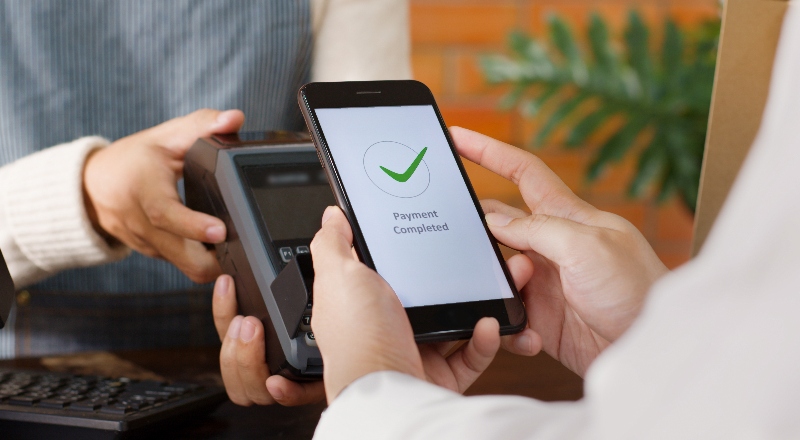
Instead of maintaining wallets, many users visited retailers, handed over cash and completed transactions through an agent. These transactions became known as over-the-counter, or OTC, transactions. For Easypaisa and later JazzCash, OTC became the dominant use case.
"Customers felt that if something went wrong, they could always go back to the retailer and ask where their money had gone," Khan says.
The approach reflected how consumers preferred to interact with financial services at the time. Retailers already existed in local communities and were often familiar to customers. Rather than push customers toward wallet adoption immediately, Easypaisa expanded its agent network and continued supporting OTC transactions.
The strategy helped the company scale its early operations while introducing customers to digital financial transactions. The original vision behind many mobile-money systems around the world was that customers would maintain digital wallets and transact directly with one another. In Pakistan, adoption followed a different path.
In the case of M-Pesa in Kenya, for instance, wallet users would use agent networks to cash in or cash out but would conduct the transactions themselves through the wallet. In Pakistan, on the other hand, a customer in Karachi could hand money to an agent, initiate a transfer and have a family member collect cash from another agent hundreds of kilometres away. The transaction moved through digital rails even if the customer never interacted with a wallet. From a product-design perspective, this differed from the original vision. From a distribution perspective, it worked.
The model enabled Easypaisa to scale without waiting for consumers to change financial habits that had developed over decades.
Why Distribution Mattered
One reason Easypaisa was able to expand quickly was that much of the required infrastructure already existed.
Banks traditionally expand through branches, but building branches requires capital, staffing, regulatory approvals and ongoing operating expenses. Expansion into lower-income or geographically dispersed areas can be difficult because transaction volumes may not justify the cost.
Telecom operators had built a different model. Instead of branches, they relied on retailers and agents.

By the late 2000s, telecom retailers were present across urban centres, towns and many rural markets. They sold airtime, registered subscribers and handled customer support functions. Consumers already interacted with them regularly. Easypaisa repurposed that infrastructure.
Rather than constructing a parallel branch network, it expanded through agents.
The approach lowered the cost of customer acquisition and gave the service a presence in locations where traditional banking infrastructure was often limited. This distribution advantage became one of the defining characteristics of Pakistan's branchless banking industry.
Years later, Khan would point to distribution as one of the most important factors behind Easypaisa's growth. During his time in Bangkok as Telenor's Head of Distribution for Asia, he worked on systems that improved visibility over inventories, commissions and retail operations across multiple markets.
The objective was not simply expansion. It was making large distribution networks more efficient and easier to manage. The same capabilities later supported financial-services operations.
Distribution also influenced the economics of the business. For traditional banks, expansion often requires physical investment before customer acquisition occurs. For branchless banking providers, distribution networks already existed. Financial services could therefore be layered onto infrastructure that had originally been built for telecommunications.
This did not eliminate the complexity of banking. Compliance, risk management and regulation remained essential. But it did change how services reached customers. The result was a model that looked different from traditional banking and different from traditional telecommunications. It sat somewhere between the two, one that required time for trust to be developed.
For many users, cash remained the preferred medium for storing and transferring value. Mobile wallets represented a new concept. The OTC model allowed customers to use digital transaction rails but without changing familiar habits immediately.
Money could be deposited with an agent, transferred digitally and collected elsewhere without requiring customers to maintain accounts themselves. This distinction mattered because branchless banking was not simply introducing a new product; it was introducing a new way of interacting with financial services.
The process took time. As Khan tells us, with the increase in transaction volumes, customers became more familiar with digital channels and wallet adoption gradually improved. The experience also shaped Easypaisa's broader approach: rather than treating technology as the primary challenge, the company increasingly focused on customer behaviour, use cases and accessibility.

The lesson became visible in the way the platform evolved. Easypaisa's early growth was driven less by sophisticated financial products and more by solving practical problems such as domestic payments, utility-bill payments and mobile top-ups.
For many customers particularly in the rural population centres of the country, these were their first interactions with the formal financial infrastructure. The importance of these services was not necessarily the transaction itself but the frequency. Utility bills are paid every month, mobile balances are topped up regularly and families send money repeatedly.
Repeated usage created familiarity with digital transactions in a way that one-time products often cannot. Those considerations would remain important as Pakistan's technology landscape evolved. Later on, smartphones changed the equation
For much of Easypaisa's first decade, Pakistan remained a feature-phone market. Mobile phones were widespread, but smartphones and mobile internet adoption were still developing. To reach these users, Easypaisa relied heavily on USSD technology, allowing customers to access services through simple menu-based interfaces without requiring internet connectivity. Think back to dialing *345# to do financial transactions.
Users could transfer money, pay utility bills and top up mobile balances through basic phones. The approach expanded access beyond smartphone users and helped establish branchless banking services in a market where internet penetration remained relatively low. For several years, this model remained central to the business. The smartphone transition altered the equation.
As smartphone adoption increased and mobile internet became more accessible, customers became accustomed to app-based experiences in other parts of their lives. Messaging, eCommerce, transport and entertainment increasingly moved to smartphones. Financial services followed.
In 2016, Easypaisa launched its mobile application. The app expanded the range of available services and shifted more activity toward direct digital engagement. Users could transfer money, pay bills, purchase insurance products, make government payments and access a growing range of services through a smartphone interface.
The shift did not eliminate the role of agents, but it added a new channel for customer engagement. Broader changes in Pakistan's telecommunications market also supported adoption. Smartphone prices declined, internet access improved and mobile data usage increased.
These developments created conditions for wider adoption of app-based financial services. The app also changed the economics of customer engagement. Agent networks remained important, but digital channels allowed Easypaisa to interact directly with customers and introduce additional services. As engagement increased, the platform expanded into areas such as savings, investments and insurance.
The transition reflected a broader change in strategy. The company was no longer focused solely on enabling transactions. It was increasingly attempting to build a broader digital-financial-services platform.
Covid, Competition and the Growth of Digital Payments
By the late 2010s, the environment in which Easypaisa operated looked very different from the one it entered in 2009.
Smartphone adoption was increasing. Mobile internet had become more accessible. Consumers were becoming more comfortable using digital services in other areas of daily life. At the same time, the broader digital-payments ecosystem was becoming more competitive.
JazzCash, operated by Jazz, had emerged as a major player in branchless banking and mobile financial services. While Easypaisa had entered the market first, JazzCash expanded aggressively and built a significant scale of its own.
The development of Pakistan's digital finance sector is often told through the story of a single company. In practice, it evolved through competition between multiple players, regulatory initiatives by the State Bank and changes in consumer behaviour. Easypaisa and JazzCash competed for customers, merchants and transaction volumes, but both also benefited from broader growth in digital payments.
As more consumers adopted smartphones, the addressable market expanded. As more merchants accepted digital payments, usage opportunities increased. As regulators introduced new infrastructure and frameworks, the ecosystem became easier to navigate. Khan explains that the Covid-19 pandemic accelerated many of these trends.
Lockdowns, mobility restrictions and concerns about physical interaction increased demand for digital transactions. Consumers who had previously relied heavily on cash began experimenting with digital alternatives. Businesses looked for ways to receive payments remotely. Government programmes increasingly used digital channels for disbursements.
"Covid became an inflection point. People realised that work, payments and daily life could all be managed through technology," Khan says. The shift was visible across the industry. Transaction volumes increased, digital-wallet usage grew and more consumers became comfortable conducting financial activities through smartphones.
The pandemic did not create digital finance in Pakistan, but it accelerated adoption among users who may otherwise have taken years to transition.
At the same time, regulators continued building the infrastructure necessary for a more digital financial system. One of the most important developments was Raast, the State Bank's instant payment system. Raast was designed to allow real-time digital payments between financial institutions and service providers.
The significance of systems such as Raast is often overlooked because they operate largely in the background. Consumers see apps, businesses see payment interfaces, but the infrastructure connecting these systems is less visible. Yet it is this invisible infrastructure that often determines how efficiently money moves through an economy.
For branchless banking providers, Raast improved interoperability, reduced friction and expanded opportunities for digital transactions. The result was a financial-services landscape that looked increasingly different from the one that existed when Easypaisa launched.
Ant Group Arrives
A major development in Easypaisa's history came in 2018 when Ant Financial acquired a 45% stake in Telenor Microfinance Bank for $184.5 million. At the time, Ant was one of the most influential companies in global financial technology.
Through Alipay and its broader ecosystem, the company has helped develop one of the world's largest digital payments and financial services platforms. For Easypaisa, the investment brought more than capital.
It brought operational experience, technology expertise and exposure to business models that had achieved scale elsewhere. “That's when we partnered with Ant Group, the largest fintech company in the world. They brought technology, expertise and global best practices,” Khan says.
The investment also reflected how international investors viewed Pakistan. That despite the challenges associated with financial inclusion, the opportunity was vast. Large portions of the population remained underserved or unserved by traditional financial institutions. At the same time, mobile phone adoption was high, smartphone adoption was increasing, and so was internet penetration. In comparison to regional markets, digital payments remained underdeveloped.
For Ant Financial, a company focused on digital finance, Pakistan represented a market with substantial room for growth. Within Easypaisa, the Ant partnership coincided with broader efforts to expand products and services.
The company increasingly positioned itself as a digital financial services platform rather than a payments provider. This distinction matters: a payments company primarily moves money. A financial services platform attempts to help customers manage money.
Those are related but fundamentally different objectives.
Becoming a Digital Retail Bank
As Easypaisa evolved into a digital financial services platform, another question emerged. How far could the platform evolve within the framework of branchless banking? The introduction of digital banking licences by the State Bank provided one answer.
The digital banking framework recognised that financial services were increasingly being delivered through software rather than physical branches. While traditional banks remain important, digital first institutions operate differently, acquire customers differently and serve customers differently.
And they often have different cost structures.
In 2022, Easypaisa began the application process for a Digital Retail Bank licence. Competition was significant, and more than 20 applicants participated in the process. The evaluation extended over a lengthy period and involved a detailed regulatory review.
In 2023, Easypaisa received in-principle approval from the State Bank. According to the company, it was the only incumbent among the successful applicants that received a license. Even its competitor JazzCash was in the race to secure the license but the State Bank opted for EasyPaisa instead.
In 2025, Easypaisa received approval to commence commercial operations as Pakistan's first Digital Retail Bank. The development reflected how far the business had evolved since 2009.
The original service focused largely on transfers and payments. The institution now offered savings products, investments, insurance and a broader range of banking services under the Digital Bank license.
For Khan, who by then had served as chief executive of Telenor Pakistan, global head of financial services for Telenor Group and now serving as chairman of Easypaisa Digital Bank, the approval represented the latest milestone in a process that began nearly two decades earlier.
Today, Easypaisa occupies multiple roles simultaneously. It is a bank, it is a payments platform and it is a distribution network. The platform's scale reflects broader changes in Pakistan's financial services sector over the past two decades.
Mobile wallets, digital payments and app-based financial services are substantially more common today than they were when Easypaisa launched in 2009.
At the same time, the original market opportunity remains. Large segments of Pakistan's population remain outside formal finance. Credit penetration remains low by regional standards. Insurance penetration remains limited and cash continues to play a dominant role in the economy.
In many respects, the questions being asked today are different versions of the questions that existed in 2007. How can financial services reach customers that traditional institutions struggle to serve? How can technology reduce distribution costs? How can more people participate in formal finance?
Different companies may propose different answers, but the underlying questions remain relevant. This is partly what makes Telenor’s potential exit noteworthy. Most companies dispose of mature assets after opportunities have been largely exhausted. Pakistan's financial services market still contains substantial room for growth.
Whether that growth ultimately benefits Easypaisa, traditional banks, new digital banks or other fintech firms remains to be seen. What is clear is that the market that originally attracted Telenor remains very much in existence.
If Telenor ultimately exits Easypaisa, it will close a chapter that began with a telecom licence in 2004 and expanded into financial services five years later. The company entered Pakistan to build a mobile network. Two decades later, one of its most valuable assets may be a digital bank.
Whether the next phase of Easypaisa unfolds under Telenor or a new shareholder, the institution traces its origins to a telecom company’s effort to extend the reach of its distribution network beyond communications and into financial services.

The author is a staff member and can be reached at [email protected]
View all articles →0 Comments
No comments yet. Be the first to join the discussion!