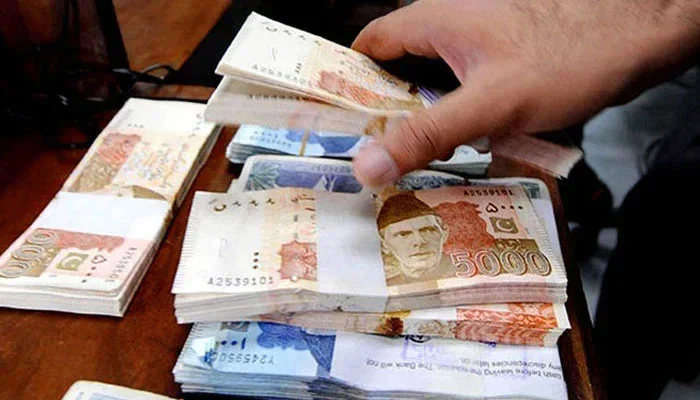
Govt borrowed Rs122 billion a day from banks in mid-June, SBP data shows
Domestic borrowing reaches Rs5.529 trillion in FY26, surpassing Rs5.434 trillion full-year borrowing in FY25

The federal government borrowed Rs611 billion from banks in five working days between June 15 and June 19, averaging Rs122 billion per day, according to the latest State Bank of Pakistan (SBP) data.
The fresh borrowing has taken the government’s total borrowing in FY2025-26 to Rs5.529 trillion, exceeding the Rs5.434 trillion borrowed during the whole of FY2024-25.
SBP data showed that government borrowing stood at Rs4.71 trillion by June 20 last year, indicating a higher borrowing pace in the current fiscal year. The increase comes as domestic debt has already crossed Rs58 trillion by April 2026 and may rise further by the end of the fiscal year.
Higher borrowing has added pressure on public finances, as a large share of government resources is being used for debt servicing.
The government is expected to spend Rs8 trillion on debt servicing in FY2026-27, compared with about Rs1 trillion allocated for the federal Public Sector Development Programme.
The gap reflects limited fiscal space for development spending as debt repayment obligations continue to rise.
The SBP data also showed that banks continued to invest heavily in government securities, while lending to the private sector remained limited and was mostly directed towards short-term working capital.
Banking experts said weak private-sector credit has restricted business expansion, investment and job creation. They said economic growth below 4% is insufficient to generate meaningful employment or substantially increase government revenues.
Experts also noted that the Public Sector Development Programme is often not fully utilised, reducing its role in supporting growth.

Our monitoring team diligently searches the vast expanse of the web to carefully handpick and distill top-tier business and economic news stories and articles, presenting them to you in a concise and informative manner.
View all articles →Comments
No comments yet. Be the first to join the discussion!