Pakistan's economy expands to $452 billion as GDP hits four-year high of 3.7% in FY2026-27
Finance Division says current account posted $255 million surplus in Jul-May, fiscal deficit narrowed to 1.1% of GDP and inflation is expected to remain at 11-12% in June 2026


Pakistan’s economy is closing FY2026 with real GDP growth of 3.7%, the highest in four years, as macroeconomic stability improved and activity recovered across agriculture, industry and services, according to the Finance Division’s Monthly Economic Update & Outlook for June 2026.
The report said the size of the economy expanded to $452.1 billion despite flood-related disruptions earlier in the year and volatility in global commodity markets. It said average inflation remained in single digits within the target range, while the current account recorded a surplus of $255 million during July-May FY2026.
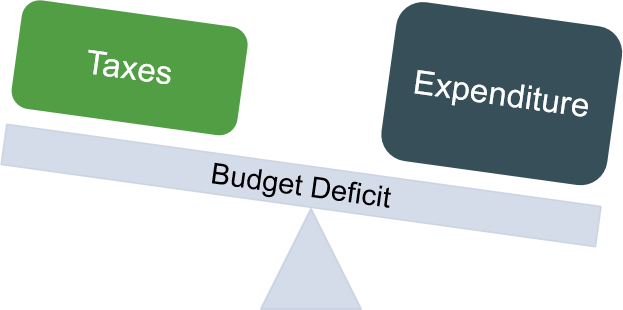
The Finance Division said fiscal performance improved due to expenditure control, revenue mobilisation and provincial surpluses. The fiscal deficit narrowed to 1.1% of GDP, or Rs1.35 trillion, during July-April FY2026 compared with 3.2% of GDP, or Rs3.63 trillion, in the same period last year. The primary surplus stood at 3.5% of GDP, or Rs4.38 trillion, compared with 3.2% of GDP last year.
Net federal revenue increased by 5.8% to Rs8.60 trillion during July-April FY2026. FBR tax collection rose 9.7% to Rs11.23 trillion during July-May, supported by a 13% increase in direct taxes and 6.7% growth in indirect taxes. Sales tax collection rose 7.7%, customs duties 1.4% and federal excise duty 10.7%.
Total expenditure declined 9.9% to Rs11.62 trillion during July-April, mainly due to a 10.3% fall in current expenditure and a 21.9% reduction in mark-up payments. Development expenditure, however, increased by 1.2%.
On the external side, the current account posted a surplus of $459 million in May 2026, taking the July-May surplus to $255 million. Goods and services exports stood at $37.4 billion, almost unchanged from $37.5 billion last year, while imports rose to $69.6 billion from $64.5 billion. The goods and services trade deficit widened to $32.2 billion from $27 billion.
Goods exports stood at $28.3 billion, while IT-led services exports increased 20.4% to $4.2 billion. According to PBS data cited in the report, knitwear exports rose 1%, garments 5.4% and bedwear 2.2%. Major import increases were recorded in petroleum crude at 27.3%, petroleum products at 2.9% and palm oil at 10.8%.
Remittances remained a major support for the external account, rising 9.2% to $38.1 billion during July-May FY2026. Monthly remittances reached $4.3 billion in May, the highest monthly inflow recorded during the period. Saudi Arabia accounted for 23.5% of inflows and the UAE for 21%.
Total FDI inflows during July-May stood at $3.3 billion, while net FDI was recorded at $1.6 billion. China contributed $819 million and Hong Kong $308.4 million in net inflows. Power attracted $871.4 million and financial services $718.5 million. Private and public portfolio investment posted net outflows of $566 million and $579.6 million, respectively. Foreign exchange reserves stood at $21.5 billion as of June 19, including $15.9 billion held by the State Bank of Pakistan.
Large-scale manufacturing grew 6.4% during July-April FY2026 against a contraction of 1.5% in the same period last year. Growth was led by automobiles, food, wearing apparel, and coke and petroleum products. Sixteen of 22 LSM sectors posted growth, including textile, food, beverages, electrical equipment, automobiles and tobacco.
In April 2026, LSM grew 6.1% year-on-year but declined 8.3% month-on-month due to lower output in chemicals, pharmaceuticals and iron and steel products. During July-May, production of trucks and buses rose 69.6%, cars 44.7%, two- and three-wheelers 30.4%, and jeeps and pick-ups 31.7%. Tractor production increased 0.9%, supported by a 77.4% rise in May.
Cement dispatches increased 6.4% to 46.3 million tonnes during July-May FY2026. Domestic dispatches rose 8.3% to 38 million tonnes, while exports fell 1.2% to 8.2 million tonnes.
The agriculture sector grew 2.9% in FY2026 despite flood damage. The government has targeted 3.6% agriculture growth for FY2027, including 3.9% growth in livestock, 3.5% in other crops, 2.9% in important crops, 1.7% in fisheries and 1.5% in cotton ginning.
Agricultural credit disbursement rose 18.9% to Rs2.46 trillion during July-April FY2026 from Rs2.07 trillion a year earlier. Imports of agricultural machinery and implements increased 24.8% to $123.8 million during July-May. Urea offtake during Kharif 2026 stood at 882,000 tonnes in April-May, up 31.9% year-on-year, while DAP offtake fell 24.3% to 146,000 tonnes due to higher prices.
CPI inflation stood at 11.7% year-on-year in May 2026, compared with 10.9% in April and 3.5% in May 2025. Average inflation during July-May FY2026 was 6.7%, compared with 4.6% in the same period last year.
The report said transport inflation rose 36.8%, while housing, water, electricity, gas and fuels increased 16.8%. Non-perishable food items rose 9.4%, clothing and footwear 8.8%, education 8.4% and health 7.5%. Perishable food prices declined 3%.
The Sensitive Price Indicator increased 0.5% for the week ended June 18, 2026. Out of 51 monitored items, prices of 25 increased, 11 declined and 15 remained unchanged. The report said petrol prices had been reduced by Rs74 per litre and diesel by Rs67 per litre following lower global crude oil prices.
The Monetary Policy Committee kept the policy rate unchanged at 11.5% on June 15, 2026. The report said the committee noted that the impact of the Middle East conflict had appeared in recent indicators, with headline inflation rising to double digits in April and May and core inflation also moving up.
During July 1 to June 12 FY2026, money supply grew 9.2%, or Rs3.73 trillion, compared with 7.1%, or Rs2.55 trillion, last year. The government borrowed Rs1.80 trillion for budgetary support compared with Rs3.21 trillion last year, while private sector borrowing rose to Rs873.3 billion from Rs676.6 billion.
The report said the Pakistan Stock Exchange maintained an upward trend in May. The KSE-100 Index gained 10,969 points during the month and closed at 173,963, while market capitalisation increased by Rs1.14 trillion to Rs19.17 trillion. According to the economic indicators table, the PSX index stood at 178,414 on June 29, 2026, up 43.3% from 124,379 on June 27, 2025.
On social sector indicators, the Bureau of Emigration & Overseas Employment registered 34,946 workers for overseas jobs in May 2026. The Pakistan Poverty Alleviation Fund, in partnership with 24 organisations, disbursed 6,935 interest-free loans worth Rs493 million in May. Since 2019, Rs125.7 billion has been provided to borrowers. BISP spending reached Rs518.1 billion during July-April FY2026, up 25.9% from last year.
For the outlook, the Finance Division said Pakistan’s economy is expected to maintain growth momentum, supported by manufacturing expansion, a stable external account, fiscal discipline and resilience in agriculture. It projected inflation at 11-12% for June 2026 and said lower international oil prices could reduce imported inflation and contain the oil import bill.
The report said the Budget 2026-27 focuses on export-led growth, taxpayer relief, social protection and fiscal discipline. It added that Pakistan’s outlook for FY2027 is expected to improve with reform continuity, stronger confidence and a more business-friendly environment.
Comments
No comments yet. Be the first to join the discussion!