Pakistan courts Turkish investment with fresh push on privatisation, energy and mining
At business forum in Istanbul, PM Shehbaz Sharif offers dedicated economic zone for Turkish firms, seeks government-to-government investment deals and expands cooperation beyond trade.
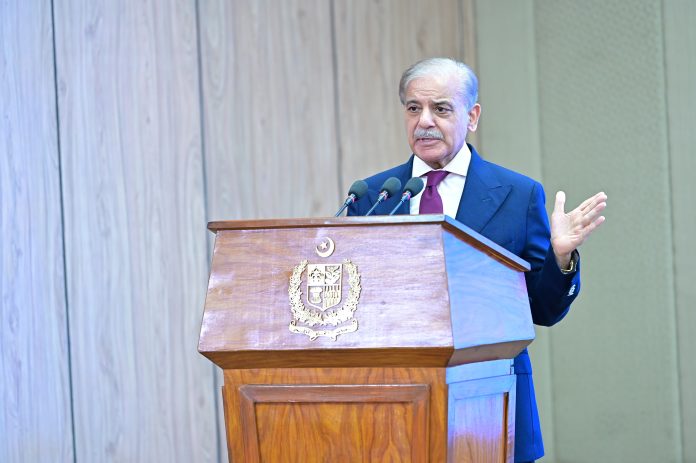
Prime Minister Shehbaz Sharif on Saturday stepped up Pakistan's drive to attract Turkish investment, inviting businesses to participate in the country's privatisation programme and invest in sectors ranging from mining and energy to information technology, manufacturing and infrastructure.
Speaking at the Pakistan-Türkiye Business Conference, the prime minister said Islamabad was prepared to sign government-to-government investment agreements with Ankara to facilitate greater Turkish participation in Pakistan's economy.
As part of that effort, he announced that Pakistan had allocated 1,000 acres in Karachi for Turkish investors in a special economic zone named after Turkish President Recep Tayyip Erdogan.
Shehbaz said the government was opening investment opportunities in state-owned enterprises, particularly loss-making power sector companies, while also encouraging Turkish firms to invest in renewable energy projects, including solar and wind power.
He said Pakistan's untapped mineral reserves presented another major avenue for bilateral cooperation and urged Turkish companies to jointly develop the country's mining sector. He also pointed to opportunities in artificial intelligence and information technology, noting that around 60 percent of Pakistan's population of 240 million was comprised of young people who could support the country's digital economy.
Highlighting Türkiye's economic transformation over the past two decades, the prime minister said the country had achieved significant progress in industries including automobiles, textiles and agriculture under President Recep Tayyip Erdogan's leadership. He added that Pakistan was keen to benefit from Türkiye's experience in privatisation and the development of special economic zones.
Calling Türkiye one of Pakistan's closest allies, Shehbaz said the relationship between the two countries was rooted in centuries of shared history and had consistently been reinforced through mutual support during wars, earthquakes and floods.
He also referred to Pakistan's recent diplomatic role in helping reduce tensions between the United States and Iran, saying the effort, undertaken with the support of President Erdogan and other friendly countries, had resulted in a ceasefire and the signing of the Islamabad Memorandum of Understanding by the presidents of Pakistan, Iran and the United States.
Turkish Vice President Cevdet Yilmaz said Ankara was committed to opening new avenues of economic cooperation with Pakistan, describing bilateral ties as a partnership built on brotherhood rather than shared interests alone.
He praised Pakistan's mediation efforts between Iran and the United States, saying regional peace was essential for economic development, and reiterated the two countries' target of increasing bilateral trade to $5 billion through the High Level Strategic Cooperation Council.
Deputy Prime Minister and Foreign Minister Ishaq Dar said the strategic locations of Pakistan and Türkiye offered both countries an opportunity to become gateways connecting Europe, Asia, the Middle East and Central Asia.
He said Pakistan's ongoing economic reform programme was aimed at improving macroeconomic stability, boosting investor confidence and creating a more business-friendly environment.
Dar invited Turkish investment in energy, mining and minerals, power infrastructure, manufacturing, agriculture, logistics, tourism, defence production and information technology, while also calling for greater collaboration in artificial intelligence, fintech, digital innovation, advanced manufacturing and research.
Prime Minister's Adviser on Privatisation Muhammad Ali said Pakistan's improving economic indicators, including a current account surplus, declining inflation, higher per capita income and increased remittances, had strengthened the country's investment profile.
He said the government was aggressively pursuing privatisation and public-private partnership projects, including motorways, airports, healthcare facilities and hospitality ventures.
Petroleum Minister Ali Pervaiz Malik told participants that Pakistan planned to expand oil refining capacity, develop additional fuel storage infrastructure and open new copper and gold mining blocks for extraction and processing. He added that companies had already begun vertical drilling on new projects while refinery upgrades and regulatory harmonisation were underway to facilitate investors.
Power Minister Awais Ahmed Khan Leghari said reforms in the electricity sector were focused on restructuring power companies, reducing system inefficiencies by 45 percent, privatising electricity distribution companies and digitalising the transmission network.
Information Technology Minister Shaza Fatima Khawaja said Pakistan's IT exports were growing by 20 percent annually. She said the country had 26,000 registered IT companies, had established special technology zones and ranked as the world's fourth largest country for IT outsourcing.
Pakistan's Ambassador to Türkiye, Dr Yousaf Junaid, said the conference reflected both countries' shared commitment to converting their longstanding political relationship into a stronger economic partnership by expanding trade, investment and industrial cooperation.
Comments
No comments yet. Be the first to join the discussion!