The buffer and the trap: What Pakistan's Petroleum Prices Stabilization Fund must not become
Pakistan's federal cabinet approved the establishment of a Petroleum Prices Stabilization Fund. The Ministry of Finance has been directed to open a separate account within the Public Account of the Federation. The Petroleum Division and OGRA have been tasked with finalizing its operational framework.
The announcement was received with quiet optimism. After a quarter of historic price volatility, petrol breaching Rs. 450 per litre, diesel crossing Rs. 520 during the Hormuz crisis, followed by various reductions to now petrol at Rs. 299 per litre and diesel Rs.311 per litre. This crises left every supply chain in the country scrambling and the idea of a government buffer feels like common sense.
I want to argue that it is the right idea, implemented at the right moment, in a framework that if left unaddressed, carries the seeds of a fiscal crisis larger than the one it is meant to prevent.
The Fund as Conceived Is an Account, Not a Policy
What the cabinet approved on June 5 is, structurally, an account head with a mandate. The operational rules, how it is funded, what triggers disbursement, what triggers replenishment, and, critically, what triggers the end of disbursement are yet to be finalized. In the absence of those rules, the fund is not a stabilization mechanism. It is a reserve that a future cabinet can draw on whenever fuel prices become politically inconvenient. That distinction is not academic; it is the difference between a shock absorber and a subsidy.
Every regional peer that has walked this road before us has eventually confronted the same moment: when global prices rise and stay elevated, the political cost of passing the adjustment to consumers exceeds the political cost of drawing from the fund. At that point, the fund stops being a buffer against volatility and becomes a mechanism for suppressing prices indefinitely. The buffer empties. The deficit grows. And when the fund finally runs dry, consumers absorb in a single brutal correction and every adjustment that was delayed across months or years.
This is not a theoretical risk. It happened in Thailand. It happened in Vietnam. And it can happen here.
What Regional Peers Teach Us
Thailand and Vietnam are the two most cited examples of fuel stabilization funds in Asia and together they tell a complete story — one about design failure, the other about scale failure.
Thailand kept diesel capped at $0.88 per litre through its Oil Fuel Fund even as market prices climbed well above that level. By mid-2022, the fund's deficit had crossed $2.7 billion. The 2026 Hormuz crisis finished it: the fund was depleted within weeks and consumers absorbed a sudden $0.18 per litre. 20% increase overnight, the very shock the fund was designed to prevent. The problem was not the concept. It was that no government was willing to let prices rise gradually while the reserve existed. The fund became a price suppression tool, not a buffer.
Vietnam built better rules, a mandatory per-litre levy held in audited OMC accounts, with rule-based disbursement triggers requiring inter-ministerial approval above a 7% price threshold. Its fund held $220 million by Q3 2025. It was tapped nine times in eight weeks during the 2026 crisis and nearly emptied anyway, requiring a $315 million state budget advance to keep it solvent.
The combined lesson is simple: funds can absorb short shocks. They cannot absorb sustained disruptions. And without a statutory clause mandating retail price adjustment when the amount falls below a threshold, every stabilization fund eventually becomes a subsidy programme with a fancier name.
India Did It Without a Fund
The regional peer that managed the 2026 crisis most effectively did so without a dedicated stabilization fund at all. India's state-owned OMCs (IOC, BPCL and HPCL) absorbed under-recoveries on their balance sheets for 76 days after the Hormuz crisis began. Losses reached nearly $3.6 billion per month at peak. The government did not draw from a reserve. It allowed the entities to carry the loss, confident that the Price Differential Claims mechanism, the PDC system, would clear those losses retrospectively within a defined settlement window. When pressure became untenable, India raised prices in measured, pre-communicated steps across May 2026.
No panic. No shortages. No emergency Senate hearings.
The model works because India's PDC settlement is automatic and time-bound. When OMCs incur under-recoveries, the government clears them within a defined window. The OMC balance sheet acts as the buffer. The settlement mechanism is the discipline.
Pakistan attempted something similar during the 2026 crisis. The government provided approximately Rs. 120 billion in crisis support through the PDC mechanism to cushion OMCs and the supply chain from the price shock. The intent was right. But of that Rs. 120 billion, Rs. 66 billion more than half remains stuck and uncleared. OMCs are carrying that gap on their books today, constraining their ability to procure, plan and invest. A PDC mechanism that settles half the claim is not a mechanism. It is a partial payment with no timeline, which in commercial terms is the same as a default.
Before Pakistan builds a stabilization fund, it needs to fix the settlement infrastructure that already exists. A new account without a functioning clearing system is a second buffer layered on top of a broken first one.
Deregulation Is the Destination — But the Road Matters
Let me say something that may be unpopular in certain policy circles: I support deregulation of the petroleum sector. A fully competitive, market-priced fuel sector with multiple private players, transparent pricing and no government interference in commercial decisions is the correct long-term destination for Pakistan.
The Philippines fully deregulated in 1998. Malaysia floated diesel in 2024. India has given its OMCs effective pricing autonomy. The direction across Asia is unambiguous: governments are getting out of the business of setting fuel prices and into the business of regulating the markets that set them.
But here is the question that no one in the Government has adequately answered: if the government must announce weekly fuel prices and nine times out of ten the public reaction is negative. Either the price goes up and consumers are angry, or the price stays flat while global prices fall. The key question is, why is the government in this business at all?
Every price announcement is a political event. Sometimes a press conference, a news cycle and then a narrative to manage. The minister's phone rings. The Prime Minister's office weighs in. What should be a commercial calculation made by a regulator applying a published formula becomes a cabinet-level decision shaped by polling anxiety and IMF deadlines.
The answer is not better price announcements. The answer is to stop making them.
Give OGRA a published formula and to apply it without reference to any ministerial consultation. Let the regulator regulate and stick to the formula instead of any creative pricing architecture every week to determine what consumers pay at the pump. If the government wants to protect the poor from fuel price shocks, do it through targeted cash transfers via BISP but not through price suppression that benefits the wealthy car owner and the industrial generator owner equally alongside the motorcycle rider it claims to protect.
A stabilization fund, designed correctly, enables this transition. It gives the government a buffer to smooth the political landing of price deregulation not a tool to perpetuate the system that made every price announcement a crisis.
The Real Crisis: Policy Inconsistency as Investment Repellent
Here is what no one in government wants to say plainly: the stabilization fund debate, the formula changes, the PDC disputes, these are all symptoms of a single underlying pathology. Pakistan does not have an energy pricing problem. It has a policy consistency problem.
And policy inconsistency, sustained over years, is the most effective investment deterrent this country has ever produced.
We speak endlessly about attracting foreign direct investment into the energy sector. We design Special Economic Zones, offer tax holidays, hold roadshows in Dubai and London and wonder aloud why capital does not arrive. The answer is sitting in every boardroom that has evaluated a Pakistan energy investment: the rules change. Not occasionally. Systematically. The pricing formula that existed when the investment was appraised is not the formula in place when the project commissions. The return that was modelled is not the return that is permitted.
The “Greenfield refining policy 2023” is the most instructive example. Pakistan announced it to attract new refinery investment, a sector where the country needs capacity modernization. Existing refineries, having studied it, concluded that brownfield expansion was the more immediately executable path. The brownfield refining policy was also approved in 2023 but its implementation is still pending and the current Government is now working to resolve several issues around it.
Local Investors: The Children of a Lesser God
Every few months, a new set of officials arrives at the decision making offices with fresh a conviction that they understand the sector better than the people who have spent their careers building it. New interpretations are applied to existing polices and formulas are revised without consultation.
Foreign investors, when this happens, invoke arbitration clauses. Governments pay attention.
Local investors write letters. They attend meetings. They are told to be patient. They are reminded of their patriotic obligation to keep investing in a country that treats their capital as less worthy of protection than capital that arrives with a foreign currency denomination.
We send delegations abroad to court foreign investors with preferential terms, sovereign guarantees and accelerated approvals and offering them the policy stability we deny existing industry. And then we are genuinely puzzled when those foreign investors, having done their diligence, conclude that if the government cannot keep its commitments to domestic players who have no exit option, it will certainly not keep them to investors who do.
Four Non-Negotiables for the Framework
If Pakistan's stabilization fund is to be a genuine policy instrument rather than a political tool, four things are non-negotiable.
A statutory target sized against a six-month shock, not normal volatility. A minimum of $700 million to $800 million is the threshold below which the fund offers no meaningful protection. A smaller fund is not a buffer. It is an illusion of one.
A mandatory per-litre levy embedded in the retail price by law, not subject to cope up with the shortfall in annual revenue targets on other accounts. The Vietnam model of OMC-held, audited contributions is the right template.
Pre-defined disbursement triggers in regulation, not cabinet discretion. Two-ministry governance with rule-based thresholds is the minimum acceptable standard.
A statutory sunset clause: if the fund falls below 20% of the target, retail prices adjust within 15 days. No exceptions.This is what separates a stabilization fund from a price control mechanism with extra steps.
Closing Argument
Pakistan's decision to create a Petroleum Prices Stabilization Fund is correct in intent. The 2026 Hormuz crisis exposed what happens to an economy with no price buffer, no functioning PDC settlement and a formula that changed six times in as many weeks.
But a fund without rules is not a policy. It is an appropriation.
Build the fund. Legislate the exit clause. Clear the backlog stuck in PDC arrears of OMCs because a settlement mechanism that has cleared half the claim and frozen the rest is not working. Implement the brownfield refining policy that has been agreed for three years and delivered nothing. Give OGRA the mandate to set prices without a cabinet meeting. And please stop treating local investors as children of a lesser god because the foreign investment Pakistan keeps chasing will not arrive in this sector until the investors who cannot leave are no longer treated as expendable.
The buffer is only as strong as the discipline behind it and the discipline in Pakistan's petroleum sector has been missing for long enough.
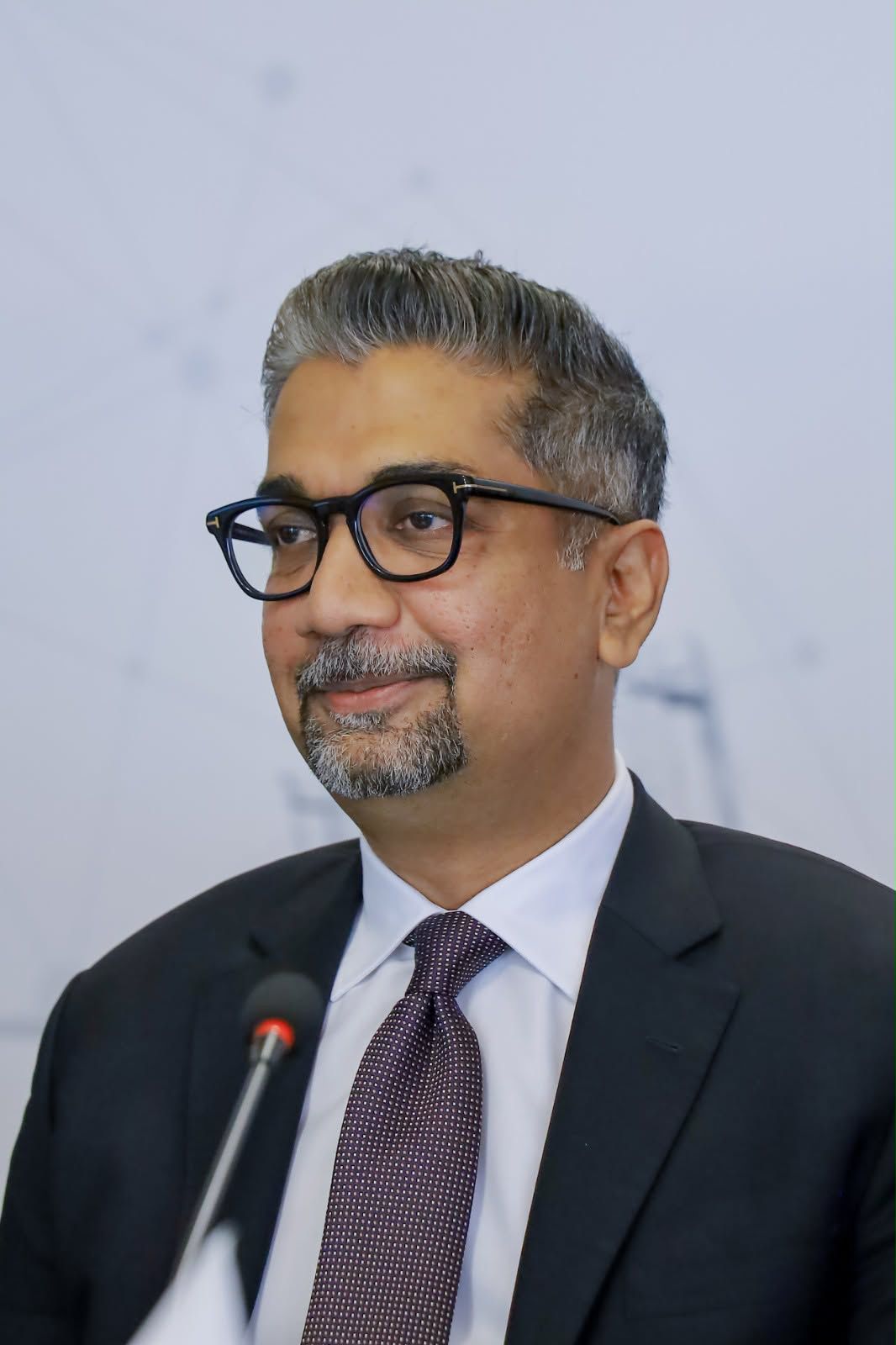
Usama Qureshi is a corporate leader with over two decades of experience in Pakistan’s corporate and energy sectors. He is a published columnist and writes on energy. He posts on X as @UsamaQureshy
View all articles →Comments
No comments yet. Be the first to join the discussion!