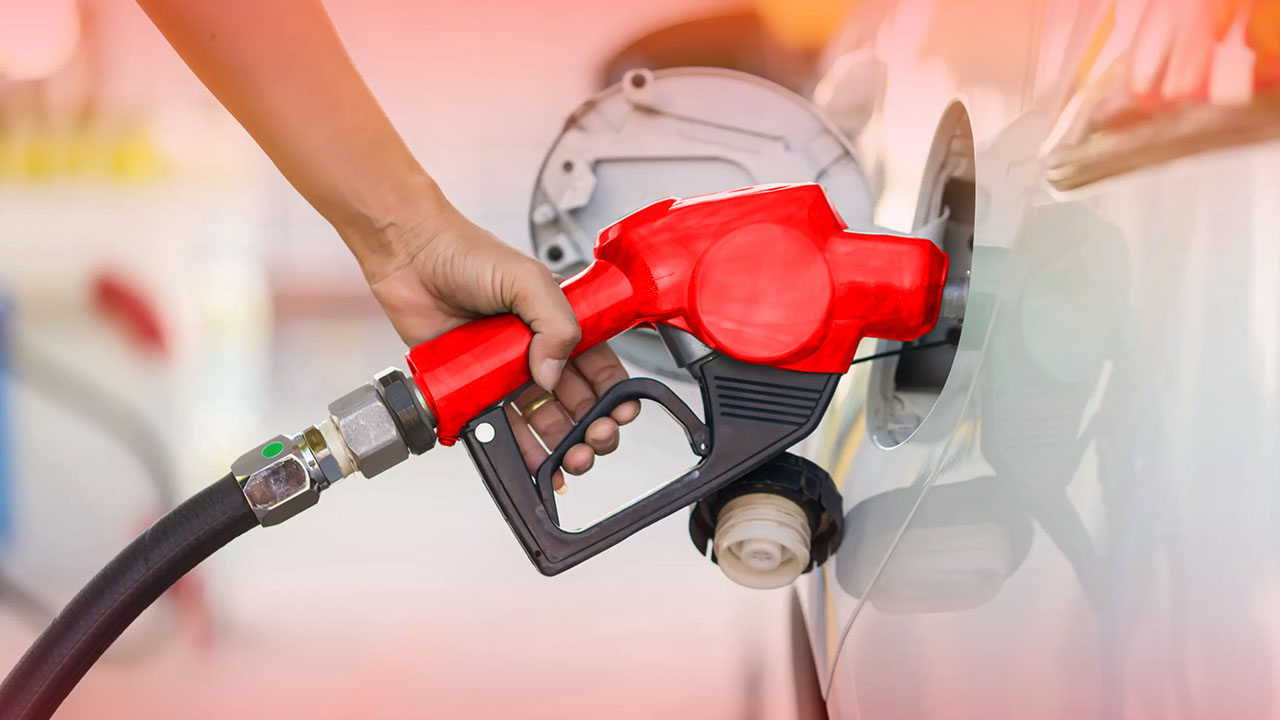
The government isn’t passing on lower fuel prices. It’s quietly taxing them away.
Pakistan’s ex-refinery prices for diesel and petrol fell as global costs eased, yet consumers saw almost no relief. The government raised the Petroleum Levy, capturing the benefit for revenue.
ISLAMABAD: Every week, the same debate dominates television screens and social media. Crude oil prices move, and speculation begins over whether petrol prices in Pakistan will follow. This time was no different. But while the country argued over Brent crude, the government quietly did something else: it absorbed almost the entire benefit of lower international fuel prices by raising the Petroleum Levy.
A review of Pakistan's latest petroleum pricing calculations by Profit shows that the underlying cost of fuel has indeed declined. The Ex-Refinery Price (ERP), the base price before taxes and margins, fell from around Rs217 to Rs210 per litre for high-speed diesel, while petrol declined from Rs211.3 to Rs210.9 per litre. Normally, lower ex-refinery prices should translate into cheaper fuel at the pump. Instead, consumers received virtually no relief — and the reason lies in taxation rather than international markets. Motorists are currently paying Rs77 per litre in Petroleum Levy on diesel and Rs66 per litre on petrol. As international gasoline and diesel prices softened, the federal government raised the levy, effectively transferring the benefit from consumers to the treasury.
One of the biggest misconceptions surrounding fuel pricing is that crude oil determines retail petrol prices. It does not. Pakistan prices petroleum products using international benchmarks for gasoline and high-speed diesel, not crude oil itself. These refined products typically trade $15-45 per barrel above crude, depending on refining margins, freight, insurance, incidentals and duties — which explains why movements in Brent crude often fail to match changes at the pump. The more relevant indicator is the ex-refinery price, and that price has fallen. The question, then, is not whether international prices declined — they did — but why consumers did not benefit.
Officials in the petroleum sector privately acknowledge that fuel pricing has increasingly become a fiscal exercise. With the Federal Board of Revenue struggling to meet ambitious tax collection targets, the Petroleum Levy has emerged as one of Islamabad's easiest and fastest sources of revenue. Unlike income tax, it is collected automatically on every litre sold and is almost impossible to evade. As one official put it, every litre sold guarantees revenue. The consequence is that the Ministry of Petroleum finds itself defending politically unpopular fuel prices even though the underlying objective is revenue mobilisation rather than energy policy.
The implications extend beyond motorists. Fuel is an input for transport, agriculture, manufacturing and logistics, and every rupee retained through the Petroleum Levy raises operating costs across the economy, ultimately feeding into inflation. In effect, consumers are paying a higher indirect tax because the government has found fuel a more dependable revenue source than expanding the direct tax base. Pakistanis already shoulder one of the region's heaviest burdens of indirect taxation, and the Petroleum Levy has become another mechanism through which fiscal pressures are passed directly to households.
The rapid growth in Petroleum Levy collections is also creating friction between the federation and the provinces. Unlike divisible pool taxes, the levy is retained entirely by the federal government, and provincial governments have increasingly questioned why one of the country's fastest-growing revenue streams is excluded from NFC sharing. PPP Chairman Bilawal Bhutto Zardari has also publicly criticised the growing reliance on the Petroleum Levy, arguing that it bypasses provincial revenue sharing.
The noise will continue to be about crude oil. But the numbers tell a different story. International gasoline and diesel prices have eased, and Pakistan's ex-refinery prices have fallen with them. Yet consumers have seen almost none of the benefit, because the federal government has chosen to capture it through the Petroleum Levy. Fuel pricing in Pakistan is no longer just about international markets — it has become one of the government's most effective tax collection tools.

The author is an investigative journalist. He can be reached at [email protected].
View all articles →Comments
No comments yet. Be the first to join the discussion!