PSX extends losses as Middle East tensions keep investors on edge
KSE-100 falls over 2,200 points intraday after fresh United States strikes on Iran fuel concerns over Strait of Hormuz and oil supplies

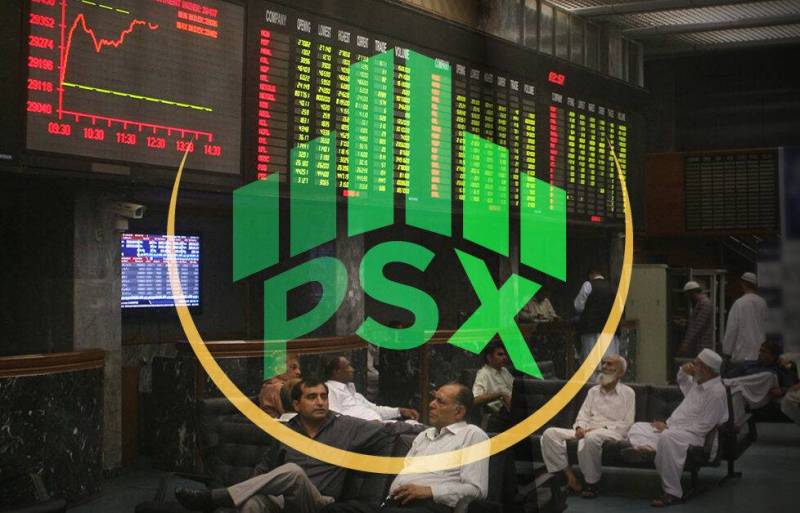
Selling pressure persisted at the Pakistan Stock Exchange (PSX) on Thursday as renewed geopolitical tensions in the Middle East continued to weigh on investor sentiment following fresh United States strikes on Iran.
According to the PSX website, the benchmark KSE-100 Index opened sharply lower, losing more than 1,500 points in the opening minutes of trading. Selling intensified during the session, with the index falling as much as 2,218 points to an intraday low of 179,411.35 at around 11:30 am.
By 12:00 pm, the benchmark index had recovered some losses but was still down 758.30 points, or 0.42%, at 180,871.06 from the previous close.
The renewed pressure came after the United States carried out fresh strikes on Iran, dampening hopes for negotiations to end the conflict and for the full reopening of the Strait of Hormuz, a key shipping route that handled around one-fifth of global oil supplies before the war.
Selling was broad-based, with losses in automobile assemblers, cement, commercial banks, fertiliser, oil and gas exploration companies, oil marketing companies and power generation stocks.
The decline follows Wednesday's sharp sell-off, when the benchmark KSE-100 Index dropped 4,626.18 points, or 2.48%, to close at 181,629.37 as investors reduced exposure amid fears of a wider regional conflict and rising international oil prices.
On the economic front, the IMF, in its latest World Economic Outlook update on Wednesday, projected Pakistan's growth to 3.5% in FY2026-27, below the government's 4% target.
Pakistan received a record $41.6 billion in workers’ remittances during fiscal year 2025-26, up 8.6% from $38.3 billion in the previous fiscal year. In June 2026 alone, remittance inflows stood at $3.5 billion, up 2.0% from a year earlier but down 18.3% compared with the previous month.
Asian shares were mixed on Thursday as oil prices rose after renewed hostilities in the Gulf, reviving inflation concerns and putting pressure on global bond markets.
MSCI’s broadest index of Asia-Pacific shares outside Japan reversed earlier gains and was last down 0.5% as the rally in chipmakers lost momentum.
Japan’s Nikkei rose 1.3%, ending a three-day losing streak. South Korea’s KOSPI climbed as much as 4% before turning 1% lower as gains in Samsung and SK Hynix faded.
Wall Street futures were about 0.2% higher, while European stock futures rose 1%.
Brent crude futures rose 1% to $78.85 a barrel and were up 9% for the week, briefly crossing $80 a barrel for the first time since June 22.
Comments
No comments yet. Be the first to join the discussion!