World Bank rates Pakistan's $856m RISE reform programme 'moderately satisfactory'
Evaluation credits gains in fiscal management and digital payments but says tax, GST and power sector reforms fell short.

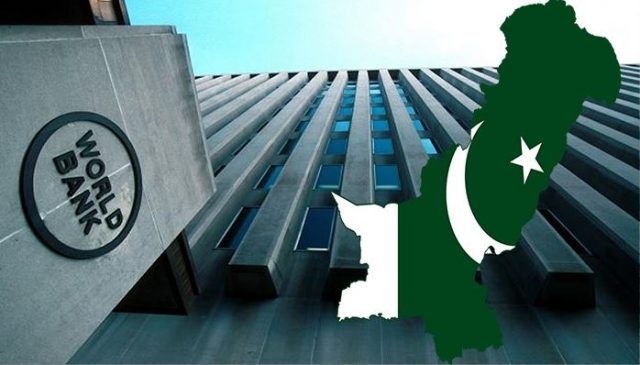
The World Bank's Independent Evaluation Group (IEG) has rated Pakistan's $856.1 million Resilient Institutions for Sustainable Economy (RISE) programme as "Moderately Satisfactory", citing progress in fiscal management and digital payments but limited success in key structural reforms.
The programme, financed through World Bank loans and credits, was originally planned as a three-operation policy financing series.
However, the World Bank ended it after the second operation, following a 24-month delay, due to slowing reform momentum, political uncertainty ahead of the 2024 elections, and a shift to a new Country Partnership Framework.
According to the evaluation, Pakistan strengthened fiscal coordination by enhancing the Macro-Fiscal Policy Unit and introducing an Annual Borrowing Plan. The programme also exceeded its targets for digital payments, with most federal government payments moving to digital platforms, wider biometric verification of bank accounts and rapid growth in branchless banking, including among women.
However, the report found that several major reforms failed to meet their objectives. Efforts to broaden the tax base through improved property valuation did not achieve the targeted increase, with property transfer tax revenues declining during the programme period before recovering after its completion. The programme also fell short of its target to reduce the annual flow of power sector circular debt.
The IEG said progress on two major structural reforms—nationwide General Sales Tax (GST) harmonisation and import tariff rationalisation—was only partial. While an online GST filing portal was introduced for selected sectors, harmonisation between the federal and provincial governments remained incomplete. Tariff reforms also recorded limited gains before partially reversing.
The evaluation noted that the World Bank underestimated the political challenges of implementing reforms requiring coordination between the federation and provinces. It also said some performance indicators were too narrow to fully measure reform outcomes.
Despite these shortcomings, the report credited the World Bank with maintaining policy engagement during the Covid-19 pandemic, the 2022 floods, political instability and macroeconomic challenges.
The IEG warned that Pakistan remains at high risk of reversing reforms due to persistent fiscal pressures, political uncertainty, power sector inefficiencies and difficulties in securing provincial cooperation.
It said sustaining progress in debt management, subsidy targeting, GST harmonisation and tariff reforms would require continued political commitment, alongside support from ongoing World Bank projects and the IMF-backed reform programme.
Comments
No comments yet. Be the first to join the discussion!