Lagarde resigns as IMF chief, cites more clarity on ECB post
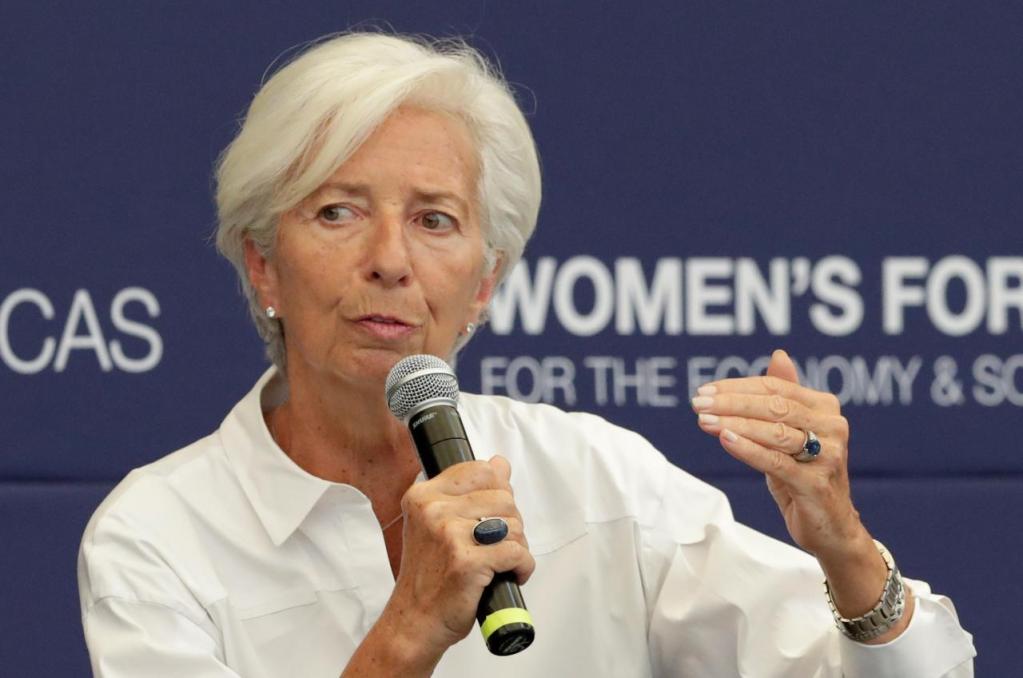
WASHINGTON: International Monetary Fund (IMF) chief
Christine Lagarde announced on Tuesday she had submitted her resignation from
the global lender, saying she had more clarity about her nomination to be the
next head of the European Central Bank.
Lagarde said in a statement her resignation was
effective Sept. 12, opening the way for the IMF to launch the search for her
successor, which is likely to be another European.
“With greater clarity now on the process for my
nomination as ECB President and the time it will take, I have made this
decision in the best interest of the Fund,” Lagarde said in a statement.
She said her resignation would expedite the
selection for the next head of the IMF.
Lagarde’s resignation comes two weeks after her
nomination on July 2 for the ECB’s top job. She did not immediately resign from
the IMF because of uncertainty over whether the new European Parliament would
support her and other new EU leadership positions, sources told Reuters.
While a vote from the European Parliament is
needed, its outcome is not binding, and Lagarde’s appointment will be finalized
by EU leaders at a regular summit on October 17-18
Lagarde’s decision to resign comes on the eve
of a meeting of the Group of Seven finance ministers in Chantilly, France.
US Treasury Secretary Steven Mnuchin is slated
to meet with Bank of England Governor Mark Carney – one of the leading
candidates to replace Lagarde – on Wednesday evening on the sidelines of the
meeting.
White House economic adviser Larry Kudlow last
week declined to comment when asked about Carney as a possible replacement for
Lagarde.
Other names being floated include Bank of
Finland Governor Olli Rehn, as well as Germany’s Bundesbank President Jens
Weidmann, and ECB executive board member Benoit Coeure.
Kristalina Georgieva, a Bulgarian national who
is currently chief executive officer of the World Bank, has been seen as having
an outside chance, according to IMF sources.
A former French finance minister, Lagarde was
the first woman to head the IMF and was known among policymakers as a tough
negotiator. She was a tireless advocate for the benefits of trade, global
growth that aids the poor and middle classes, and the empowerment of women.
Her second five-year term as head of the IMF was
not due to end until July 2021. Traditionally, the post has always been held by
a European, while the head of the IMF’s sister organization, the World Bank,
has always been an American since the institutions were created at the end of
World War Two.
If approved, Lagarde would take over as ECB
president from Mario Draghi on Oct. 31. While her confirmation could be
lengthy, it is likely to be largely a formality as long as the euro zone’s
biggest member states - Germany, France and Italy - are in unity.
Her immediate challenge at the ECB would be to
overcome her shortcomings in monetary policymaking, especially as it seeks to
rearm for a potential new slump after years of using unconventional policy
tools to stimulate inflation and growth.
Comments
No comments yet. Be the first to join the discussion!