Govt readies mobile manufacturing policy, seeks final stakeholder input
Draft policy targets higher localisation, exports and global supply chain integration
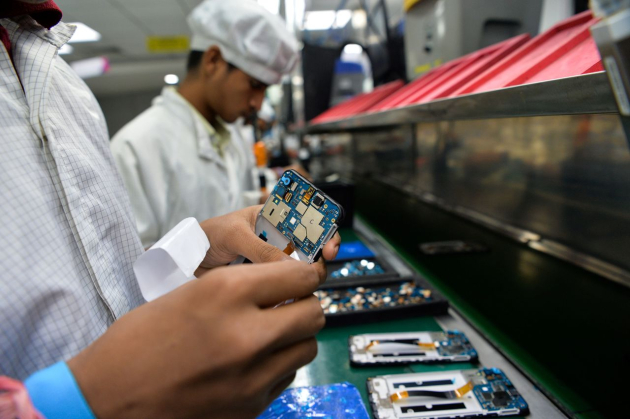
ISLAMABAD: The government has finalised a draft Mobile and Electronic Device Manufacturing Policy (2026–33) aimed at shifting Pakistan’s electronics sector from low-value assembly to full-scale manufacturing, with targets for deep localisation, export growth and integration into global supply chains, according to policy documents.
As per documents, the draft policy, prepared by the Ministry of Industries and Production in coordination with the Engineering Development Board (EDB), acknowledges that Pakistan’s current mobile phone industry remains heavily dependent on assembly of imported kits, with limited domestic value addition and negligible export presence. Despite rapid growth in handset assembly over the past five years, the policy notes that localisation remains below 20 percent for most devices, leaving the sector vulnerable to import disruptions and foreign exchange pressures.
Under the proposed framework, the government plans a phased transition from assembly to manufacturing over seven years, with localisation targets rising to 50 percent in mobile phones by 2033. The policy also extends beyond handsets to include laptops, tablets, wearables and other electronic devices, reflecting an effort to broaden the industrial base rather than relying on a single product segment.
The document identifies high tariffs on components, fragmented vendor development, absence of design and testing capabilities and weak integration with global technology ecosystems as key constraints holding back the sector. To address these gaps, it proposes differentiated tariff structures to incentivise local component manufacturing, including printed circuit boards, chargers, batteries, casings and displays, alongside gradual withdrawal of incentives for simple assembly operations.
The policy envisages a clear sequencing of manufacturing stages, starting with higher localisation of mechanical parts and sub-assemblies, followed by electronic components and, eventually, advanced manufacturing processes. Firms will be required to meet defined localisation thresholds within specified timelines to continue availing incentives, a departure from earlier policies that critics say failed to enforce performance benchmarks.
Exports form a central pillar of the draft. The policy targets positioning Pakistan as a regional manufacturing hub for affordable smartphones and electronics, particularly for markets in South Asia, the Middle East and Africa. It proposes linking incentives to export performance, encouraging firms to integrate Pakistani plants into their global supply chains rather than treating them solely as captive domestic units.
Environmental sustainability has also been built into the framework. The policy sets a target of recovering 70 percent of electronic waste through formal collection and recycling systems by 2033, citing the rapid growth in discarded devices and associated environmental risks. Manufacturers may be required to participate in extended producer responsibility schemes to support organised e-waste management.
On the human capital side, the draft estimates that implementation of the policy could generate up to 50,000 skilled jobs over the policy period, including around 15,000 specialised positions in engineering, quality control, testing and production management. It emphasises the need for collaboration with technical institutes and universities to develop skills aligned with evolving manufacturing requirements.
The document also underscores the importance of attracting global technology firms to Pakistan, noting that without participation from major international brands, localisation targets and export ambitions would be difficult to achieve. It proposes targeted facilitation measures, improved regulatory predictability and long-term policy continuity to build investor confidence.
Officials say a final round of stakeholder consultations is planned before the policy is submitted to the federal cabinet and the prime minister for approval. According to the Ministry of Industries and Production, Special Assistant to the Prime Minister on Industries and Production Haroon Akhtar Khan recently chaired a high-level meeting to review the draft, attended by senior ministry officials, the EDB and representatives of mobile phone manufacturers.
The ministry said the policy has been formulated after extensive consultations and represents a strategic shift from assembly-based operations towards manufacturing and exports. It added that international technology companies, including Apple, have been invited to participate in the upcoming final consultation to provide input on the policy framework before it is presented to the prime minister.

The writer is a member of the staff at the Islamabad Bureau. He can be reached at [email protected]
View all articles →Comments
No comments yet. Be the first to join the discussion!