China, Pakistan launch joint push on education, agriculture and industry at Islamabad symposium
COMSTECH-hosted forum outlines new investment plans, research collaboration and academic exchanges ahead of 75 years of diplomatic ties
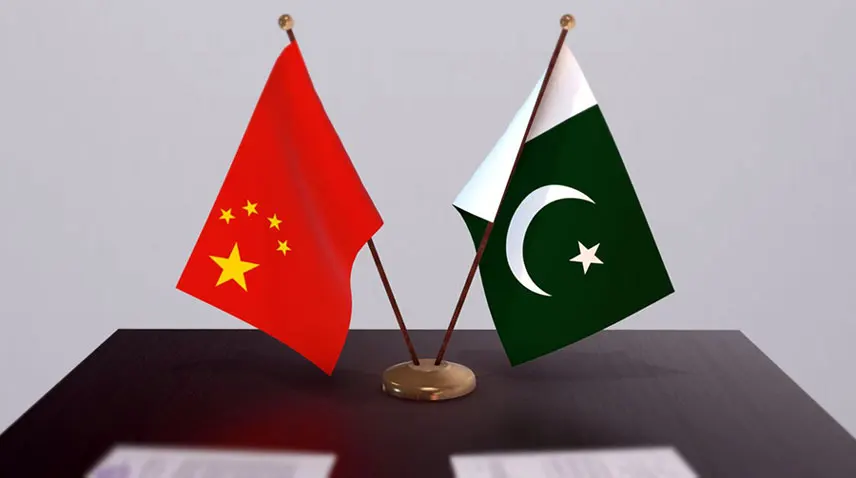
Pakistan and China have stepped up efforts to deepen cooperation in education, science and industry with the holding of the first China-Pakistan Symposium on Education, Science and Industrial Cooperation at COMSTECH headquarters in Islamabad on January 20, 2026.
The symposium brought together more than 50 participants from government bodies, universities, research organisations and major enterprises from both countries. Pakistan’s Ambassador to China, Khalil Hashmi, delivered the keynote address, while the session was chaired by Senior Professor Zhang Lixin of Northwest A&F University. Professor Zhang also heads the Silkroad Biohealth Agricultural Industry Alliance and serves as Chief Scientist and Director of the Shaanxi Belt and Road Joint Laboratory on Dryland Biological Resources and Green Smart Agriculture.
Welcoming the participants, Professor Zhang noted the wide representation at the event, including officials and experts from Shaanxi province, Chinese national media, faculty members and students from Northwest A&F University, alongside representatives from Pakistan’s science and technology institutions, universities and private sector.
The discussions centred on agriculture, higher education and industrial collaboration. Speaking on behalf of Pakistan’s Ministry of Science and Technology, Shakil Arshad highlighted ongoing joint initiatives with Chinese universities such as Nanjing University and Xian Jiaotong University, particularly in space science and traditional Chinese medicine.
Agricultural cooperation emerged as a key theme. Professor Muhammad Azam Khan, former director general of the National Agriculture Research Center, said that over 700 crop varieties developed by the council now account for around 80% of Pakistan’s cultivated area. He stressed the need to expand collaboration with China in precision farming, smart agricultural machinery and sesame value-chain development. Professor Shah Nawaz Marri, Chairman of the Department of Plant Breeding and Genetics at Sindh Agriculture University, announced plans to establish Pakistan’s first China-Pakistan Agricultural Cooperation Center and proposed joint research on pepper variety improvement and germplasm exchange for high-value crops.
Chinese business leaders outlined concrete investment plans. Sun Lianfeng, General Manager of Baoji Haisheng Modern Agriculture, said the company intends to introduce high-density apple cultivation techniques in Pakistan, with the potential to raise yields by 30% while cutting water use by 80%. Feng Lianying, General Manager of Xianyang Kangda Modern Agriculture, said preparations were under way to invest in modern poultry farming projects in the country.
Educational collaboration has already shown measurable progress. More than 260 Pakistani students are currently enrolled in agriculture-related programmes at Northwest A&F University, and over 510 individuals have completed training courses. In addition, 10 Chinese Silk Road graduate students visited Pakistan University for exchange studies over the past two years, while two Pakistani graduate students are set to travel to China for training in smart agricultural technologies.
In his closing remarks, Ambassador Khalil Hashmi described agriculture as a central pillar of high-quality development under the China-Pakistan Economic Corridor, pointing to the strong alignment between Pakistan’s natural resources and China’s technological expertise. He also noted that an international cooperation programme approved in December 2025 would serve as a new platform for expanding bilateral collaboration.
Following the symposium, the Chinese delegation undertook a 10-day visit programme across Islamabad, Lahore and other regions. The itinerary included participation in a Pakistan-China agriculture investment conference, inspections of farms, food processing units and poultry facilities, and meetings with institutions such as the Pakistan Academy of Sciences and the Ayub Agricultural Research Institute. Several agreements were signed, and roadmaps were finalised for joint laboratories, technology transfer centres and demonstration parks.
The symposium and subsequent engagements translated dialogue into on-ground cooperation, reinforcing people-to-people links and setting the stage for a deeper partnership as Pakistan and China move toward the 75th anniversary of diplomatic relations.

Our monitoring team diligently searches the vast expanse of the web to carefully handpick and distill top-tier business and economic news stories and articles, presenting them to you in a concise and informative manner.
View all articles →Comments
No comments yet. Be the first to join the discussion!