March 11, 2026
IMF presses Pakistan to bring traders into tax net through asset-based levy
FBR resists proposal as past attempts to bring retailers into tax net fail

March 11, 2026
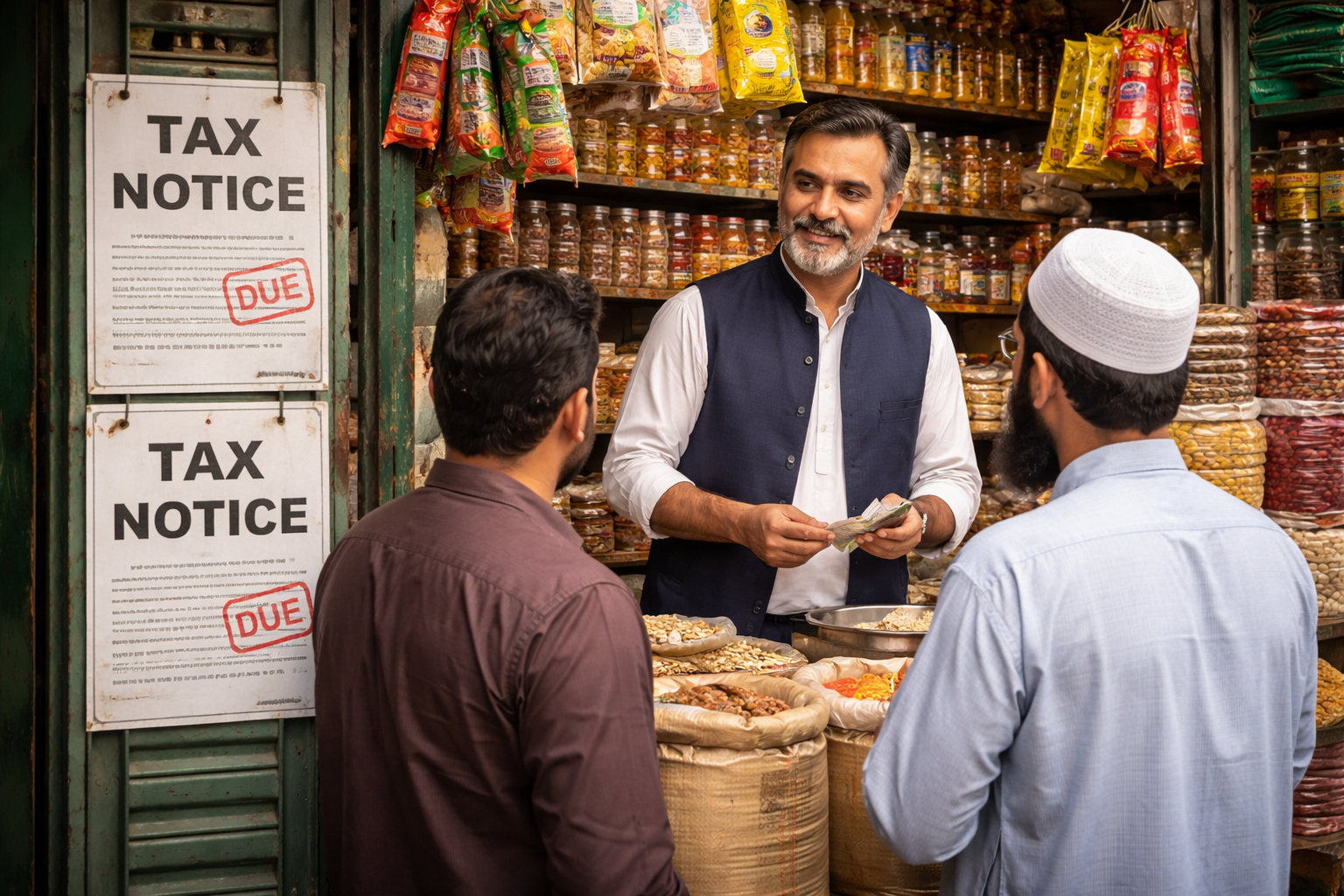
The International Monetary Fund has asked Pakistan to consider introducing an asset-based tax system for traders who remain outside the formal tax net, The Express Tribune reported, citing officials familiar with discussions between the government and the lender.
Under the proposed system, traders would be taxed based on their asset holdings rather than location or shop size.
The proposal emerged after earlier attempts to tax the retail sector, including the Tajir Dost Scheme and retail-based tax targets, failed to generate the expected revenue. However, officials said the Federal Board of Revenue has expressed reservations about implementing the new approach. Tax authorities have argued that such a system would be difficult to implement because many traders do not file tax returns, making it hard to determine their assets or calculate liabilities.
Over the past three years, the government has introduced multiple schemes to bring retailers into the tax net. One initiative during the Pakistan Democratic Movement government imposed a fixed tax on retailers through electricity bills, but it was later withdrawn following political opposition.
Another scheme launched under the current IMF programme sought to collect about Rs50 billion in the last fiscal year by imposing a fixed monthly income tax ranging from Rs100 to Rs60,000 depending on the size of business premises.
The scheme was initially applied to commercial areas and later expanded to shops operating in residential neighbourhoods. It targeted traders involved in various parts of the supply chain in 42 cities across the country, including 25 cities in Punjab, seven in Sindh, six in Khyber Pakhtunkhwa, three in Balochistan and Islamabad.
However, the government suspended the programme in August 2024 after trade unions announced a nationwide strike against the measure.
Tax officials said political resistance and the influence of trader groups have limited the effectiveness of such initiatives. They argued that measures such as point-of-sale systems and digital invoicing could gradually bring retailers into the tax system, though progress has remained slow.
Data from the FBR shows that during the first eight months of the current fiscal year traders paid about Rs28 billion in withholding taxes, only Rs5 billion more than the same period last year. An additional Rs17 billion was collected through withholding taxes at the supply stage.
Combined tax collections under sections 236-G and 236-H totalled about Rs45 billion during the period. In comparison, salaried individuals paid more than Rs350 billion in income taxes in the same fiscal year.
Officials said manufacturers have also not consistently shared retailer data despite collecting withholding taxes from them under existing rules.
During the first eight months of the fiscal year, the revenue gap against the original target has already exceeded Rs640 billion despite additional collections following court rulings on the super tax.
The FBR has informed the IMF that it may revise the tax collection target downward to about Rs13.5 trillion for the current fiscal year.
Our monitoring team diligently searches the vast expanse of the web to carefully handpick and distill top-tier business and economic news stories and articles, presenting them to you in a concise and informative manner.
View all articles →4 Comments
No comments yet. Be the first to join the discussion!