Why are cotton prices going up in Pakistan?
Trade blocks because of the war in the Middle East and fears that output will fall because of excessive rains are driving prices to record highs for advance deals. All of this is during early sowing season.

Cotton farmers are commanding high prices in Pakistan’s ever-shrinking cotton belt months before the harvest season even begins. Recent reports from major cotton growing areas in Sindh like Badin and Sanghar indicate record prices for advance cotton deals.
The first deal of the season was reportedly struck between a trader from Tando Bago and a ginning factory in Khanewal at Rs 10,000 per maund for four truckloads of cotton to be delivered at the end of May. Similarly rates in Sanghar have been reported as high as Rs 20,000 per maund.
Trade blocks and climate shocks send prices soaring
But why have ther rates increased so quickly? The prices indicate a three year high in advance deals. One significant factor according to traders is the continued strain on global trade routes. For many years now Pakistan has imported a large chunk of its cotton. The United States is a particularly big provider for Paksitan’s textile industry which depends on the timely provision of cotton. However, cotton imports have essentially come to a halt in the past two months because of trade routes blocked by Iran.
Initially traders felt that local supply would fulfill demand. Cotton is a Kharif crop in Pakistan, which means it is harvested after the monsoon season and all the way into the winter months. The typical cotton timeline in Pakistan is that sowing takes place from late April to early June, with May being the peak season. It grows all the way through to August and is harvested from then until December since a single cotton plant continues to grow and produce.
However, a lot of ginners purchase cotton during May as well. This is largely provided by early sowing that takes place between February and April. While most farmers follow the typical calendar, many in Sindh farm cotton twice, first planting it around February-March and harvesting it in early to mid-May. Because of the trade blocks since the 28th of February when the US and Israel attacked Iran, traders and ginners have been relying on early sowing to bridge the gap in cotton supply. According to one farmer in Sindh, this also led to a number of cotton farmers increasing the area they planted cotton on during the early sowing season.
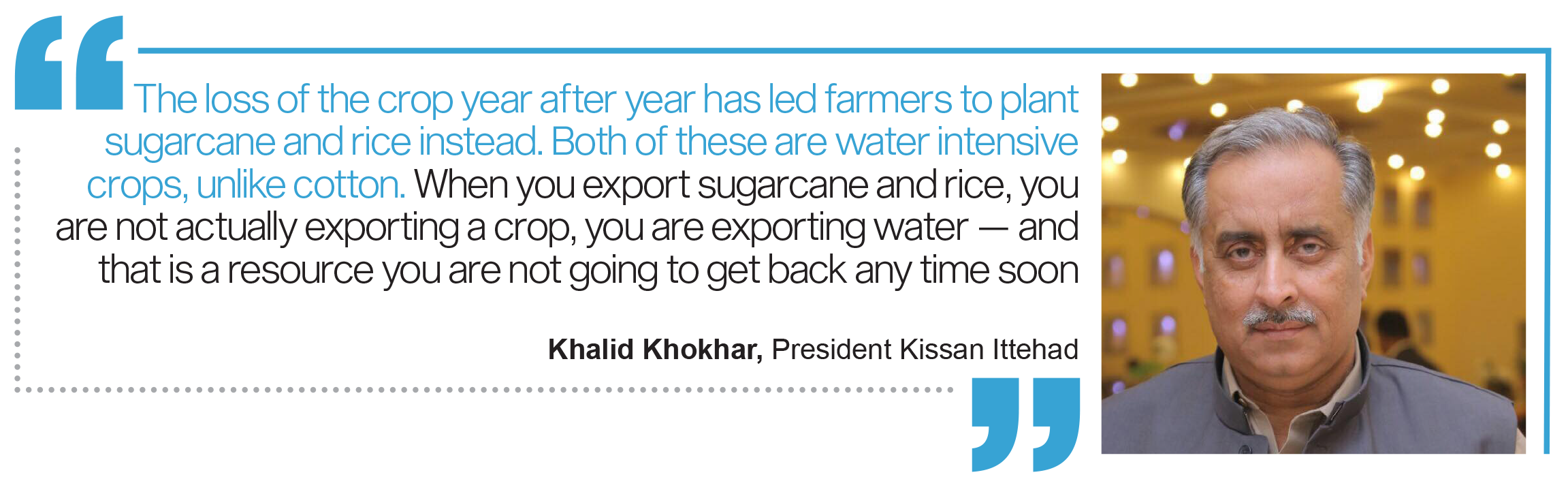
However, excessive rains all throughout March have meant farmers and traders alike are worried about how much yield they will be able to get. As a result, traders are moving quickly to try and secure as many deals for cotton as possible in advance. One dealer even announced they would purchase unlimited cotton at a set rate of Rs 9200 per maund, indicating expectations that supply will be badly affected.
All of these deals were struck before the announcement of the ceasefire between Iran and Pakistan early on the morning of Wendesday the 8th of April. As of now, traders are still holding firm to their offers until it becomes clear that the Strait of Hormuz is open and regularl trade routes are operating.
Another factor exacerbating fears is that overall global supply, including from the United States, is also falling. An earlier report from this year of the World Agricultural Supply and Demand Estimates (WASDE) has said it expects the global cotton balance sheet to show lower production, higher consumption, and rising prices.
Cotton on the ropes
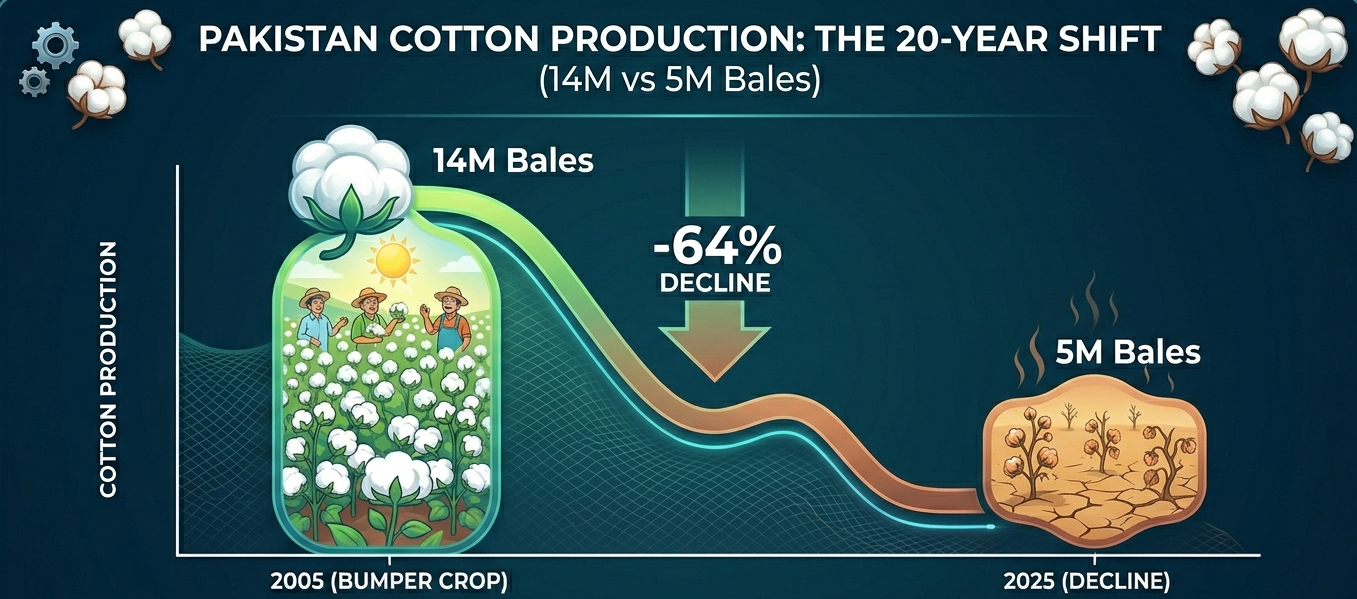
The recent situation once again highlights the continued plight of Pakistan’s cotton crop, which has been decimated over the past two decades. Since 2005 the cotton crop in Pakistan has fallen out of demand, has become internationally uncompetitive, and output has fallen by a whopping 65% from 14 million bales being produced in 2005 to 5 million bales being produced last year. This is despite the fact that Pakistan has actually decreased the weight of its bales.
Once the darling of farmers and agriculturalists, the area dedicated to cotton farming has also been shrinking significantly since the late 2000s while competitor countries like Egypt have increased the area they are dedicating to growing cotton.
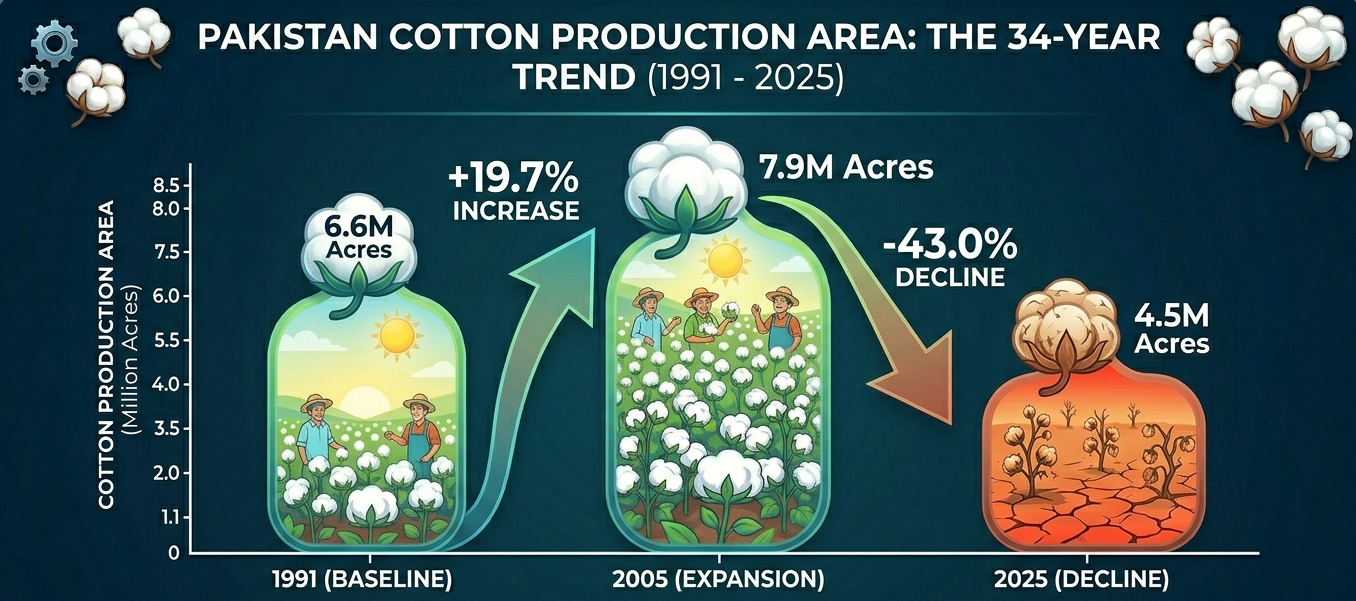
In 1991, cotton was grown on around 6.6 million acres of land all over Pakistan. It grew to a peak area-under-cultivation level of 7.9 million acres in 2005 but stood at a mere 2 million hectares in 2020 showing a serious backwards trend.
Last year as well Pakistan missed its cotton sowing targets. By June 2025, missed its sowing target by about 11%, while Sindh and Balochistan were trailing by around 35%, despite repeated cotton revival initiatives.
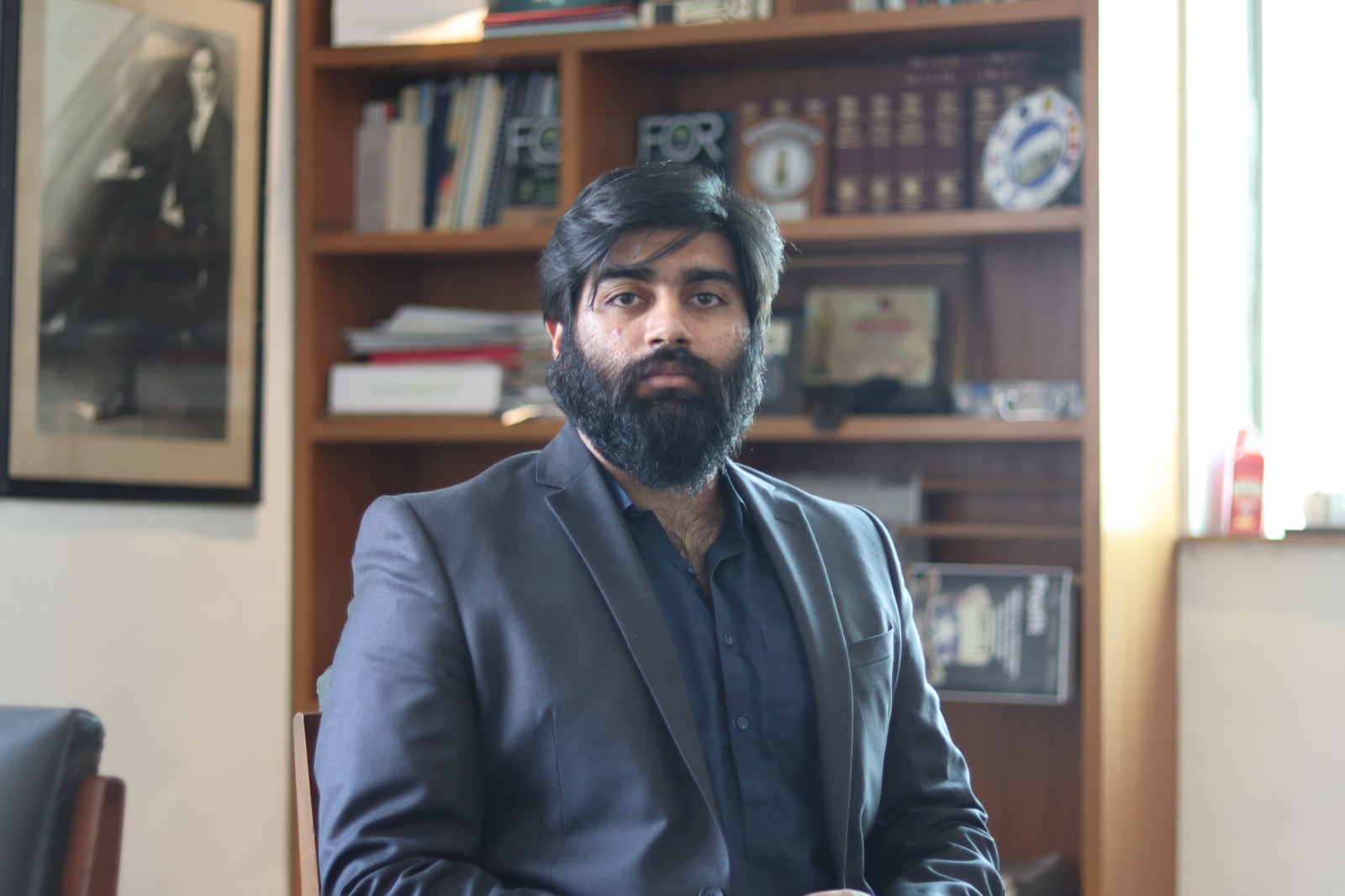
Abdullah Niazi is senior editor at Profit. He can be reached at [email protected]
View all articles →1 Comment
No comments yet. Be the first to join the discussion!