
Electric fan manufacturers are up in arms over copper and other raw material exporters. Can they be shifted to an export model?
The local electric fans industry demands the exports of raw materials be restricted. Why do they demand this measure, and will it be enough to enable export competitiveness?
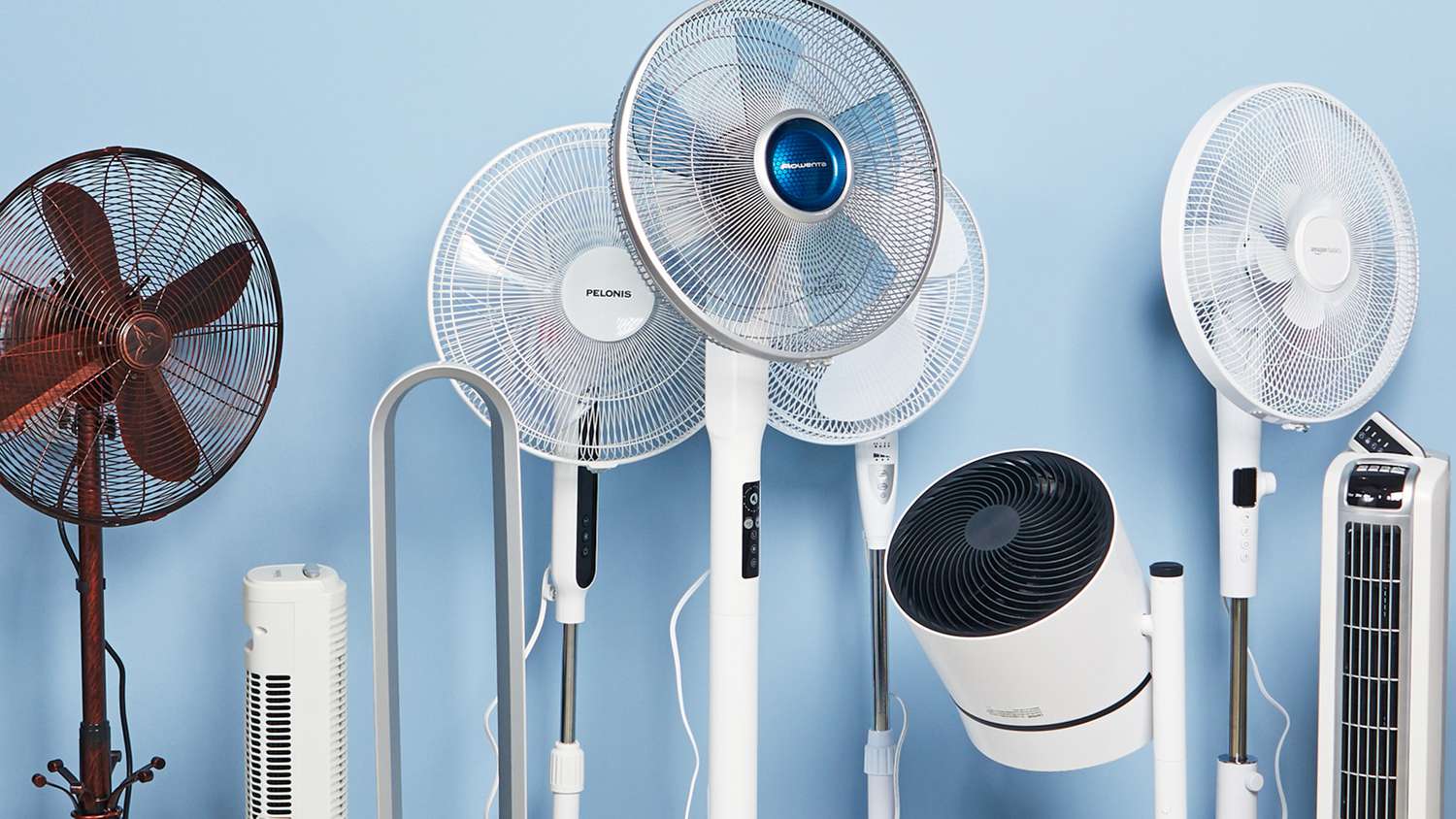
Electric fans have many fans, or so one would assume looking at the consumption numbers within Pakistan. In fact, electric fans are one of the few products where we are not particularly reliant on imports. We make almost all of them at home. With established manufacturing hubs in Punjab, specifically Gujrat and Gujranwala, the industry not only supplies local demand, but is also heavily underutilized, according to some accounts, by as much as 50 percent.
The problem here is that we don’t export much of these electric fans either, so this excess capacity goes unutilized. No wonder why the local electric fan manufacturers bemoan the current state of affairs. In a recent meeting with the finance minister, they highlighted that one of the major issues facing them was the exports of raw materials, especially copper and aluminium. This, they argued, directly interfered with their ability to procure cheaper, locally sourced material, and consequently robbed them of the opportunity to produce value added products from those materials and therefore generate more foreign exchange revenue.
There is truth to this. Raw materials represent almost 80 percent of the cost of one electric fan unit, and of course the manufacturers’ argument makes sense: exporting scrap allows for lesser value returns than exporting higher-value finished products. Not only would that open newer markets, but also enable us to compete with regional players like India, owing to our established manufacturing capacities and cheaper costs of production and relatively high quality products.
But on its own this won’t be sufficient to really take the industry’s contribution to the national trade balance to the next level. Pakistan electric fans lack the proper quality control to enable entry into higher value Western markets at scale. Similarly, there is a need to diversify products to cater to the demands of the first world markets, and that would require investment into the local R&D capabilities as well as the testing facilities. Of course, government support would also be required, but local manufacturers also need to rethink their export strategy, and try to tap into higher-value markets. Given our lower costs of production, there is much potential in gunning for such markets.
Pakistan’s Electric Fans Industry:
Established in 1942, the local electric fans industry remains one of the fewer manufacturing enterprises that predate the establishment of Pakistan. The industry is concentrated in Punjab, with Gujarat and Gujranwala serving as the major hubs, although some production is spread around Lahore and Karachi as well. Decades of manufacturing activity, specifically in the former two hubs, has led to the creation of clusters of suppliers around them. These clusters supply critical components such as castings, blades, guards, etc., as well as accessories and sub-assemblies for electric motors, which are then manufactured and assembled into ceiling, pedestal, table, bracket, exhaust, and louver fans.
Overall, there are between 300 and 350 local electric fans manufacturers, which are part of an industry that provides direct employment to around 40,000 and indirect employment to over 150,000 workers. The annual domestic demand for electric fans is estimated to be between 8 and 10 million units, which these manufacturers are able to meet, whereas the unutilised capacity is estimated to be between 6 and 7 million units.
Traditionally, electric fans in Pakistan were those based on the AC electrical model. However, the load that such fans consume was not insignificant. The enormity of this inefficiency was compounded by the fact that these fans were the most widely available types of cooling gadget available to the local population. After all, around 65 percent of the fans locally consumed are ceiling fans. And this usage is reflected in the voltage used by these AC fans: combined units consumed by AC fans amount to around 388 million, whereas air conditioners on the whole use around 135 million units. No wonder then that AC fans are estimated to account for 67 percent of the 17,610 megawatts of extra cooling load experienced during the summers by the national grid.
In order to rectify this situation, the government for years had been eyeing an electric fans replacement scheme, where the existing AC fans within households would be replaced by more efficient DC fans. These are thought to consume up to 70 percent less power than traditional AC power fans, so the energy savings should add up if these are adopted at scale. And they are whir quieter than the AC fans.
DC fans had initially been imported, but local manufacturers quickly grasped the potential of such fans to disrupt the market and invested in their production. There was also the issue that imported DC fans, because they were light and made of plastic, and because their ability to displace air was lower than locally produced fans, were not very attractive to the local taste and needs.
Manufacturers stepped in and started creating varieties of DC fans that catered to local needs and taste. Given that DC current is usually the type of current one gets from batteries, the demand for such fans has also positively correlated with the greater adoption of solar energy systems, especially in off-grid and weak-grid areas. On top of this the government banned the production of traditional AC fans in 2023 as a part of the National Energy Conservation Policy. The result is that almost all the fans being currently produced within Pakistan are of the DC variety.
There are three major types of DC fans being produced in Pakistan. First, there are DC fans that work with DC current, but this category is not as widespread since batteries are not widely used as a way to generate electricity. The other types of DC fans include the DC inverter and the AC/DC fans. These units can make use of AC currents, either converting them to DC in the case of the former, or being able to work with both AC and DC power sources. These latter two are understandably more popular, with the inverter category accounting for around 80 percent of the total production.
The government finally launched the ‘Prime Minister Fan Replacement Scheme’ in February 2026. The aim was to replace existing AC fans, estimated to be around 88 million units, with DC fans, through a financing scheme through banks where the instalments would be directly added to a household’s electricity bills. The savings estimated to accrue from this shift amount to between 5,000 and 7,000 megawatts of electricity per year. The total financing cost of this replacement is estimated to be around USD 3 billion, while the government has also announced a 10 percent first-loss credit guarantee to banks for this purpose.
The Issue:
Certain issues remain, however, and not the least is the one we began the story with: that of capacity underutilisation. Between 40 to 50 percent of our local electric fans manufacturing capacity is not utilised. And given that almost all of our local demand is met by the fans we produce, the excess capacity has one major way of being utilised: exports. We have been trying to ramp up exports, but the numbers aren’t too promising. In FY24, we exported around 1.89 million units of fans, a 4.86 percent growth over the previous year’s figures. If we believe the industry insiders that the local manufacturers have the capacity to produce 6 to 7 million more units per annum, that just represents so much of the export potential lost.
And the claim raised by the Pakistan Electric Fan Manufacturers Association (PEFMA) in the recent meeting with Finance Minister Aurangzeb in this context makes sense. If local traders are indeed exporting raw materials such as aluminium and copper, that does represent a loss of potential value, since the conversion of such materials into more valuable products, such as fans, would certainly generate more revenue. This is not to mention the potential benefits to the local industry, which would have access to cheaper materials, since there would be greater supply if these input materials aren’t exported. Such a fact becomes even more important if we consider that raw materials represent almost 80 percent of the cost of an electric fan unit.
This issue of exports needs to be considered in the context of imports that our local fan manufacturing industry relies on. According to a report by the Engineering Development Board, “domestic fan manufacturers use around 50-60 percent imported raw materials whereas the rest are procured from local vendors. Moreover, components procured through vendors are mostly manufactured using imported raw materials.” These imports include electric steel sheets, plastic granules, even printed circuit boards from China.
Perhaps more importantly, however, as the report points out, copper and aluminium also need to be imported. The problem is that the government has removed regulatory duty on the exports of recycled copper and aluminium, causing the local recycling industry to start exporting recycled copper and aluminium ingots to China. Given that the industry relies heavily on recycled aluminium and scrap to make fans, this has led to a shortage of such raw material directly impacting the manufacturer’s ability to scale production. Of course, it is not the only reason; reportedly, fan manufacturers need 2 to 3 times the working capital to maximise production. But the demand from the industry that exports of raw materials be curtailed does make sense. Raw materials are need as much as capital for a manufacturing enterprise to work.
On the topic of exports, another issue must be discussed: quality control and standards. Currently, our major export destinations are countries like Iraq and Bangladesh, followed by Gulf States and a few African countries. Exporting to these countries, on the whole, does not require stringently high safety and quality standards, since cost of the unit is a major factor in these markets. Therefore, Pakistan is able to fulfill most of the quality certification and compliance requirements for these markets. Within the GCC countries, there is a demand for both higher- and lower-end fans, and the required Gulf or ‘G’ marking is required to export into those markets, something certification Pakistani exporters are able to obtain.
The issue is with Pakistan’s ability to tap into higher-value European markets. To be eligible to enter those markets, the exporters must obtain a CE marking, which can only be obtained after passing strict quality standards. These tests include Low Voltage Direct current (LVD) test, Electromagnetic Compatibility (EMC) test, and Restriction of the Use of certain Hazardous Substance in Electrical & Electronic Equipment (RoHS) test. For the EMC and RoHS tests, local manufacturers need to send their products to China.
The ability to pass these tests, and to manufacture compliant products at a large scale, would open these markets to local exporters. But that’s not all, product diversification and development is also needed. Currently, although the trend is slightly shifting, the fans most in demand within European countries are those with lightweight disposable plastic bodies. These are the types of fans that were initially being imported into Pakistan, and which didn’t appeal to local tastes, and against which local manufacturers stepped in to produce heavier fans able to displace more air. So, the local manufacturers would have to not only bring their products to the required standards, but also diversify their product portfolio, and do this all at scale. Then they might be able to compete within the European market, a prospect that if realised would fetch them premium margins.
This is not to say that the assistance of the government is not required. Of course, export incentives and government-led trade agreements would greatly improve the situation, and so would the demanded restriction of raw material exports. Similarly, financing opportunities to R&D incentives too would encourage local manufacturers to increase capacity utilisation. And we have already seen government-led programs to replace traditional fans with newer fans, and that would also help with the utilisation of excess capacity. But with that done, exports surely are the way to look towards, and the efforts of the manufacturers would be required in addition to government support for capability enhancement and testing facilitation.

4 Comments
No comments yet. Be the first to join the discussion!


