April 23, 2026
Power sector maps out up to 70,720MW expansion by 2035 as renewables take lead in future energy mix
Revised generation and transmission plans estimate $46–54 billion investment needs, rising solar adoption, and higher electricity exports to K-Electric amid shifting demand patterns.

April 23, 2026
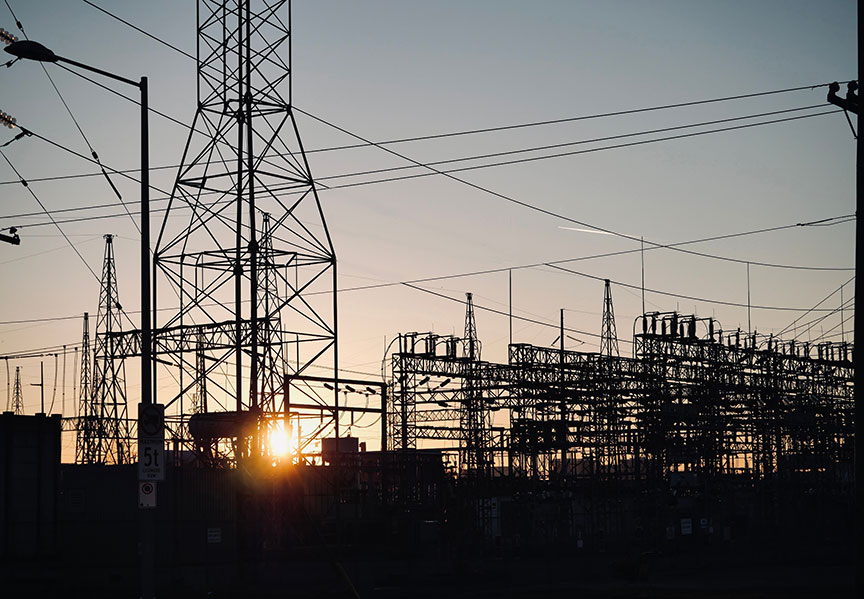
Pakistan’s power sector planners have projected the need for 62,657MW to 70,720MW of additional electricity generation capacity by 2035 to support economic growth ranging from 3.52 per cent to 6.37 per cent, according to the revised long-term expansion roadmap.
The updated Indicative Generation Capacity Expansion Plan (IGCEP) 2025–35 indicates a decisive transition toward renewable and indigenous energy sources, with hydropower expected to account for 34 per cent of total capacity and variable renewable energy contributing 27 per cent to the overall generation mix by the end of the planning horizon.
The planning framework estimates the present value of investments and operating costs for existing and future power projects at between $46 billion and $54 billion, while expansion of the transmission network is projected to require an additional $4.6 billion to $6 billion.
The plans were prepared by the Independent System and Market Operator in coordination with stakeholders, including the National Electric Power Regulatory Authority, and cover the entire national electricity system, including distribution companies and the network operated by K-Electric.
Under the capacity expansion scenarios, additions have been projected at 62,657MW in the low-growth case, 66,459MW in the medium-growth scenario, and 70,720MW in the high-growth case linked to stronger economic expansion.
Hydropower dominates the planned additions at approximately 21,400MW, followed by 8,224MW from liquefied natural gas, 4,730MW from nuclear energy, 4,680MW from imported coal, and 3,300MW from local coal. Smaller increments are projected for local gas at 1,433MW, furnace oil at 819MW, and bagasse-based plants at 400MW.
Renewable energy capacity is set to expand rapidly, with solar power additions projected at 11,544MW in the low-growth scenario and up to 13,200MW in the high-growth case. Wind power capacity has been modelled at 5,133MW, 8,935MW, and 11,500MW across low, medium, and high economic growth scenarios, respectively.
The revised plan also factors in a significant increase in distributed generation, including 8,120MW of net-metered capacity and an additional 800MW of market-based solar generation, reflecting the accelerating shift toward rooftop solar adoption.
Officials said the planning exercise ensures sufficient base-load capacity from hydropower, nuclear, liquefied natural gas, and local coal projects to maintain reliable round-the-clock supply while accommodating renewable energy variability and reserve requirements.
A notable feature of the revised IGCEP is the incorporation of Least Cost Violation (LCV) provisions for major projects, including the Diamer-Bhasha hydropower development and solar projects associated with international developer ACWA, to maintain system reliability under constrained operating conditions.
The modelling exercise also evaluated new transmission corridors linking the southern, central, and northern regions of the national grid, along with an additional transmission line connecting the National Grid Company system to K-Electric to support future demand growth.
Power sector planners reported that electricity consumption linked to distribution company networks has declined sharply in recent years due to economic conditions and the rapid expansion of rooftop solar installations. However, the planners consider the decline temporary and maintain that long-term capacity expansion decisions should remain unchanged at this stage.
Separately, the revised assessment projects a significant increase in electricity transfers from the national grid to K-Electric, with exports expected to reach 3,456MW by 2035 compared with the currently contracted level of 2,050MW.
As part of future planning, the Karachi-based utility is expected to conduct a detailed cost comparison between developing its own 620MW renewable energy portfolio and sourcing additional electricity from the national grid as demand patterns evolve.
Our monitoring team diligently searches the vast expanse of the web to carefully handpick and distill top-tier business and economic news stories and articles, presenting them to you in a concise and informative manner.
View all articles →0 Comments
No comments yet. Be the first to join the discussion!