Arif Habib Limited says case for holding policy rate at 10.5% still holds weight
AHL survey shows 61% expect no change, 19% see 50bps hike, 17% 100bps and 3% 150bps increase

- Analysts say outlook hinges on geopolitical developments, with June 2026 MPC decision and budget expected to offer clearer direction
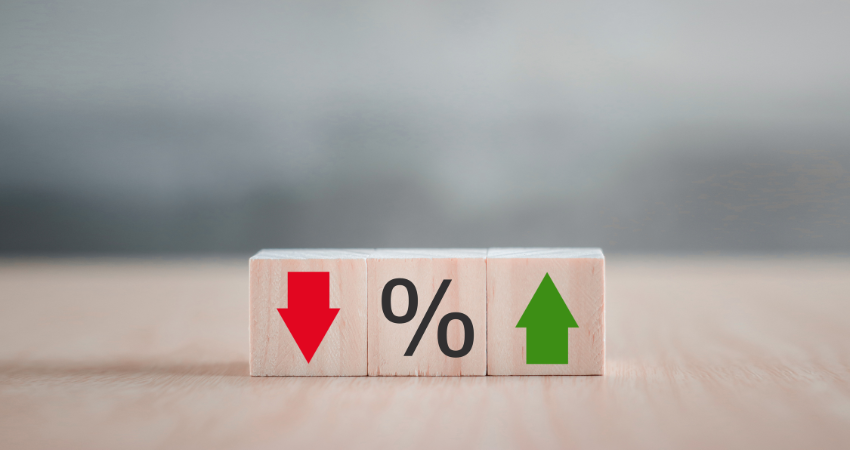
The Monetary Policy Committee (MPC) of the State Bank of Pakistan (SBP) will meet on April 27 to decide on the policy rate, but according to Arif Habib Limited (AHL), the case for holding the policy rate at 10.5% still holds weight.
A survey conducted by AHL indicates that 61% of respondents expect no change in the policy rate, while 19% anticipate a 50 basis points increase, 17% foresee a 100 basis points hike and 3% expect a 150 basis points increase.
AHL said that Pakistan’s external position remained stable, with the country recording a current account surplus of $1.07 billion in March 2026, the highest in a year, supported by strong remittances and a narrowing trade deficit.
Despite global oil prices hovering around $100 per barrel, the current account deficit for FY26 is projected at around $1.6 billion, with further downside risk if oil prices ease. For FY27, the deficit is expected to widen to approximately $3.5 billion under an assumption of $85 per barrel.
The rupee has held steady against the dollar despite significant external inflows and outflows. Saudi Arabia provided $3 billion in fresh deposits and extended a $5 billion facility, while Pakistan raised $750 million through a Eurobond and is awaiting a $1.2 billion tranche from the IMF. Outflows included $1.3 billion in Eurobond repayments and $2 billion in payments to the UAE. Foreign exchange reserves stand at $15.1 billion, excluding an additional $1 billion inflow from Saudi Arabia.
AHL analysts noted that with external buffers intact, the case for further monetary tightening appears limited. The policy rate, currently at 10.5%, is already considered restrictive, with inflationary pressures largely driven by supply-side factors rather than demand.
Financial markets have shown sensitivity to geopolitical developments, with yields on treasury bills and Pakistan Investment Bonds rising by 100–200 basis points during peak tensions before easing to 60–130 basis points as ceasefire developments reduced uncertainty.
Globally, major central banks, including the Federal Reserve, European Central Bank and Reserve Bank of India, have largely maintained policy rates, while acknowledging risks from ongoing geopolitical tensions.
Arif Habib Limited said the immediate policy outlook remains dependent on evolving geopolitical conditions, with the next monetary policy decision in June 2026, alongside the federal budget, expected to provide clearer direction.
Contrary to AHL, Topline Securities forecasted that market expectations have shifted toward a possible rate increase, showing a divided outlook.
According to the Topline’s poll, 53% of participants expect a rate hike. Within this group, 41.2% anticipate an increase of 50–100 basis points, 10% expect a rise of 25–50 basis points, and 2% foresee a larger increase of over 100 basis points. While 43% of respondents expect no change, while 4% see a potential cut of 50–100 basis points.
Topline expects a 50 basis point increase in the upcoming decision, citing the need to manage inflationary pressures from higher energy prices and their broader impact on the economy.
Comments
No comments yet. Be the first to join the discussion!