CCP flags cartel risks, regulatory distortions in Pakistan’s cement sector
Study highlights high taxes, transport bottlenecks, and market concentration as key barriers to competition

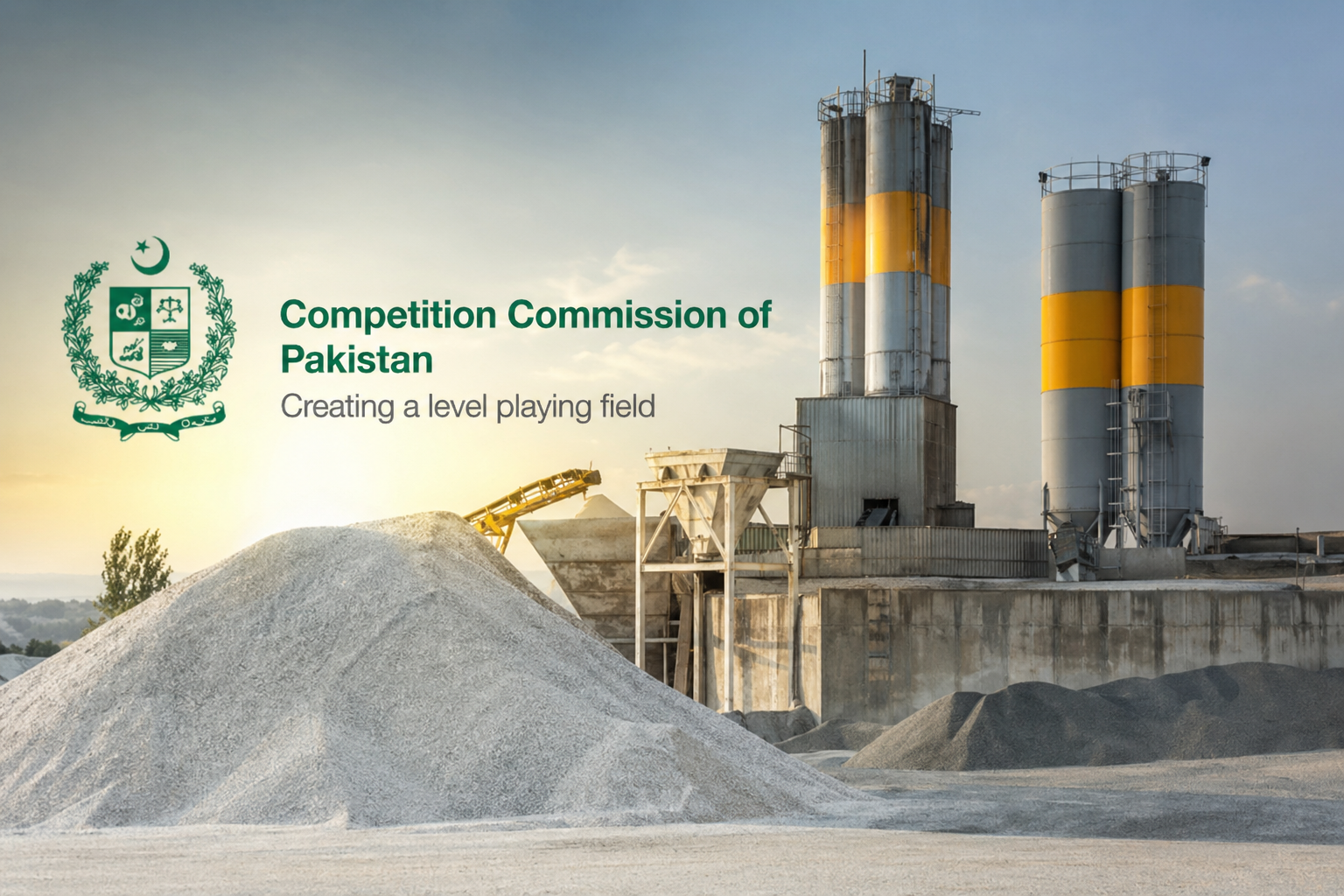
A new study by the Competition Commission of Pakistan (CCP) has raised concerns over structural and regulatory distortions in Pakistan’s cement sector, warning that persistent inefficiencies and cartel-like tendencies could undermine competition and long-term growth.
The report, conducted by the CCP’s Centre of Excellence in Competition Law, paints a mixed picture of an industry that remains central to the economy but is weighed down by high costs, uneven regulation, and recurring risks of collusion. Cement contributes roughly 1% to GDP and is a key component of large-scale manufacturing, yet the sector contracted by 1.5% in FY25 amid slowing demand and rising input costs.
While Pakistan has significantly expanded its cement capacity—nearly doubling it over the past decade—utilisation has dropped sharply to just over 52% in FY25. This reflects a slowdown in construction activity, particularly in the private sector, even as exports have partially offset weak domestic demand.
The CCP study finds that the industry’s structure makes it inherently prone to cartelisation. Cement is a homogenous product, with high entry barriers, significant fixed costs, and limited differentiation—conditions that historically enabled price coordination among manufacturers. Pakistan has seen multiple cartel cases in the past, including a major 2009 ruling where the regulator imposed penalties of Rs6.3 billion on cement companies for collusive practices.
Despite a nominally competitive national market structure, concentration rises significantly at the regional level. The top four players control over half the market, while logistical constraints—such as high transport costs and limited storage—create localised market power, particularly in the southern region.
Beyond market structure, the report identifies a range of policy-induced distortions. Taxes and duties account for nearly half of the retail price of cement, making fiscal policy a major driver of pricing. At the same time, disparities in provincial royalty rates, inconsistent enforcement of axle-load limits, and reliance on a single coal-handling terminal add to cost pressures and limit competition.
Energy costs are another major concern. Fuel and power represent the largest share of production costs, and recent levies on captive power generation have further eroded efficiency. The report also flags smuggling, counterfeit products, and weak border enforcement as factors distorting the competitive landscape.
Despite these challenges, the sector retains significant growth potential. Per capita cement consumption in Pakistan stands at just 191 kg—well below the global average of 550 kg—indicating room for expansion if structural issues are addressed.
The CCP has recommended a series of reforms, including harmonising provincial royalty regimes, introducing competition in port infrastructure, rationalising energy pricing, and ensuring tax policy stability. It also calls for stronger enforcement against anti-competitive practices and better border controls to curb informal trade.
The study underscores that without coordinated policy action, the sector’s growth could remain constrained, limiting its ability to support infrastructure development and broader economic expansion.
Comments
No comments yet. Be the first to join the discussion!