May 1, 2026
PSX outlook hinges on geopolitics, IMF decision and budget cues: report
KSE-100 gains 14,251 points in April, up 9.6% to 162,994, rally fades as weak earnings and geopolitical uncertainty drive volatility

May 1, 2026
The Pakistan Stock Exchange (PSX) is expected to remain driven by geopolitical developments in May 2026, with sentiment likely to improve on approval of a $1.2 billion IMF tranche on May 8 and further support possible from upcoming budget cues, according to an outlook report by Arif Habib Limited (AHL).
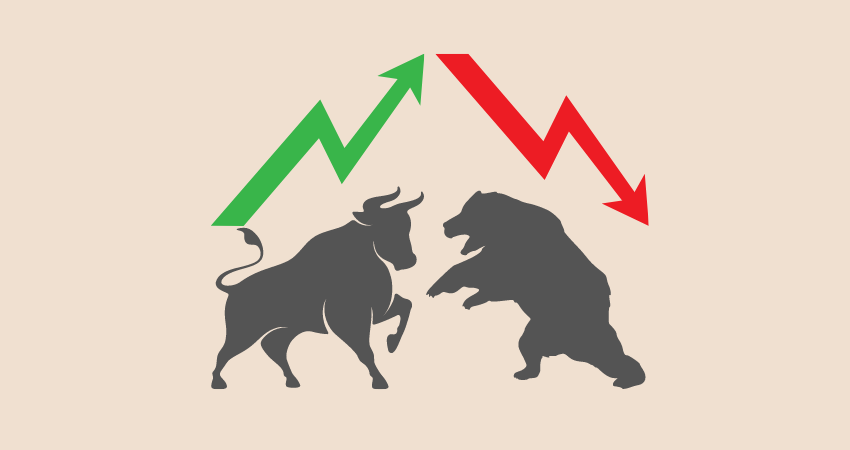
The KSE-100 Index staged a rebound in April 2026, gaining 14,251 points month-on-month, though investor sentiment remained highly volatile. The initial rally was driven by optimism surrounding a potential US–Iran ceasefire, which triggered sharp gains early in the month; however, momentum weakened as the month progressed, with volatility resurfacing amid weaker-than-expected corporate results and renewed uncertainty on the geopolitical front.
The index depicted a positive return of 9.6%, closing at 162,994 points by the end of the month.
The Consumer Price Index (CPI) for March 2026 rose to 7.3% year-on-year, the highest since August 2024, up from 7.0% in February 2026.
The Ministry of Finance, in its Monthly Economic Update, projected headline inflation to remain in the range of 8–9 per cent in April, citing supply chain constraints and rising global energy prices linked to the Middle East conflict.
On the external front, Pakistan posted a current account surplus of $1.07 billion in March 2026, compared to $231 million in February 2026, taking the 9MFY26 balance to a surplus of $8 million.
The SBP revised the policy rate, increasing it by 100 basis points, with an effective rate at 11.5%.
During the PIB auction, the government rejected bids across all tenors, as market participants drove yields further up. Meanwhile, in the T-Bill auction, yields went up by 40 basis points to 80 basis points across all tenors, with majority acceptance concentrated in the 1-month tenor.
As of April 2026, Fitch affirmed Pakistan’s sovereign rating at B minus with a stable outlook.
During the month, the World Bank reclassified Pakistan from its South Asia grouping to the MENA AP region, which includes the Middle East, North Africa, Afghanistan, and Pakistan. The change will take effect from fiscal year 2026.
Pakistan received the final $1 billion tranche under Saudi Arabia’s $3 billion support package, while repaying $3.45 billion to the United Arab Emirates (UAE) against maturing deposits. Additionally, it raised further funds by exercising the greenshoe option, bringing its Eurobond issuance to $750 million.
Sectoral Development
During March 2026, refinery upliftment rose 13% year-on-year, led by high-speed diesel at 26.8% and motor spirit at 25.1%. Petroleum sales grew 19% year-on-year to 1.44 million tons in March 2026, excluding furnace oil at 16.7%, driven by high-speed diesel at 21%, motor spirit at 16%, and furnace oil at 62%, taking 9MFY26 volumes up 5% year-on-year to 12.4 million tons.
Cement dispatches edged up 0.9% year-on-year to 3.74 million tons in March 2026, supported by exports amid weak local demand, while 9MFY26 dispatches rose 9.8% year-on-year.
Power generation remained strong, increasing 6% year-on-year to 8,939 gigawatt hours in March 2026, while generation cost declined 15% year-on-year to PKR 8.08 per kilowatt hour, keeping fuel cost adjustment low at PKR 0.27 per kilowatt hour.
Auto sales surged 40% year-on-year to 15.5 thousand units in March 2026, though down 9% month-on-month, with 9MFY26 volumes up 43% year-on-year to 144 thousand units.
Technology exports rose 20% year-on-year and 13% month-on-month to $413 million, contributing 46% to services exports.
Meanwhile, OGDC announced a discovery at Baragzai X-01, with incremental output of approximately 5,300 barrels per day oil and 17 million cubic feet per day gas, taking cumulative production to approximately 15,000 barrels per day and 45 million cubic feet per day.
Economic Development
For the second quarter of fiscal year 2026, a GDP growth of 3.89% has been reported, driven by industry at 7.40%, agriculture at 1.76%, and services at 3.69%.
The Federal Board of Revenue (FBR) reported a tax shortfall of Rs684 billion in the first ten months of the current fiscal year, with collections standing at Rs10,261 billion against a target of Rs10,945 billion.
In April 2026, the FBR collected Rs956 billion against a target of Rs1,029 billion, resulting in a monthly shortfall of Rs73 billion. To meet the revised annual target of Rs13,979 billion by June 2026, the FBR will need to collect Rs3,718 billion during May and June.
Remittances increased by 8% year-on-year to $30.3 billion during 9MFY26. Remittances by overseas Pakistanis decreased by 5% year-on-year to $3.8 billion during March 2026 compared to $4.1 billion during March 2025. On a month-on-month basis, remittances increased by 17%. In 9MFY26, remittances increased by 8% year-on-year to $30.3 billion.
During March 2026, the repatriation of profits and dividends in Pakistan declined by 35.1% year-on-year and increased by 110.3% month-on-month to $102.4 million. In 9MFY26, this figure rose by 3.4% year-on-year to $1,778 million.
Pakistan’s large-scale manufacturing index output grew by 6.5% year-on-year in February 2026, while declining 9.0% month-on-month. On an 8MFY26 basis, LSMI increased by 5.9% year-on-year.
Increase in traded volume
During April 2026, the average traded volume surged by 91% to 929 million shares, with the average traded value improving by 49% to $148 million.
Sectors that contributed the most activity during the month were Technology, Investment Banks, Banks, Power and Food, reporting average volumes of 115 million, 105 million, 93 million, 92 million and 77 million, respectively.
On a scrip-wise basis, volumes were led by BOP at 61.2 million, FNEL at 57.2 million, WTL at 56.6 million, KEL at 53.5 million, and CNERGY at 52.1 million.
Value leaders
On a sector-wise basis, the highest activity in terms of value was observed in Banks at USD 30 million, followed by Cement at $16 million, Exploration and Production at $16 million, Power at $13 million and Refinery at $11 million.
On a scrip-wise basis, the highest trading values were dominated by UBL at $7.4 million, BOP at $7.3 million, OGDC at $7.3 million, PPL at $5.7 million and NBP at $5.6 million.
Sectors contributing positively to the index during April 2026 include Banks at 5,529 points, Cement at 1,735 points, Exploration and Production at 1,133 points and Fertilizer at 987 points.
Scrip-wise positive contributors during the month were UBL at 1,721 points, HBL at 809 points, HUBC at 801 points, LUCK at 768 points, and OGDC at 717 points. Scrip-wise negative contributor was LCI at minus 15 points.
In terms of sectors, major gainers were Automobile parts at 37%, Modarabas at 28%, Synthetic at 22%, Cable and Electric goods at 21% and Vanaspati at 21% during April 2026.
Scrip-wise major gainers during April 2026 were YOUW, HCAR, GAL, BOP and GHNI, posting gains of 59%, 51%, 37%, 37% and 28% respectively. Meanwhile, the major loser during the month was LCI, losing 2%.
Foreign selling was witnessed in the Asia-Pacific region during April 2026, led by India at $4,170 million, followed by Indonesia at $904 million and Vietnam at $522 million.
On the domestic stock exchange, foreign selling activity of $0.59 million was reported for April 2026. The outflows were predominantly in Banks at minus $3.6 million, Cement at minus $3.3 million and Exploration and Production at minus $1.1 million.
On the local front, buying was reported by Individuals at $59.4 million, Companies at $14.9 million and Non-Banking Financial Companies at $0.3 million. Meanwhile, selling was witnessed by Insurance at minus $35 million, Banks and Development Finance Institutions at $19 million, Other Organisations at $10.1 million and Brokers at minus $6.3 million in April 2026.
In a separate note, AKD Research presented a similar outlook to that of Arif Habib Limited on the market trend, stating that a constructive resolution to ongoing geopolitical tensions remains the key near-term catalyst for direction, with any easing in oil prices expected to trigger a recovery.
The brokerage noted that the market continues to trade at attractive valuations, with the KSE-100 currently at a price-to-earnings ratio of 6.9x.
0 Comments
No comments yet. Be the first to join the discussion!