Govt prepares new auto policy with tax cuts for electric vehicles, localisation
Five-year policy proposes lower duties on electric vehicle parts, gradual phase-out of petrol vehicle imports and incentives for local manufacturing
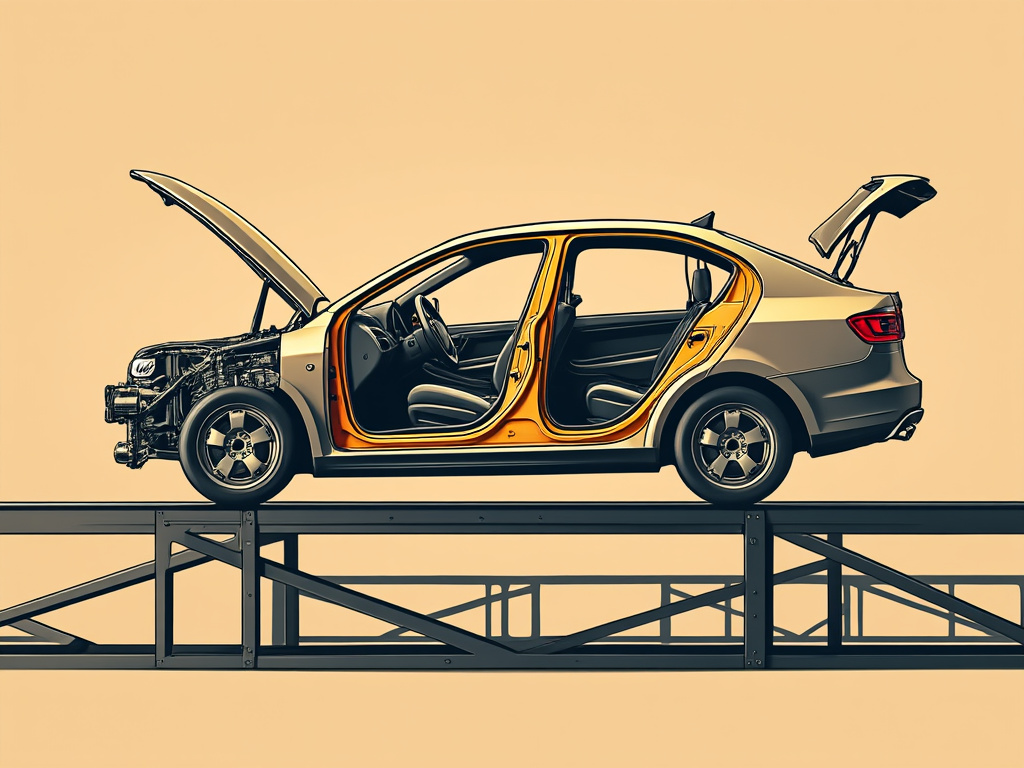
The government has finalised a five-year auto and auto parts manufacturing policy for 2026-30 aimed at increasing localisation and promoting production of electric and conventional vehicles through lower duties and tax incentives, according to a news report.
According to sources, the government plans to eliminate additional customs duty and reduce regulatory duty in line with the principles of the National Tariff Policy. Customs duty on sub-components and components used for manufacturing auto parts under SRO 655(I)/2006 has been proposed at 5%, while assemblies and sub-assemblies will attract 10% duty from July 1, 2026.
Sources said regulatory duty and additional customs duty on items covered under the scheme would gradually be reduced to zero, leading to eventual phase-out of SRO 655(I)/2006 from the bill of materials and input-output regime.
The policy also proposes incentives for New Energy Vehicles, including Battery Electric Vehicles, Range-Extended Electric Vehicles, Plug-in Hybrid Electric Vehicles and Fuel Cell Electric Vehicles.
A customs duty of 1% has been proposed for New Energy Vehicle-specific parts, while hybrid vehicle parts would attract 5% customs duty. Sales tax on hybrid vehicles has been proposed at 9%, equivalent to 50% of the applicable rate.
For two-, three- and four-wheel electric vehicles, import and local supply of inputs used in manufacturing parts may be allowed at 1% duty. Local vendors supplying electric vehicle-related parts may also receive the same concession.
Original Equipment Manufacturers would also be allowed to import New Energy Vehicle-related parts at 1% customs duty under the proposed framework.
Under the policy, customs duty on completely knocked down units has been proposed at 5% for non-localised parts and 10% for localised parts until June 30, 2028, with certain exemptions for L6 and L7 category vehicles.
The Ministry of Industries has also proposed allowing manufacturers of L6 and L7 category vehicles to assemble up to 10 units of the same variant locally. After that, companies may be allowed to manufacture up to 100 units at 10% customs duty until June 30, 2027.
The policy, prepared as part of proposals for the federal budget 2026-27, effective from July 1, 2026, also proposes a gradual reduction in imports of petrol-powered vehicles while offering incentives for electric vehicle manufacturing.
Officials said Special Assistant to the Prime Minister on Industries and Production Haroon Akhtar Khan played a role in developing consensus among industry stakeholders during the preparation of the policy.
Officials said the incentives proposed under the policy would carry sunset clauses, with transition towards the normal tariff regime planned by the end of fiscal year 2029-30.

Our monitoring team diligently searches the vast expanse of the web to carefully handpick and distill top-tier business and economic news stories and articles, presenting them to you in a concise and informative manner.
View all articles →Comments
No comments yet. Be the first to join the discussion!