May 18, 2026
Rs1.51 trillion PSDP under review as Shehbaz reshapes development priorities ahead of budget
Government signals performance-linked funding as IMF pressures continue to constrain fiscal space

May 18, 2026
With weeks remaining before the federal budget, the government has begun outlining the broad contours of its economic and development strategy for the coming fiscal year — one that attempts to balance IMF-driven fiscal restraint with the political necessity of sustaining visible development spending.
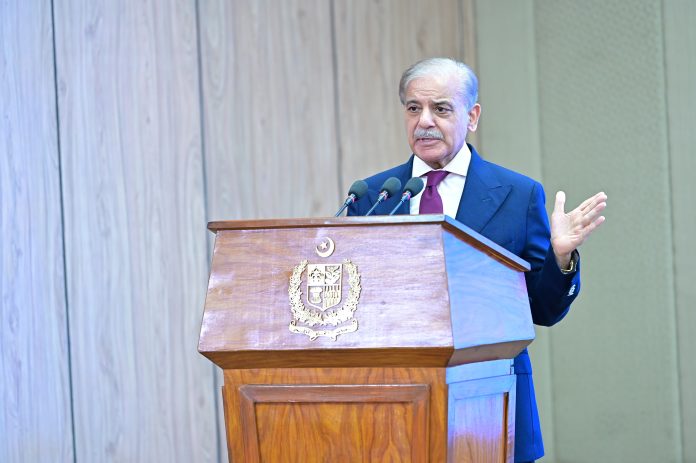
At the centre of that effort is a proposed Rs1.51 trillion Public Sector Development Programme (PSDP) for fiscal year 2026-27, reviewed on Monday by Prime Minister Shehbaz Sharif during a high-level meeting attended by senior cabinet members and top bureaucrats.
The proposed figure remains under discussion and is expected to be finalised in upcoming meetings on the Annual Development Programme (ADP), amid broader debate within the government over how much fiscal space can realistically be allocated to development spending under Pakistan’s ongoing IMF programme.
The meeting reviewed both the outgoing year’s development expenditure and proposed projects for FY27, while also offering one of the clearest indications yet of how the government intends to shape spending priorities in the coming year.
According to officials, the prime minister directed that ministries and divisions demonstrating stronger utilisation of development funds and faster implementation of projects should receive greater allocations in the next PSDP, while underperforming ministries could see their funding reduced.
The move signals the government’s intention to shift toward a more performance-linked approach to development spending as Islamabad attempts to preserve investment activity while remaining within increasingly tight fiscal limits.
Pakistan remains under the IMF’s Extended Fund Facility (EFF), which has placed significant pressure on public finances and forced the government to reduce subsidies, raise taxes and curb expenditure growth over the past year.
Last year, the government sharply restricted financing for new PSDP schemes under IMF-linked fiscal constraints, reflecting broader efforts to stabilise the economy after years of external financing stress and recurring balance-of-payments pressures.
This year, however, the government appears to be pursuing a more selective strategy rather than across-the-board austerity.
Instead of uniformly compressing development expenditure, the emerging approach appears aimed at concentrating available resources on projects considered economically important, politically visible and administratively achievable. Ministries capable of demonstrating implementation capacity are likely to receive priority consideration, while slower-moving departments may struggle to secure additional funding.
Officials briefed the meeting on progress under the current PSDP and presented proposed schemes for the upcoming fiscal year. Among the projects receiving particular attention were major water storage and hydropower initiatives including Dasu Dam, Diamer-Bhasha Dam and Mohmand Dam.
The prime minister reiterated that water reservoirs and hydropower projects remained among the government’s highest development priorities, stressing the importance of increasing Pakistan’s water storage capacity and strengthening domestic energy generation.
The emphasis reflects growing concern within policymaking circles over Pakistan’s long-term water and energy vulnerabilities. The country continues to face recurring electricity shortages, rising energy import costs and mounting pressure on water resources due to climate stress and population growth, making large dam and hydropower projects central to the government’s infrastructure narrative.
During the meeting, the prime minister also praised the performance of the ministries of railways, information technology and power, signalling the government’s focus on sectors it considers relatively better-performing in terms of implementation and service delivery.
The inclusion of information technology among the better-performing ministries is particularly notable as Islamabad increasingly attempts to position digitalisation, technology exports and fintech expansion as future growth drivers capable of easing pressure on Pakistan’s external account.
The government also reiterated its emphasis on public-private partnerships as a way to offset shrinking fiscal space. The prime minister directed authorities to encourage greater private-sector participation in development projects, reflecting the administration’s growing recognition that the state may no longer have the financial capacity to independently finance large-scale infrastructure expansion at previous levels.
The PSDP discussions unfolded alongside a broader effort by the government to project economic stability and investor confidence to international markets.
In a separate meeting on Monday, Prime Minister Shehbaz met Timur Turlov, founder and chief executive of Freedom Holding Corp., where Islamabad pitched Pakistan as a destination for long-term financial and digital investment.
The discussions focused on expanding the company’s presence in Pakistan through digital financial services, correspondent banking partnerships and branch operations. Officials said the two sides also explored possible cooperation in retail brokerage, fintech innovation, Islamic banking solutions and capital market development.
During the meeting, the prime minister reiterated Pakistan’s commitment to a “robust economic reform agenda” and investor-friendly policies while highlighting the country’s large young population and expanding digital infrastructure.
The outreach forms part of a broader attempt by the government to convince foreign investors that Pakistan is gradually emerging from the macroeconomic instability that defined much of the past two years. Since entering the IMF programme, the government has repeatedly attempted to balance painful adjustment measures with messaging centred on reform, digital transformation and private-sector-led growth.
Officials also highlighted the recent launch of Pakistan’s Panda Bonds, which received a positive response in the market. The prime minister publicly appreciated Finance Minister Muhammad Aurangzeb for the successful issuance during Monday’s meeting, with the government increasingly using the bond launch as evidence that investor confidence is beginning to recover.
The focus on investment and reform was mirrored in another high-level meeting chaired by the prime minister later in the day with Pakistan’s ambassadors to Gulf Cooperation Council countries and Iran.
The meeting centred on economic diplomacy, trade, remittances and investment ties with Gulf countries that remain critical to Pakistan’s economic stability. Ambassadors briefed the government on bilateral relations, emerging opportunities and regional developments, while discussions also covered the Pakistani diaspora and strategies to deepen economic engagement with the Gulf region.
The prime minister described GCC countries and Iran as economically and strategically important partners and directed diplomats to proactively pursue stronger cooperation in trade, investment, energy and people-to-people connectivity.
The emphasis on the Gulf reflects a larger reality confronting Pakistan’s economic managers: despite efforts to diversify foreign investment sources, the country remains heavily dependent on Gulf-linked remittances, financial support and labour exports to stabilise its external account.
Taken together, Monday’s meetings revealed a government attempting to build a coherent pre-budget economic narrative — one centred on tighter scrutiny of public spending, prioritisation of large-scale infrastructure projects, renewed investor outreach and deeper regional economic diplomacy, all while operating within the fiscal boundaries imposed by the IMF programme.
14 Comments
No comments yet. Be the first to join the discussion!