May 19, 2026
Pakistan’s new Iran transit trade routes remain non-operational despite official notification
Six routes linking Karachi, Port Qasim and Gwadar with Gabd and Taftan were notified in April to facilitate Iran-bound cargo and Central Asia trade

May 19, 2026
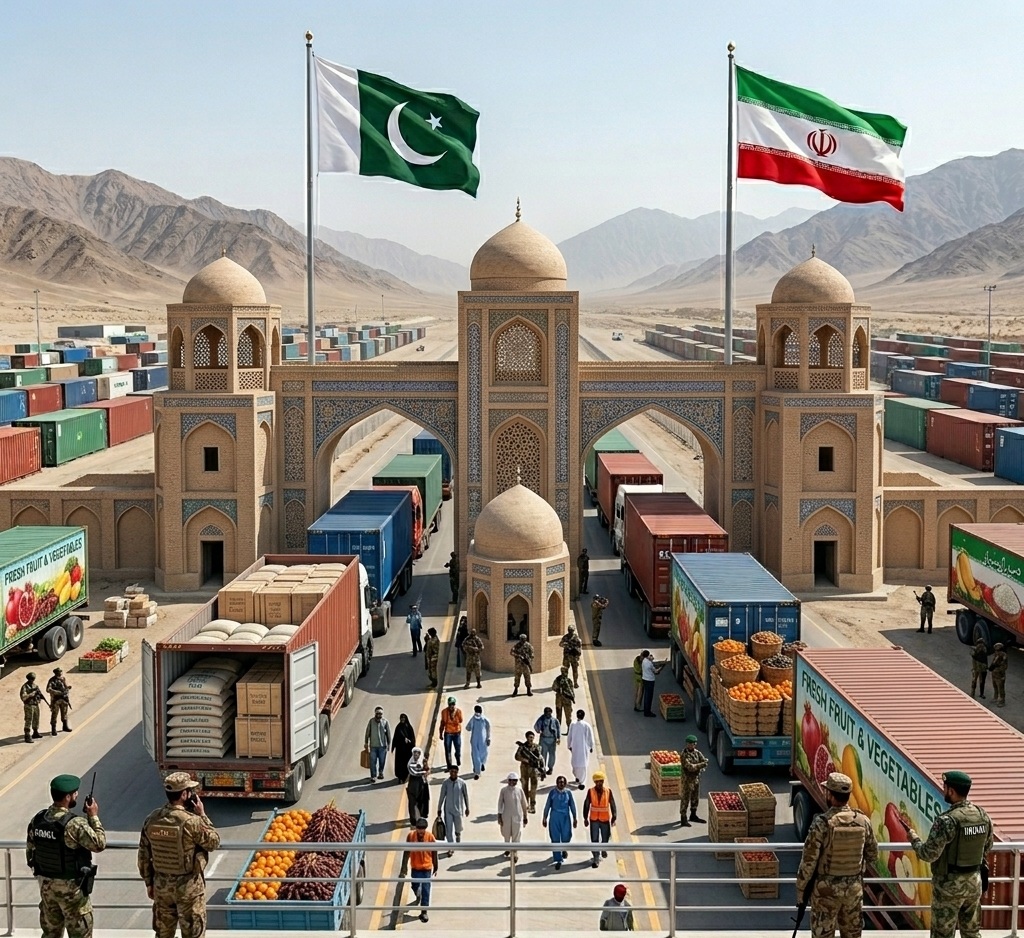
Despite formal notification of six designated transit corridors under the “Transit of Goods through Territory of Pakistan Order 2026” issued through SRO 691(I)/2026 on April 25 to facilitate movement of goods to Iran and its trading partners through Pakistani ports, the facilities remain non-operational and cargo movement under the new arrangement has yet to begin, Business Recorder reported.
The approved routes include Gwadar-Gabd, Karachi/Port Qasim-Lyari-Ormara-Pasni-Gabd, Karachi/Port Qasim-Khuzdar-Dalbandin-Taftan, Gwadar-Turbat-Hoshab-Panjgur-Nagg-Besima-Khuzdar-Quetta/Lakpass-Dalbandin-Nokundi-Taftan, Gwadar-Liari-Khuzdar-Quetta/Lakpass-Dalbandin-Nokundi-Taftan and Karachi/Port Qasim-Gwadar-Gabd.
However, officials and businesses said the objective of the arrangement had not yet been achieved as containers arriving at Pakistani ports for onward shipment to Iran were still not being routed through the newly designated corridors.
The transportation of cargo under the arrangement is to be regulated under the Customs Act, 1969 and procedures prescribed by the Federal Board of Revenue.
Officials said the transit mechanism was introduced after disruptions at Iranian ports caused by the conflict involving the United States and Israel, prompting Iran to seek alternative arrangements through Pakistan.
Private sector representatives said shipping lines had already unloaded containers carrying Iranian goods at Pakistani ports, but operational movement under the new framework had not yet started.
Officials added that Pakistan’s exports to Central Asia through Iran had already been underway for the past six months following operationalisation of the Iran corridor after deterioration in relations with Afghanistan and disruptions in traditional transit routes.
In March 2026, Pakistan also allowed exports of non-sanctioned goods, including food items and medicines, to Iran amid increased demand caused by war-related disruptions to Iranian manufacturing facilities and ports.
According to officials, the temporary permission for export of non-restricted items was granted for three months and the final impact would be assessed after the collection of trade data by customs authorities.
Officials said Pakistan’s formal exports to Iran had declined sharply since 1999 and official trade figures had effectively remained at zero in recent years.
The current arrangement marks the first time in decades that exports to Iran are expected to appear again in formal trade data maintained by the FBR.
Pakistan and Iran had earlier signed a road transportation agreement in 2008 allowing transit trade access to Central Asia through Iranian territory.
Our monitoring team diligently searches the vast expanse of the web to carefully handpick and distill top-tier business and economic news stories and articles, presenting them to you in a concise and informative manner.
View all articles →0 Comments
No comments yet. Be the first to join the discussion!