
What Bitcoin Pizza Day Says About Pakistan’s Digital Economy
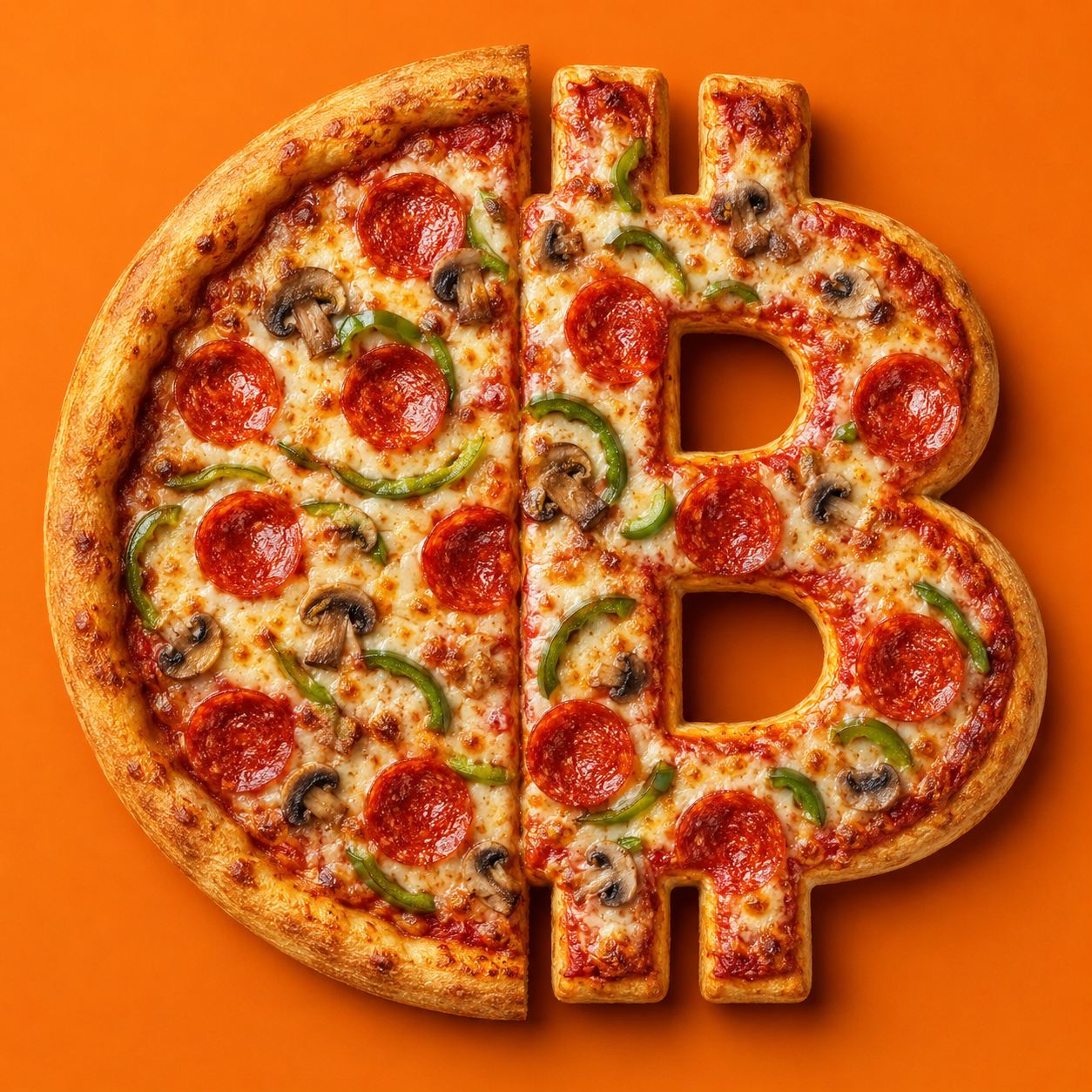
Long before Bitcoin Pizza Day became crypto folklore, Pakistan had its own adoption story with pizza. It arrived in cities as a foreign novelty, then became something more local, with chicken tikka, malai boti, garlic ranch dips, family boxes, and late-night orders. Pizza found staying power because it fits everyday habits.
Bitcoin Pizza Day carries a similar message. On May 22, 2010, Laszlo Hanyecz paid 10,000 BTC for two pizzas, a purchase worth about $41 at the time. At recent Bitcoin prices, the same amount would be worth hundreds of millions of dollars. The number still attracts attention because it turns a simple lunch order into financial history.
Price, however, is a narrow way to read the moment. Bitcoin moved from code, forums, and mining circles into commerce through a pizza order. Pakistan stands at a similar stage: crypto has already moved from curiosity to behaviour, and behaviour is where real participation begins.
Pakistan’s adoption test
Pakistan’s crypto story began with users who needed faster settlement, access to dollar-linked value, global payment options, and mobile-first financial tools. Many came through peer-to-peer networks before any formal policy path existed. Demand grew through freelancers, young savers, remittance users, and traders who met global markets through a phone screen.
Pizza Day was not just a quirky moment in Bitcoin history where digital currency was exchanged for two pizzas. It was a signal of something far more fundamental: a buyer and a seller connecting directly, peer to peer, without intermediaries, across a borderless financial network.
That same principle is now moving beyond payments into the real economy. Blockchain is enabling Pakistani talent, workforce, services, and goods to be exchanged globally in the same direct way, without relying on traditional gatekeepers, slow settlement systems, or geography-bound financial rails.
In practical terms, this shift expands who can participate in global markets. It allows Pakistani builders, freelancers, entrepreneurs, and exporters to compete not only locally, but for global projects, global clients, and global capital—settling value in real time, with fewer frictions and lower barriers to entry.
Coming after India and the United States, Pakistan ranks third in the 2025 Crypto Adoption Index, while Bangladesh also appears in the global top fifteen. Pakistan’s rise from sixth place in 2022 shows how quickly grassroots adoption has moved, even as much activity still flows through informal or peer-to-peer channels. Its second-place ranking for retail centralized-service value received points to everyday usage rather than a narrow speculative class.
Across South Asia, the demand is for financial tools that are global, digital, and usable at smaller ticket sizes. India offers scale and a deep trading base. Bangladesh shows how adoption can grow under tighter financial constraints. Pakistan sits close to the centre of this regional pattern: young users, organic market activity, and a growing need to connect informal demand with safer access.
Price cycles often dominate public debate, yet utility is the part that survives market noise. In Pakistan, the use cases point toward access. Freelancers seek smoother cross-border payments. Households look for protection during periods of currency pressure. Small investors want exposure to global markets without the friction of older financial systems.
For exchange operators, these are the signals that matter most. The strongest adoption often starts far from the loudest market narratives.
The next phase of crypto adoption will be defined by how well digital platforms connect people to the wider economy. Trading access opens the door. Information, transparent markets, safer custody, lower-friction payments, and global opportunities help people participate with greater confidence.
Access needs confidence
Pakistan’s regulatory path has been uneven, but the direction has started to change. In May 2025, officials still described cryptocurrency as illegal while also raising the need for a legal framework.
By April 2026, banks were allowed to open accounts for licensed virtual asset service providers, following the Virtual Assets Act, 2026. For users, this signalled that crypto activity is beginning to move closer to the formal financial system.
Confidence has become part of adoption. Users who enter through peer-to-peer channels, mobile apps, or global platforms need clearer information, safer custody, and visible protections. Without those basics, participation remains fragile.
For platforms, that means protection can no longer sit behind the scenes. Proof-of-reserves, user-protection funds, stronger account security, and responsive support are becoming part of the basic trust layer for digital finance. MEXC’s $100 million Guardian Fund is one example of how the industry is starting to make user protection more visible, beyond a back-office promise.
The next Pizza Day
Fifteen years after the first Bitcoin pizza purchase, the world no longer debates whether digital assets can move value. Countries have to shape that movement into a system people can actually trust. Pakistan already has the demand. The next stage will be defined by execution.
Execution should start with the citizen, Small users need safer access. Freelancers need smoother ways to receive value. Families need more efficient financial tools. Builders need platforms that connect local demand to wider markets
Pakistan’s pizza culture shows how ideas travel. Global ideas spread when people make them useful in their own setting. Bitcoin Pizza Day gave a young network social proof through a simple purchase. Pakistan’s crypto moment now carries a larger responsibility: to bring community-led digital-asset adoption turn community-led digital-asset adoption into broader participation in the global digital economy, while keeping the access that made it grow in the first place
Vugar is the CEO of MEXC, one of the leading crypto exchanges in the world
View all articles →3 Comments
No comments yet. Be the first to join the discussion!


