Pakistan set to unveil Rs17.1tr budget focused on revenue growth, fiscal discipline
Pakistan will unveil a Rs17.1tr federal budget aimed at boosting revenue collection and fiscal discipline under its IMF programme, with growth at 4.1% and inflation targeted at 8.2%, while protecting low-income households.


Pakistan is expected to present a Rs17.1 trillion federal budget on Friday aimed at boosting revenue collection and containing expenditure, as the government seeks to meet commitments under its International Monetary Fund (IMF) programme while maintaining support for low-income households.
Finance Minister Muhammad Aurangzeb will table the budget for fiscal year 2026-27 after a delay of about one week, with fiscal consolidation expected to remain the central policy objective.
The government is targeting economic growth of 4.1% next year, compared with an estimated 3.7% expansion in the current fiscal year, while setting an inflation target of 8.2%. The IMF has projected Pakistan's growth at 3.5%.
According to economists, a significant portion of the fiscal adjustment is likely to fall on salaried individuals and formally registered businesses, as authorities continue to struggle to bring agriculture, retail and real estate more effectively into the tax net.
The Federal Board of Revenue (FBR) is under pressure to sharply increase tax receipts next year, with authorities aiming to raise collections by roughly 37% above this year's target, which is expected to be missed.
Analysts say the government's options remain constrained by Pakistan's narrow tax base. Official figures show only 1.3% of the population filed tax returns showing taxable income last year, while just 7.7% of adults held a debit or credit card, underscoring the scale of the undocumented economy.
"The government's hands are tied as it will once again prioritise fiscal consolidation over economic growth," said Mustafa Pasha, chief investment officer at Lakson Investments, who argued that stronger enforcement would be needed to broaden tax collection.
The budget is being prepared amid fresh economic risks stemming from rising global oil prices following the conflict involving Iran. Economists warn that Pakistan remains particularly vulnerable to prolonged instability in the Middle East because of its dependence on Gulf energy imports, remittances and financial support.
Business activity indicators have also weakened in recent months. Manufacturing sector surveys showed confidence fell to its lowest level since data collection began last year, while input costs climbed to a 21-month high and employment declined for a second consecutive month.
On the spending side, development allocations are expected to remain under pressure. Planning Minister Ahsan Iqbal has indicated that no new development schemes are planned for the next fiscal year apart from projects related to defence and interior ministries.
Officials say social protection programmes will continue to shield lower-income households, even as broader austerity measures remain in place.
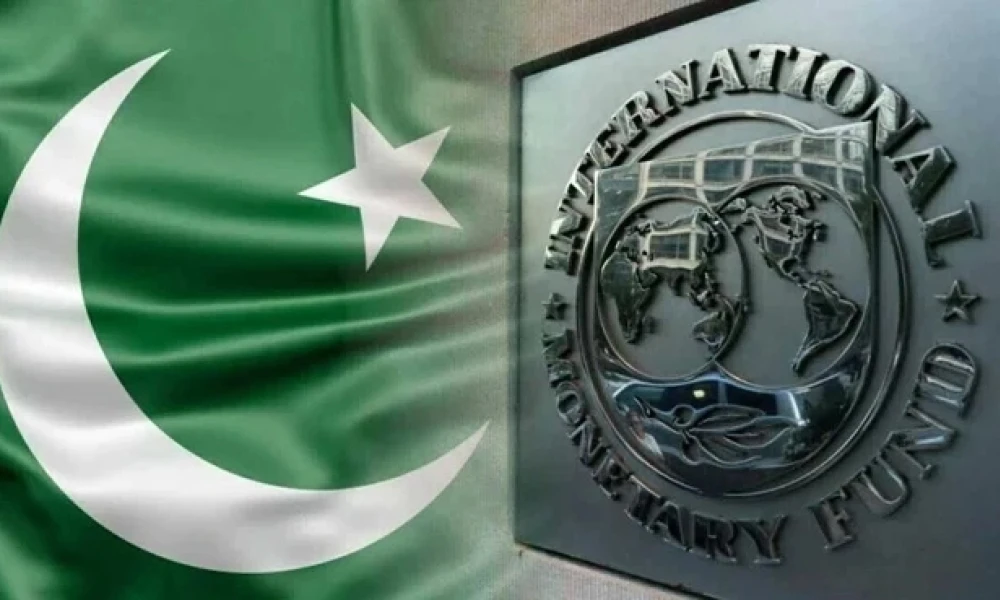
The delay in the budget presentation has been linked to ongoing discussions with the IMF, including issues related to provincial resources and federal financing requirements. The IMF said last month that Pakistan had agreed to target a primary budget surplus of 2% in the coming fiscal year, excluding debt servicing costs.
Comments
No comments yet. Be the first to join the discussion!