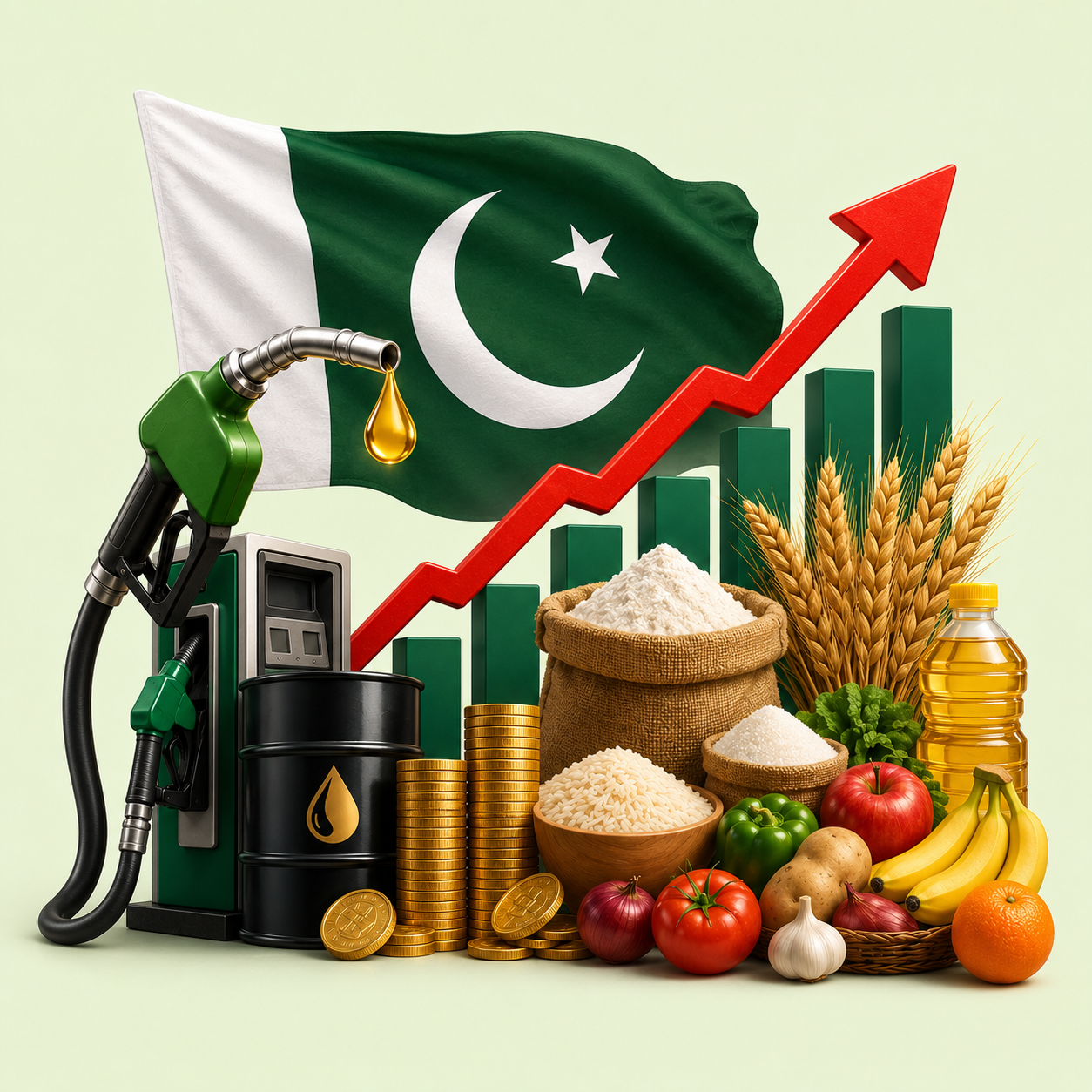
Pakistan’s weekly inflation rises 0.16%, stands 15.06% higher YoY
Tomato prices surge 35.39% and LPG 11.03% during week ended on June 11, while onions, fuel and flour record sharp annual hike; global volatility in oil prices could affect domestic inflation

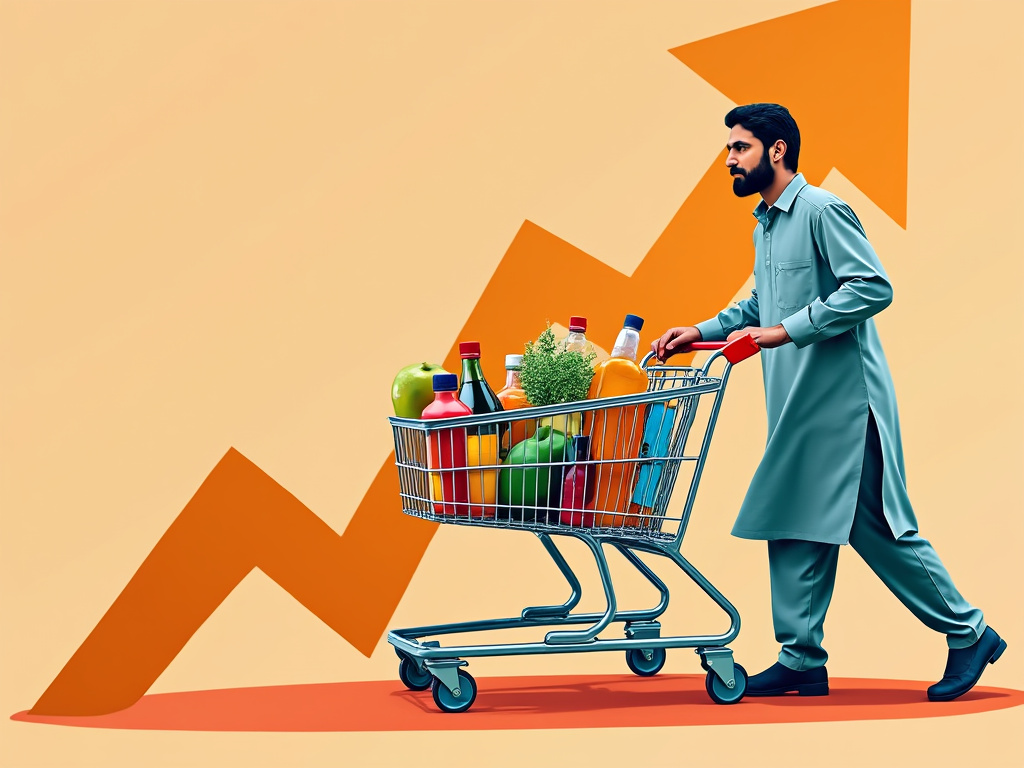
Pakistan’s weekly inflation, measured through the Sensitive Price Indicator (SPI), increased by 0.16% during the seven-day period ended June 11, while prices were 15.06% higher than a year earlier, according to the Pakistan Bureau of Statistics.
The weekly increase was driven mainly by a 35.39% surge in tomato prices and an 11.03% rise in the cost of liquefied petroleum gas.
The SPI tracks the prices of 51 essential commodities collected from 50 markets across 17 cities to assess short-term inflationary trends.
During the week under review, prices of 12 items, or 23.53% of the basket, increased, while 11 items, representing 21.57%, became cheaper. Prices of the remaining 28 items, or 54.90%, were unchanged.
Potato prices rose by 1.04%, followed by cigarettes at 0.46% and 2.5-kilogram vegetable ghee packs at 0.40%.
The price of five-litre cooking oil increased by 0.27%, while one-kilogram vegetable ghee packs became 0.24% more expensive.
Fresh milk prices rose by 0.21%, while gur and bread each recorded an increase of 0.10%.
Egg prices recorded the largest weekly decrease, falling by 9.62%, while chicken became 5.73% cheaper.
Onion prices declined by 4.61%, followed by petrol at 1.04% and garlic at 0.98%.
The price of pulse mash fell by 0.23%, while wheat flour became 0.21% cheaper.
Banana prices declined by 0.19% and mustard oil by 0.17%.
Annual inflation
Compared with the corresponding week last year, onion prices increased by 85.43%, the largest rise among the commodities monitored by PBS.
LPG prices rose by 74.45%, while wheat flour became 59.62% more expensive.
Electricity charges for the first quarter increased by 59.40%, while diesel and petrol prices rose by 49.63% and 49.03%, respectively.
Tomato prices increased by 36.40% year-on-year, followed by mutton at 15.73%, chilli powder at 15.20%, beef at 12.87%, garlic at 12.41% and bread at 8.66%.
Several products, however, remained cheaper than a year earlier.
Potato prices fell by 42.79%, while eggs became 34.17% cheaper.
Pulse gram prices declined by 22.56%, sugar by 15.71%, salt powder by 13.26% and pulse masoor by 12.07%.
Chicken prices were 7.35% lower, while pulse moong became 4.66% cheaper.
Global risks to inflation
The Pakistan Economic Survey 2025-26 warned that global uncertainty and volatility in international oil prices could affect domestic inflation and broader economic conditions in the near term.
The survey said ongoing conflicts and changes in energy prices required continued policy vigilance.
Inflation remained contained during much of FY26, but rising global energy prices linked to the conflict in the Middle East pushed headline inflation to 7.3% in March 2026.
Inflation later accelerated to 11.7% in May, reaching its highest level since June 2024.
The State Bank of Pakistan responded by increasing the policy rate by 100 basis points to 11.5% in April 2026.
The Economic Survey said continued policy discipline and structural reforms could strengthen Pakistan’s economic resilience and competitiveness over the medium term.
Comments
No comments yet. Be the first to join the discussion!