Profit

June 15, 2026

Searle Pakistan subsidiary to begin contract manufacturing of biologics

The company will be working on behalf of Martin Dow and Atco Laboratories, though it has not disclosed which products it will be manufacturing for them

Profit

Profit

June 15, 2026

Searle Pakistan subsidiary to begin contract manufacturing of biologics

In Pakistan’s pharmaceutical industry, the more sophisticated end of the industry — biologics, biosimilars, monoclonal antibodies and other injectable therapies produced through biotechnology — has mostly been the preserve of imports, licences and multinational partnerships.

Searle appears to be betting that this is about to change.

The Searle Company Ltd has informed the Pakistan Stock Exchange that its indirect subsidiary, Nextar Pharma (Pvt) Ltd, has entered into separate arrangements with Martin Dow Marker Ltd and Atco Laboratories Ltd for the potential manufacture of biological products at Nextar’s production facility. The announcement, made in the formal language of stock-exchange disclosure, was short. It did not name the products. It did not disclose financial terms. It did not specify volumes, timelines, margins, technology-transfer arrangements, or whether Nextar will be manufacturing active pharmaceutical ingredients, finished dosage forms, or undertaking some narrower form of sterile filling, packaging or release testing. But the strategic direction was unmistakable.

Nextar, which Searle says is in the process of being renamed Searle Biopharma (Private) Ltd, is being positioned not merely as a captive unit for Searle’s own biological portfolio, but as a contract manufacturer for other pharmaceutical companies that either lack the facilities to produce biologics locally or prefer to outsource that capability. For Martin Dow Marker, the arrangement is described as a memorandum of understanding for the manufacturing of certain biological products. For Atco Laboratories, it is described as an in-principle agreement for the potential manufacturing of selected biological products, subject to the finalisation of commercial terms. In both cases, Searle says the arrangements are expected to contribute positively to Nextar’s future profitability once operational.

That phrase — once operational — is doing a fair amount of work. Pakistan’s capital market has seen enough exuberant pharmaceutical announcements to know that memoranda of understanding are not the same as recurring revenue. Still, this development matters because it comes weeks after Searle announced a broader internal restructuring of its biologics business. In May 2026, Searle’s board approved the transfer of its biological and associated products portfolio to Nextar in a transaction valued at up to Rs4 billion, to be routed through Searle BioSciences. The transfer included not just products, but the related trademarks, authorisations, registrations and technical information. In plain English, Searle is trying to put its biopharma assets into one dedicated vehicle, capitalise it, rename it, and then use it as a platform.

If the plan works, Nextar will become one of the few Pakistani pharmaceutical subsidiaries with a plausible claim to being a focused biopharmaceutical manufacturing business rather than merely a conventional drug company with a few imported specialty products in its portfolio.

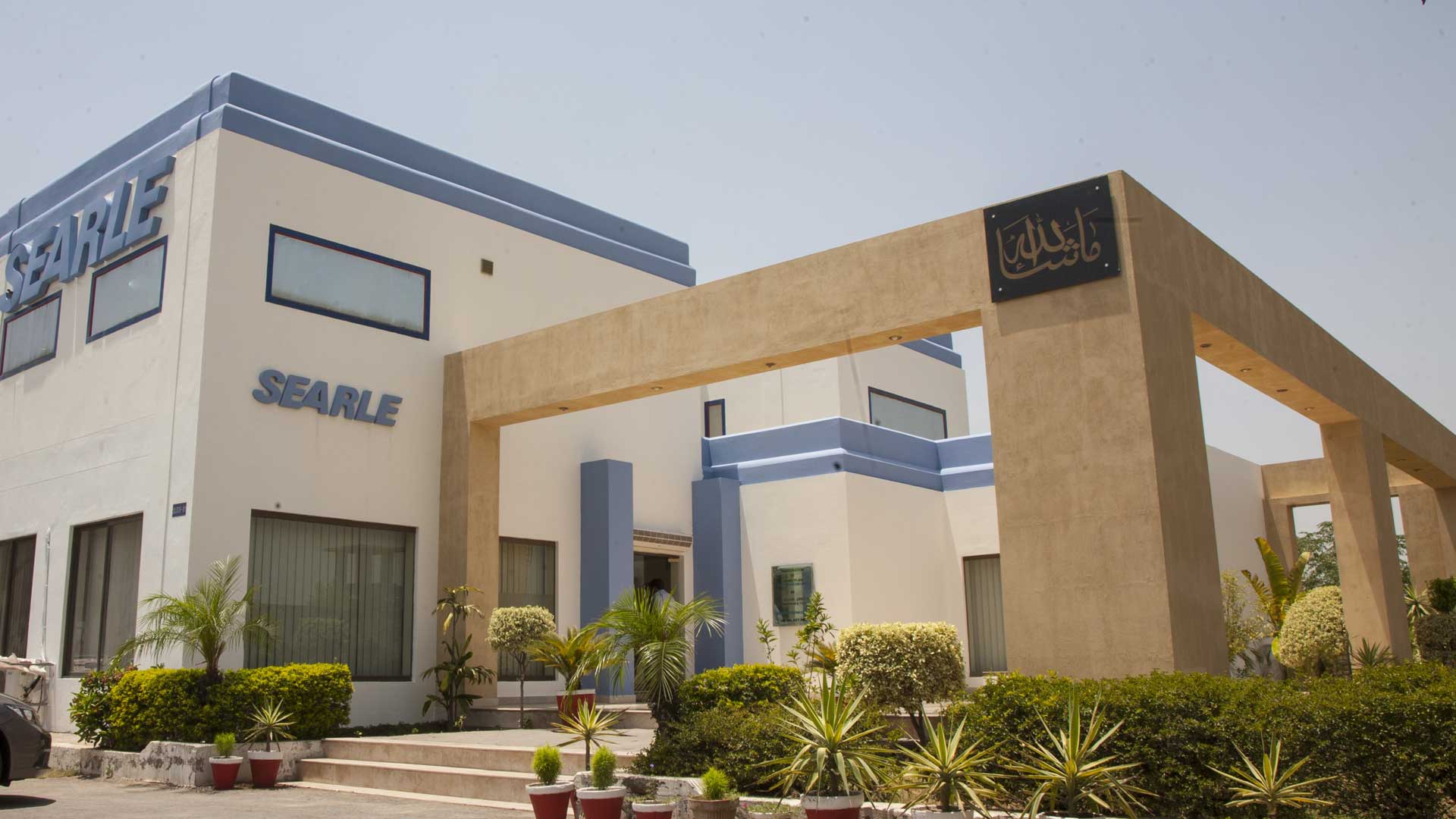
Nextar’s industrial base is what makes the announcement more than a marketing flourish. Searle describes the Port Qasim facility as a purpose-built biotechnology manufacturing plant and says it acquired the facility in 2014. The company presents it as Pakistan’s first and only integrated facility built to manufacture therapeutic biosimilar active pharmaceutical ingredients and finished biopharmaceuticals in compliance with US FDA good manufacturing practice guidelines, with qualified building management and environmental monitoring systems. That is an unusually ambitious claim in a country whose pharmaceutical manufacturing has traditionally been strong in oral solid dosage forms, generics, branded generics and selected sterile products, but far less developed in biotechnology.

The distinction is important. A conventional pharmaceutical plant can make tablets, capsules, suspensions and many injectable medicines through chemical synthesis, formulation and packaging. A biologics plant must handle products that are more complex, more fragile and far more sensitive to the manufacturing process. The facility must control contamination risks, environmental conditions, purification, sterile processing and analytical testing in ways that go beyond much of ordinary generic manufacturing. Even small process differences can matter. In biologics, the process is not merely the method of producing the product. To a considerable extent, the process defines the product.

Nextar’s public-facing biopharmaceutical association has also become clearer through Searle’s own product portfolio. Searle markets several biopharmaceutical products, including adalimumab under Dalimab, bevacizumab under Cizumab, denosumab under Denosu and Rexeva, rituximab under Tuximab, filgrastim products such as Neutromax and Nexfil, and erythropoietin products such as Hemax and NP-poetin. Not all of these are necessarily manufactured at Nextar, and Searle has not always made the manufacturing chain clear to public investors. Some products involve licensing and international supply relationships. But taken together, they show the therapeutic areas in which Searle wants to compete: oncology, rheumatology, nephrology, haematology, osteoporosis and supportive cancer care.

These are precisely the areas where biologics have changed medicine globally. They are also the areas where Pakistani patients have often faced the worst access problem. Cancer drugs, autoimmune-disease therapies and injectable biologics can cost far more than ordinary medicines. In a country where most healthcare expenditure is paid out of pocket, cheaper local manufacturing or locally handled biosimilar supply can be more than a commercial opportunity. It can alter whether a treatment is available to middle-income patients at all.

Martin Dow Marker, the first named customer in Searle’s announcement, is not a marginal player. It is part of the Martin Dow Group, one of Pakistan’s most recognisable privately held healthcare groups. The Akhai family’s pharmaceutical history goes back to the 1960s, while Martin Dow Pharmaceuticals was established in the 1990s. The group’s modern identity was built through a series of acquisitions and partnerships. In 2010, Martin Dow acquired Roche’s manufacturing facility in Pakistan along with rights to several product lines. In 2016, it acquired Merck’s shareholding in Merck Pakistan, and Martin Dow Marker Ltd was later established as the successor to the former Merck business in Pakistan.

That inheritance explains why Martin Dow Marker’s product list looks different from that of many local pharmaceutical companies. It includes familiar chronic-care brands such as Glucophage in diabetes and Concor in cardiology, vitamins such as Neurobion and Evion, gastrointestinal medicines, antibiotics and pain products. But it also includes products that sit in more specialised categories: Erbitux, the brand name for cetuximab; Gonal-F, a follitropin alfa product; Ovidrel, a choriogonadotropin alfa prefilled syringe; Pergoveris, a fertility product combining recombinant gonadotrophins; and Cetrotide, a peptide hormone-related fertility product. Some of these are biologics or recombinant biological therapies; others are complex specialty injectables that sit near the same hospital and specialty-care market.

For that reason, Martin Dow Marker is an obvious candidate for a local biopharmaceutical manufacturing arrangement. If a company has a portfolio inherited from Roche and Merck, strong brands in chronic and specialty therapy, and ambitions to broaden its manufacturing base, it may not want to build an entire biologics facility from scratch. Contracting with a specialist manufacturer could be cheaper, faster and less risky. It could also allow Martin Dow Marker to reduce dependence on imported finished products where local manufacturing is commercially and regulatorily feasible.

Atco Laboratories, the second named customer, is a different kind of institution. Founded in its current form in 1978 after being acquired by the Kohinoor Group, Atco is one of Pakistan’s older local pharmaceutical manufacturers. Its official profile presents it as a top-ten player in unit terms, with more than four decades of operating history, exports to more than 20 countries, and a broad portfolio that runs across anti-infectives, cardiovascular and metabolic medicines, dermatology, oncology, injectables, hospital products and other therapeutic areas. It has long operated from Karachi’s SITE industrial area and has emphasised its cGMP-compliant manufacturing base.

Atco’s public product list is broad rather than focused. It includes conventional products such as sitagliptin, metformin combinations, anti-malarials, antibiotics, dermatology products, oncology drugs such as doxorubicin and epirubicin, injectable hospital products and supportive-care therapies. But the more relevant clue for the Searle agreement is Atco’s partner list. Atco identifies Celltrion, the South Korean company, as one of its partners and describes it as a leading biologics company involved in the research, development and manufacture of biosimilars and new biopharmaceutical products. Celltrion is best known globally for biosimilars, including monoclonal antibody products used in autoimmune disease and oncology.

That does not prove which product Atco intends to have Nextar manufacture. It does, however, narrow the field. If Atco’s arrangement with Nextar involves biological products rather than ordinary injectable generics, the logical candidates would be products connected to its biopharma partnerships, particularly imported or licensed biosimilars where local sterile manufacturing, filling, packaging, batch release or eventual broader production might make commercial sense. Public pharmacy listings in Pakistan have associated Atco with Remsima, Celltrion’s infliximab biosimilar, though Atco’s own website does not prominently present a detailed public biologics catalogue. That distinction matters. A pharmacy listing is useful market evidence, but it is not the same as a company disclosure.

The best way to read Searle’s announcement, therefore, is not to assume that Nextar will immediately manufacture any specific named biologic for Martin Dow Marker or Atco. It is to understand the overlap in capabilities. Nextar says it has a facility for biosimilar APIs and finished biopharmaceuticals. Martin Dow Marker has publicly visible specialty injectable and biologic-related products, including a monoclonal antibody and recombinant fertility therapies. Atco has a broad injectable and oncology portfolio and a stated partnership with Celltrion, a biologics and biosimilars company. The intersection of those facts points towards sterile injectable biologics and biosimilars, not ordinary tablets or syrups.

Among Martin Dow Marker’s products, Erbitux is the most obvious biologic from the public list because cetuximab is a monoclonal antibody used in oncology. Gonal-F, Ovidrel and Pergoveris are also relevant because they are recombinant hormone therapies used in fertility treatment. For Atco, the plausible area of overlap would be biosimilar monoclonal antibodies or other injectable biologics connected to Celltrion-type products, including autoimmune-disease or oncology therapies. But without product names, any list is necessarily an assessment of possibilities rather than a factual statement of what Nextar will produce.

The distinction between possibility and certainty is especially important in biologics because manufacturing arrangements can mean many different things. A company may manufacture the active biological substance. It may import the bulk drug substance and do local fill-finish. It may undertake packaging and quality release. It may make only selected strengths or presentations. It may begin with technology transfer and validation batches before commercial production. It may manufacture for local sale only, or it may eventually seek export approvals. Each version has a very different economic profile.

For Searle, the highest-value scenario would be for Nextar to become a credible domestic contract development and manufacturing organisation for biologics. That would give it revenues beyond Searle’s own brands, improve utilisation of a capital-intensive facility, and place it in a part of the pharmaceutical value chain where barriers to entry are higher than in ordinary generics. It would also allow other Pakistani companies to enter biologics without building their own plants. The lower-value scenario would be a narrower service arrangement that produces some incremental revenue but does not fundamentally change Nextar’s economics. The truth will probably emerge only after commercial production begins and Searle’s financial statements show whether the subsidiary is becoming material.

The development also says something about the maturity of Pakistan’s pharmaceutical sector. For decades, the industry’s main complaint was price control. Companies argued, not without reason, that the government squeezed margins so tightly that serious investment in research, quality upgrades and advanced manufacturing became difficult. Recent deregulation and price adjustments have improved profitability for several listed pharmaceutical companies, giving them more room to invest. Some of that money will go into expanding ordinary capacity. But the more interesting question is whether the industry can climb the technology ladder. Biologics are one way to do that.

The science explains why. Most conventional medicines are small-molecule drugs. They are usually chemically synthesised, relatively stable, and easier to copy once patents expire. A generic version of a small-molecule drug can be shown to be equivalent through well-established tests, and manufacturing can be scaled with predictable chemistry. A tablet of metformin or paracetamol is not simple in a regulatory sense, but it is simple compared with a monoclonal antibody.

Biologics are different. They are derived from living systems, such as cell lines, microorganisms, animal cells or other biological sources. They are often large, complex molecules: proteins, antibodies, hormones, enzymes or other therapies that interact with the body in highly specific ways. Because they are produced in living systems, their structure and performance can be affected by the manufacturing process. Two companies cannot simply copy a biologic in the same way they copy a small chemical molecule. Instead, they make biosimilars: products that are highly similar to an already approved reference biologic, with no meaningful clinical differences in safety, purity and efficacy, but not identical in the way a small-molecule generic is identical.

That complexity creates commercial barriers. It also creates opportunity. Patients need more affordable versions of advanced therapies. Governments need to reduce the cost of specialised care. Local pharmaceutical groups need products that are less exposed to the commoditisation of ordinary generics. A company with a validated biologics facility, regulatory expertise, licensing partners and contract-manufacturing customers can occupy a more valuable niche than a company selling one more antibiotic into an overcrowded market.

Searle has been trying to occupy that niche for some time. Its denosumab announcement in 2025 signalled a desire to be identified with Pakistan’s biosimilar market. Its May 2026 restructuring suggested that biologics would be housed in a dedicated subsidiary. The latest agreements with Martin Dow Marker and Atco suggest the next step: using that subsidiary not only for Searle’s own portfolio, but for other companies’ products as well.

That is a sensible strategy, but not an easy one. Biologics manufacturing requires technical discipline, regulatory credibility and commercial patience. Customers will not entrust high-value specialty products to a manufacturer that cannot deliver consistency. Regulators will not treat biosimilars like ordinary generics. Doctors may take time to build confidence. Patients may still find the products expensive. And investors will need more than optimistic announcements; they will need evidence of scale, margins and repeat business.

Still, the direction of travel is clear. The Pakistani pharmaceutical industry is moving from a world in which biologics were mostly imported and marketed by a few large players to one in which domestic groups want to manufacture, license, fill, finish and distribute them locally. If Nextar can turn its announced arrangements into actual commercial production, Searle will have done something more consequential than signing another partnership. It will have created a platform that could make Pakistan’s biopharmaceutical market less dependent on imported finished products and more integrated into the manufacturing chain.

For now, the products remain unnamed. That is frustrating for investors, analysts and patients alike. But in a market where companies often disclose grand ambitions before they have the infrastructure to support them, Searle’s announcement is notable for a different reason. The infrastructure appears to exist. The customers are named. The portfolios overlap. The economics are plausible.

The missing piece is execution.

Share:

0 Comments

Sort by:
0/2000
Supports: **bold** *italic* [link](url) > quote @mention
Guest comments require moderation

No comments yet. Be the first to join the discussion!